Digital medication system increased adherence in patients with schizophrenia or bipolar disorder
Randomized clinical trial of a digital medication system to enhance adherence in patients with severe mental disorders
Cluster-randomized controlled trialBenefit found
Does a digital medication system improve adherence in patients with serious mental disorders?
Who
206
Patients aged 18-65 years with schizophrenia or bipolar disorder · 30 communities in Beijing
Compared
Digital medication system: 84/108
Online medication diary: 23/108
Main outcome
Poor adherence defined as missing 20% or more of doses
Result: adjusted risk difference 52.34% (95% CI 34.65%-70.03%)
Bottom line: A digital medication system significantly improves medication adherence in patients with serious mental disorders.
NPJ Digit Med · 2025-06-05 · Save PNG
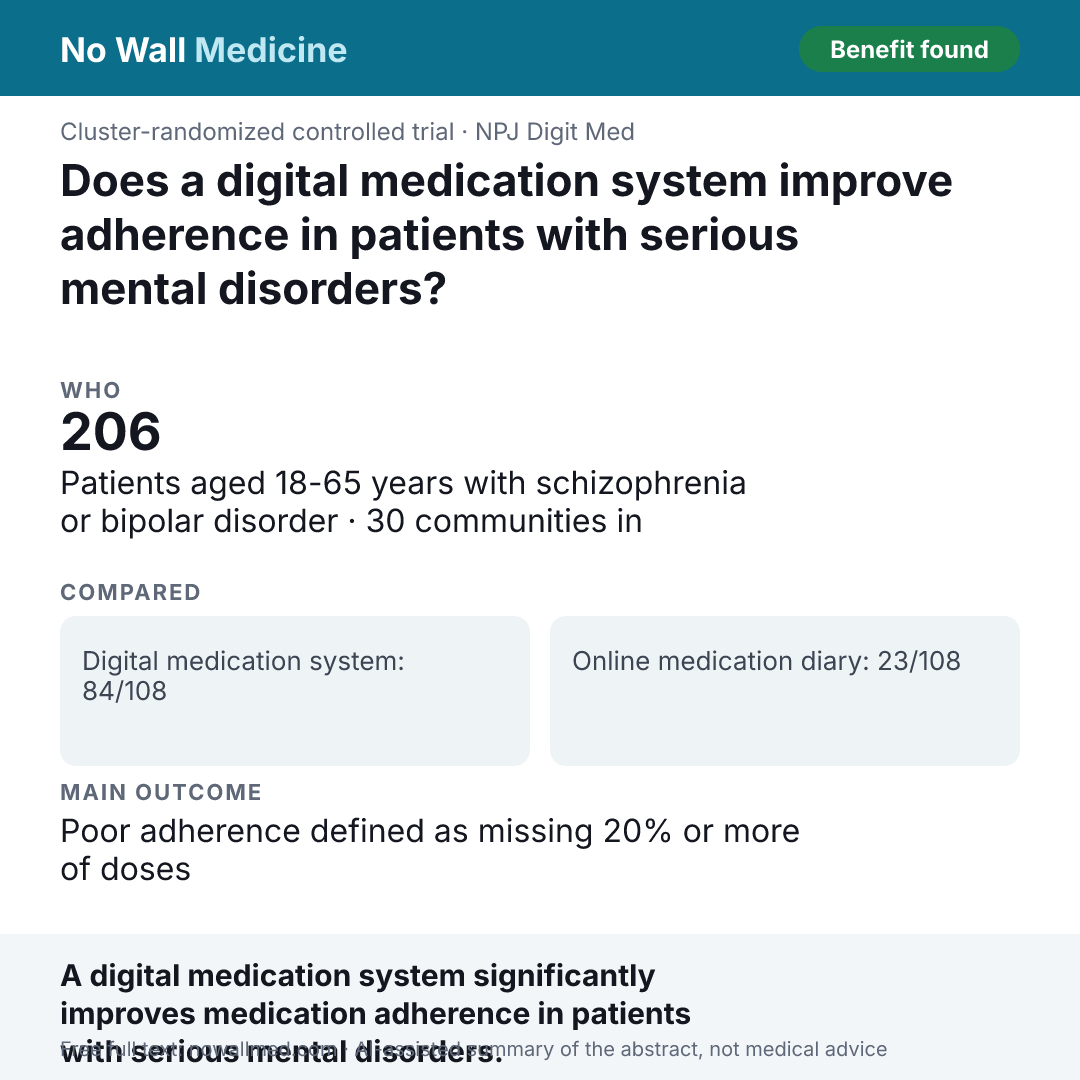
Clinical question: Does a digital medication system improve adherence in patients with serious mental disorders?
Key points
- Researchers conducted a cluster-randomized controlled trial involving 206 patients with schizophrenia or bipolar disorder across 30 communities in Beijing.
- The digital medication system group had higher adherence compared to the online medication diary group, with an adjusted risk difference of 52.34% (95% CI: 34.65%-70.03%; P < 0.0001).
- Poor adherence was defined as missing 20% or more of prescribed doses at 12 months.
Headline and key points written with AI from the paper’s abstract, with every number checked against it. Read the paper before relying on them.
Was this summary helpful?
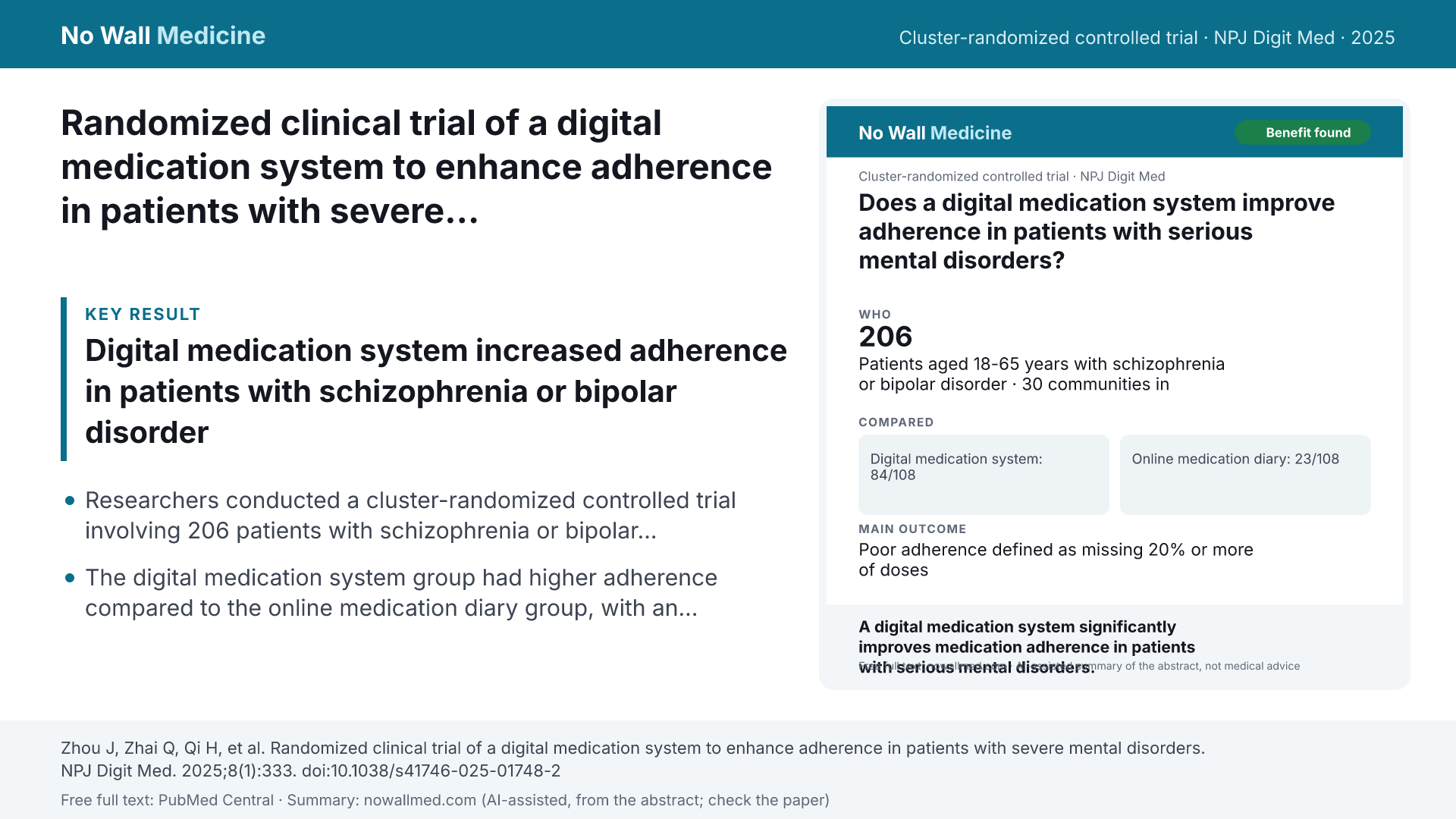
Headline, design, result, key points, caveat and citation as plain text.
Cite this article
Zhou J, Zhai Q, Qi H, et al. Randomized clinical trial of a digital medication system to enhance adherence in patients with severe mental disorders. NPJ Digit Med. 2025;8(1):333. doi:10.1038/s41746-025-01748-2
Spotted a mistake? Suggest a correction