Digital cognitive behavioral therapy app improved blood sugar levels in adults with type 2 diabetes
Randomized, Controlled Trial of a Digital Behavioral Therapeutic Application to Improve Glycemic Control in Adults With Type 2 Diabetes
Randomized, controlled trialBenefit found
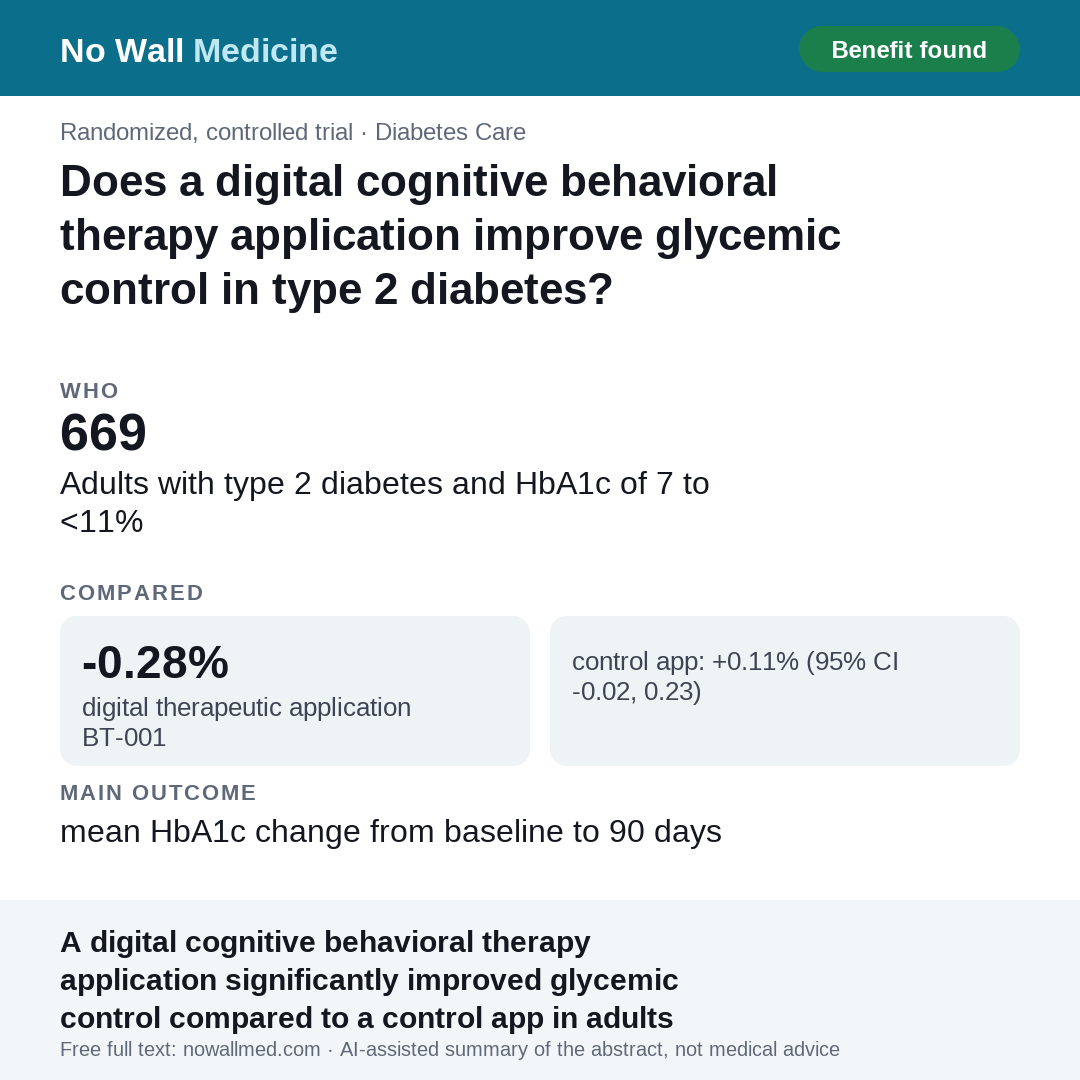
Does a digital cognitive behavioral therapy application improve glycemic control in type 2 diabetes?
Who
669
Adults with type 2 diabetes and HbA1c of 7 to <11%
Compared
-0.28%digital therapeutic application BT-001 (95% CI -0.41, -0.15)
control app: +0.11% (95% CI -0.02, 0.23)
Main outcome
mean HbA1c change from baseline to 90 days
Result: treatment group difference 0.39%; P < 0.0001
Bottom line: A digital cognitive behavioral therapy application significantly improved glycemic control compared to a control app in adults with type 2 diabetes.
Diabetes Care · 2022-10-02Download image
Clinical question: Does a digital cognitive behavioral therapy application improve glycemic control in type 2 diabetes?
Why it matters: It was unknown if a digital application delivering cognitive behavioral therapy could effectively improve glycemic control in adults with type 2 diabetes.
Key points
- Researchers studied 669 adults with type 2 diabetes and an HbA1c (average blood sugar) between 7% and 11% who were assigned to either a cognitive behavioral therapy app or a control app.
- After 90 days, the cognitive behavioral therapy group had a mean HbA1c change of -0.28% compared to a +0.11% change in the control group.
- No adverse events or device effects were attributed to the use of the application in either group.
Headline and key points written with AI from the paper’s abstract, with every number checked against it. Read the paper before relying on them.
Was this summary helpful?
Subject terms
Cite this article
Hsia J, Guthrie NL, Lupinacci P, Gubbi A, Denham D, Berman MA. Randomized, Controlled Trial of a Digital Behavioral Therapeutic Application to Improve Glycemic Control in Adults With Type 2 Diabetes. Diabetes Care. 2022. doi:10.2337/dc22-1099
Spotted a mistake? Suggest a correction
Top studies every Monday
The week’s key trials and guidelines in your specialties, plus any topics you follow. By email, free.
Get the weekly digest