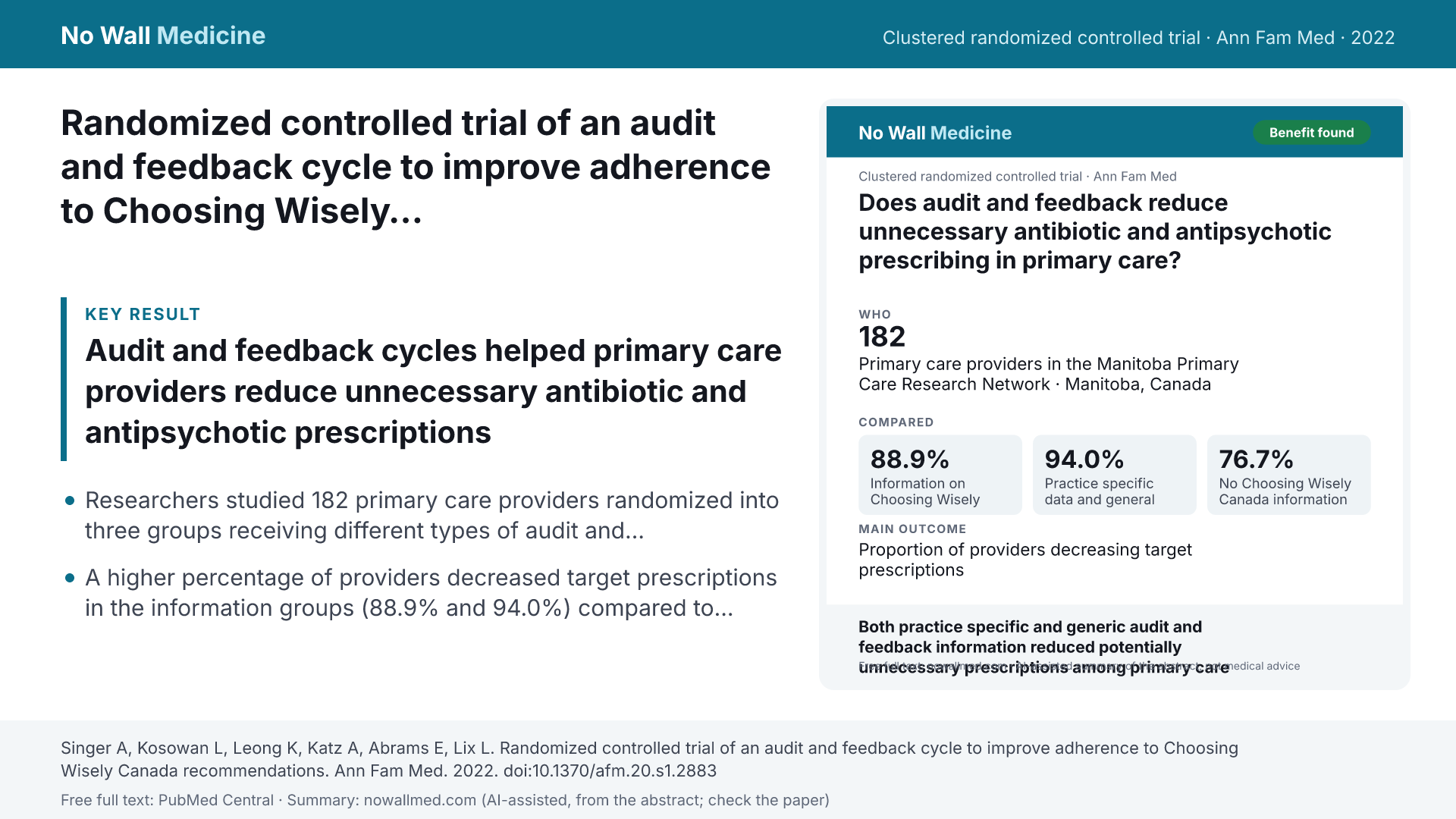
Audit and feedback cycles helped primary care providers reduce unnecessary antibiotic and antipsychotic prescriptions
Randomized controlled trial of an audit and feedback cycle to improve adherence to Choosing Wisely Canada recommendations
Clustered randomized controlled trialBenefit found
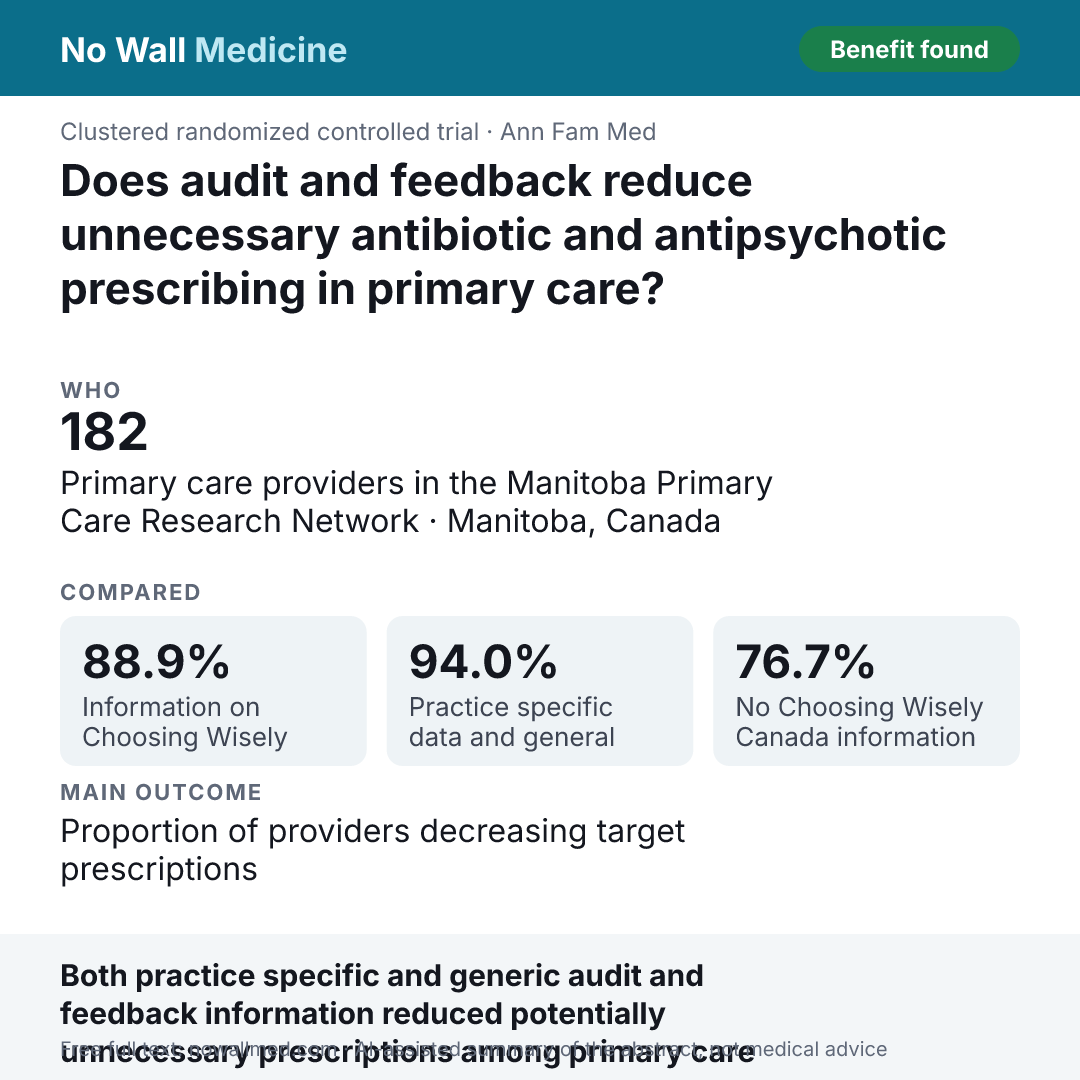
Does audit and feedback reduce unnecessary antibiotic and antipsychotic prescribing in primary care?
Who
182
Primary care providers in the Manitoba Primary Care Research Network · Manitoba, Canada
Compared
88.9%Information on Choosing Wisely Canada recommendations
94.0%Practice specific data and general information
76.7%No Choosing Wisely Canada information
Main outcome
Proportion of providers decreasing target prescriptions
Bottom line: Both practice specific and generic audit and feedback information reduced potentially unnecessary prescriptions among primary care providers.
Ann Fam Med · 2022-04-01 · Save PNG
Clinical question: Does audit and feedback reduce unnecessary antibiotic and antipsychotic prescribing in primary care?
Why it matters: Reducing the overuse of antimicrobials and antipsychotics in patients with dementia in primary care settings remains an ongoing challenge.
Key points
- Researchers studied 182 primary care providers randomized into three groups receiving different types of audit and feedback information regarding Choosing Wisely Canada recommendations.
- A higher percentage of providers decreased target prescriptions in the information groups (88.9% and 94.0%) compared to the control group (76.7%).
- Average antibiotic prescriptions for viral indications dropped from 46 per provider in 2014/2015 to 15 in 2016/17 and 18 in 2018/19.
Headline and key points written with AI from the paper’s abstract, with every number checked against it. Read the paper before relying on them.
Was this summary helpful?
Subject terms
Headline, design, result, key points, caveat and citation as plain text.
Cite this article
Singer A, Kosowan L, Leong K, Katz A, Abrams E, Lix L. Randomized controlled trial of an audit and feedback cycle to improve adherence to Choosing Wisely Canada recommendations. Ann Fam Med. 2022. doi:10.1370/afm.20.s1.2883
Spotted a mistake? Suggest a correction