Randomized Controlled Trial of Cilostazol Addition for In-Stent Restenosis After Carotid Artery Stenting
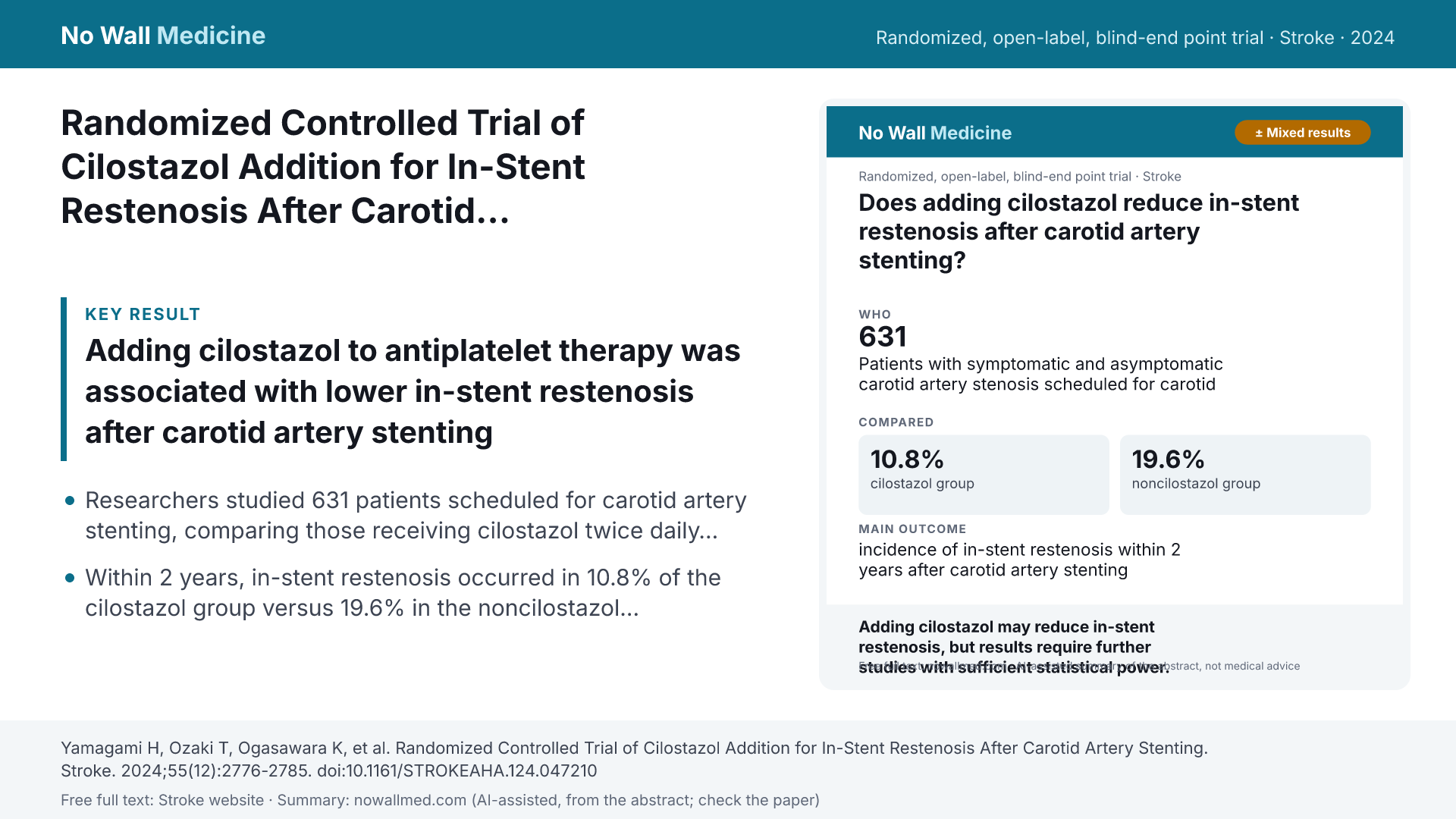
Key result: Adding cilostazol to antiplatelet therapy was associated with lower in-stent restenosis after carotid artery stenting
Randomized, open-label, blind-end point trialMixed results
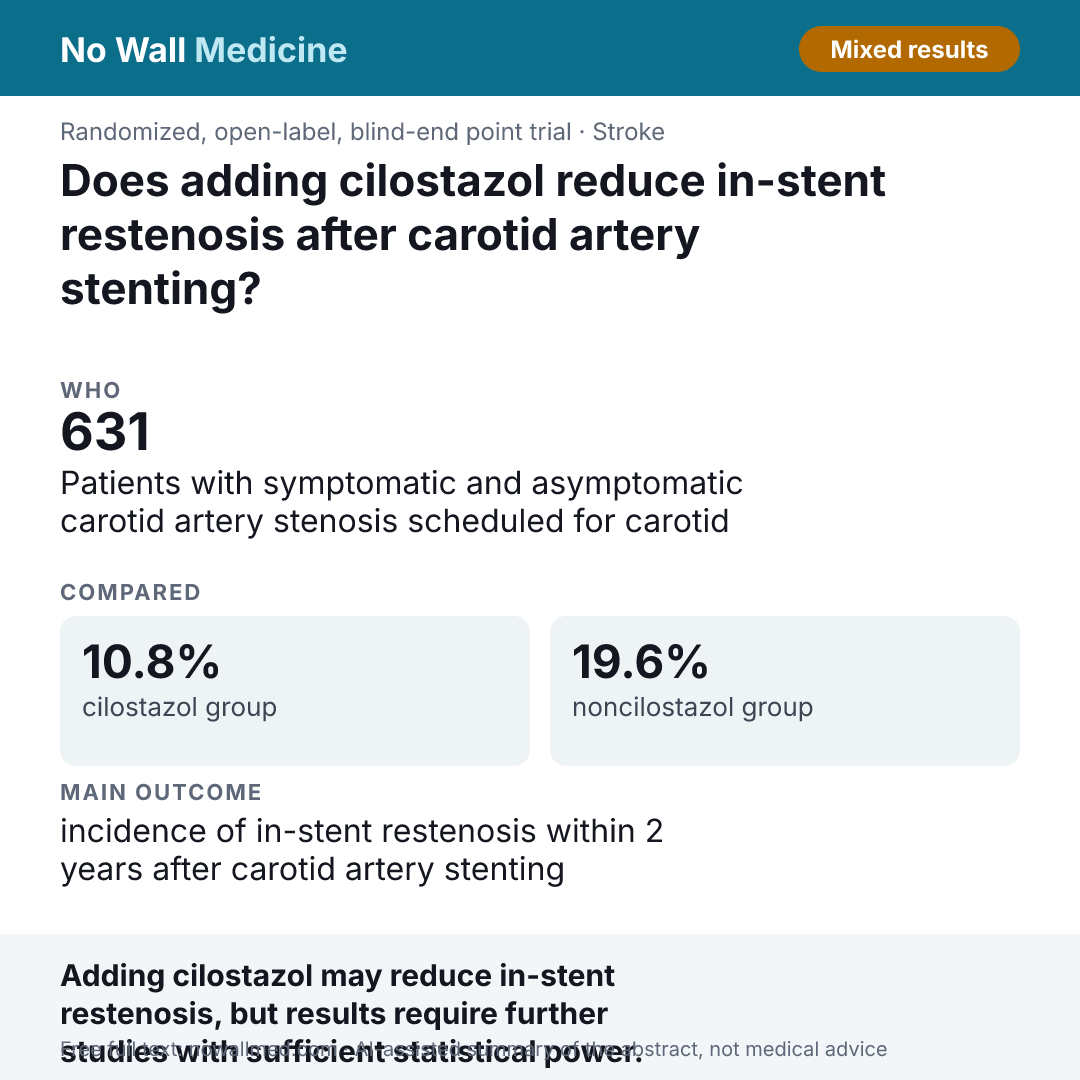
Does adding cilostazol reduce in-stent restenosis after carotid artery stenting?
Who
631
Patients with symptomatic and asymptomatic carotid artery stenosis scheduled for carotid artery stenting
Compared
10.8%cilostazol group
19.6%noncilostazol group
Main outcome
incidence of in-stent restenosis within 2 years after carotid artery stenting
Result: hazard ratio 0.64 (95% CI 0.41-1.0)
Bottom line: Adding cilostazol may reduce in-stent restenosis, but results require further studies with sufficient statistical power.
Stroke · 2024-11-25 · Save PNG
Key points
- Researchers studied 631 patients scheduled for carotid artery stenting, comparing those receiving cilostazol twice daily with those who did not.
- Within 2 years, in-stent restenosis occurred in 10.8% of the cilostazol group versus 19.6% in the noncilostazol group, though this was not statistically significant (P=0.056).
- In an exploratory analysis, the incidence of in-stent restenosis after 30 days was 10.3% in the cilostazol group compared to 19.3% in the noncilostazol group (P=0.040).
Discussion prompts
- Would these patients look like yours? Who was left out?
- Is the main outcome one that matters to patients?
- Is the difference large enough to change what you do?
Cite: Yamagami H, Ozaki T, Ogasawara K, et al. Randomized Controlled Trial of Cilostazol Addition for In-Stent Restenosis After Carotid Artery Stenting. Stroke. 2024;55(12):2776-2785. doi:10.1161/STROKEAHA.124.047210
Free full text: Stroke website · Summary and visual abstract: nowallmed.com/a/randomized-controlled-trial-of-cilostazol-addition-for-in-stent-1tuesil/ (AI-assisted from the abstract; check the paper before relying on it).