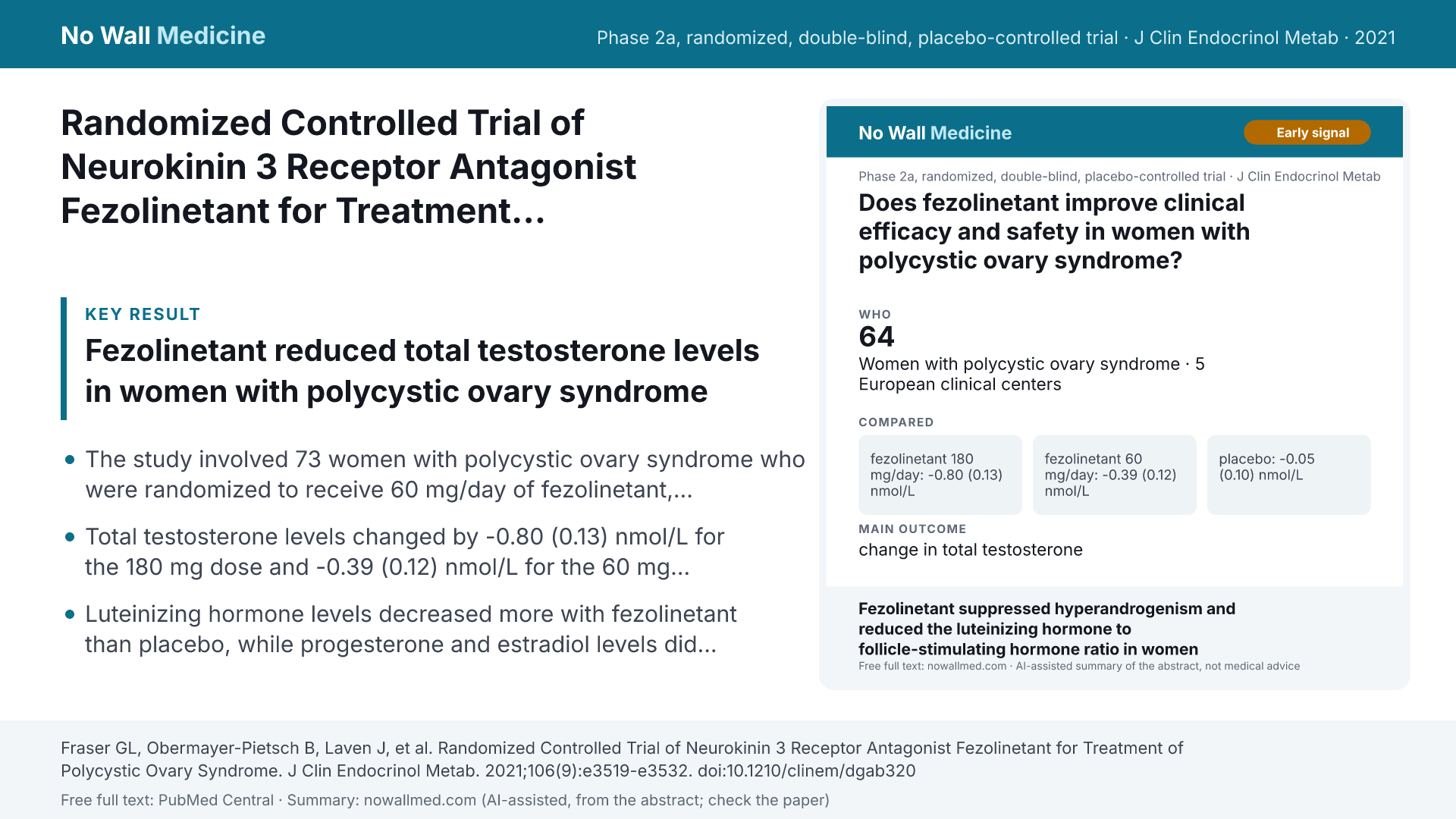
Fezolinetant reduced total testosterone levels in women with polycystic ovary syndrome
Randomized Controlled Trial of Neurokinin 3 Receptor Antagonist Fezolinetant for Treatment of Polycystic Ovary Syndrome
Phase 2a, randomized, double-blind, placebo-controlled trialEarly signal
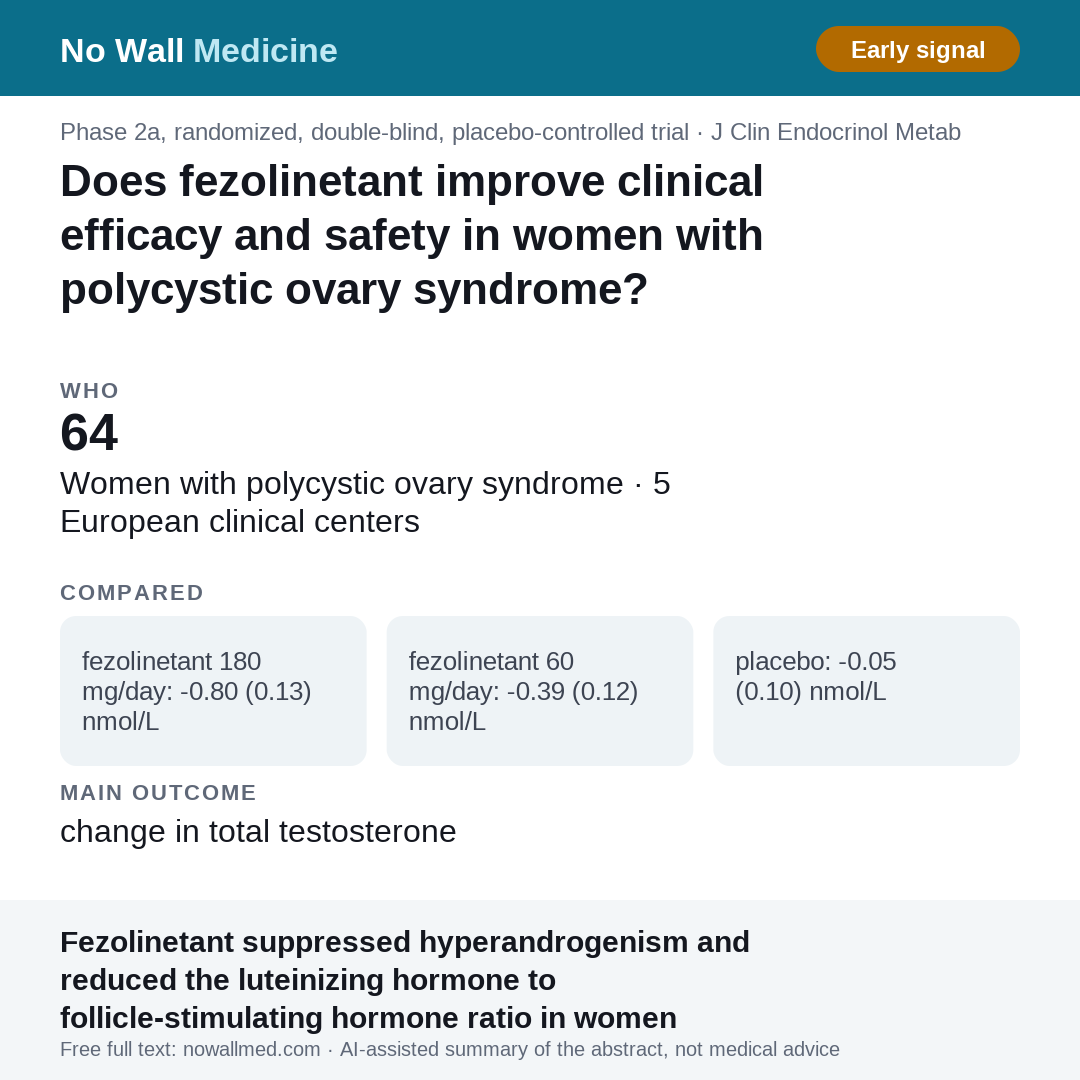
Does fezolinetant improve clinical efficacy and safety in women with polycystic ovary syndrome?
Who
64
Women with polycystic ovary syndrome · 5 European clinical centers
Compared
fezolinetant 180 mg/day: -0.80 (0.13) nmol/L
fezolinetant 60 mg/day: -0.39 (0.12) nmol/L
placebo: -0.05 (0.10) nmol/L
Main outcome
change in total testosterone
Bottom line: Fezolinetant suppressed hyperandrogenism and reduced the luteinizing hormone to follicle-stimulating hormone ratio in women with polycystic ovary syndrome.
J Clin Endocrinol Metab · 2021-05-18Download image
Clinical question: Does fezolinetant improve clinical efficacy and safety in women with polycystic ovary syndrome?
Why it matters: The clinical efficacy and safety of the neurokinin 3 receptor antagonist fezolinetant for treating polycystic ovary syndrome were unknown.
Key points
- The study involved 73 women with polycystic ovary syndrome who were randomized to receive 60 mg/day of fezolinetant, 180 mg/day of fezolinetant, or a placebo for 12 weeks.
- Total testosterone levels changed by -0.80 (0.13) nmol/L for the 180 mg dose and -0.39 (0.12) nmol/L for the 60 mg dose compared to -0.05 (0.10) nmol/L for placebo.
- Luteinizing hormone levels decreased more with fezolinetant than placebo, while progesterone and estradiol levels did not change significantly.
Headline and key points written with AI from the paper’s abstract, with every number checked against it. Read the paper before relying on them.
Was this summary helpful?
Subject terms
Cite this article
Fraser GL, Obermayer-Pietsch B, Laven J, et al. Randomized Controlled Trial of Neurokinin 3 Receptor Antagonist Fezolinetant for Treatment of Polycystic Ovary Syndrome. J Clin Endocrinol Metab. 2021. doi:10.1210/clinem/dgab320
Spotted a mistake? Suggest a correction