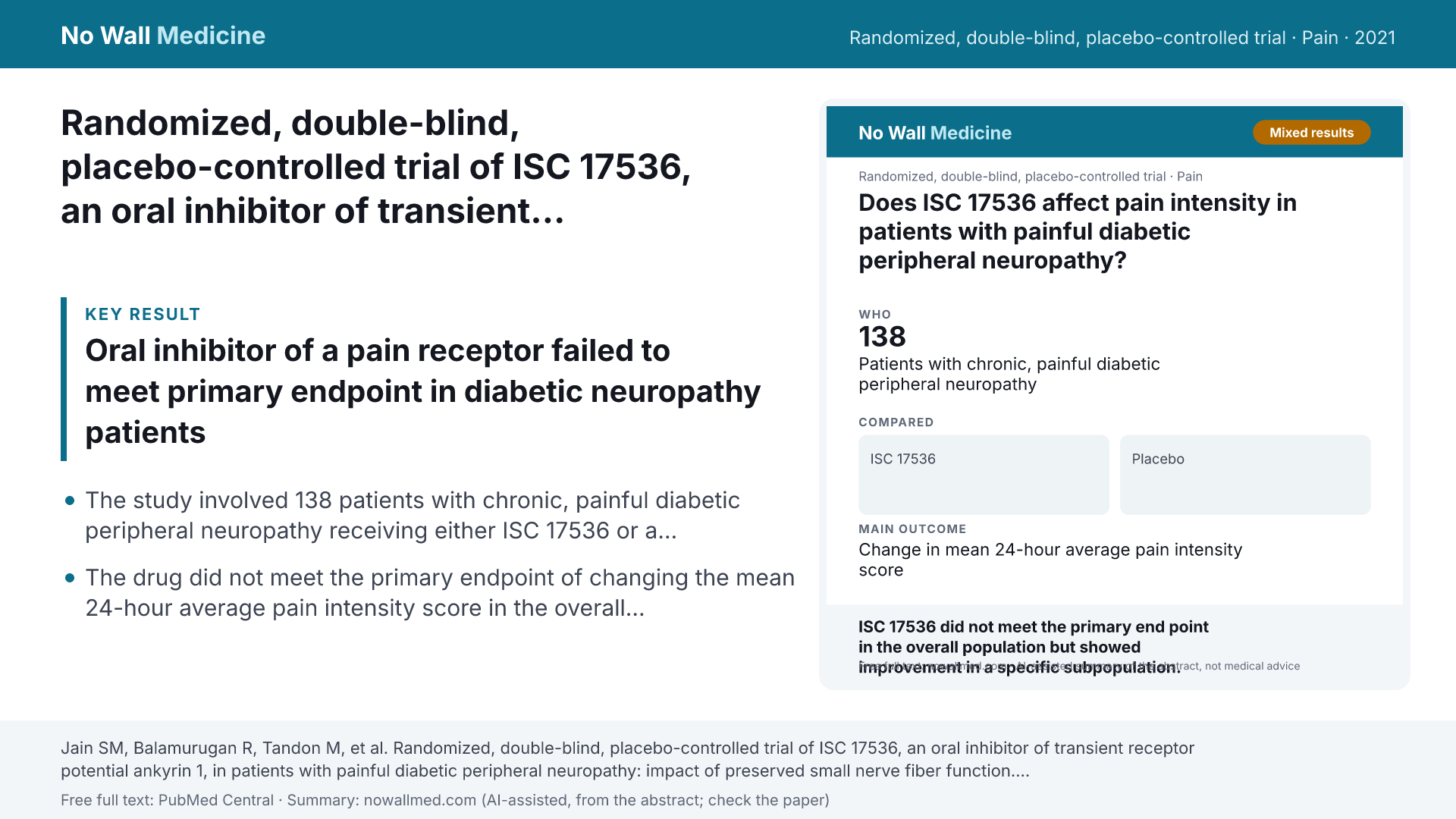
Randomized, double-blind, placebo-controlled trial of ISC 17536, an oral inhibitor of transient receptor potential ankyrin 1, in patients with painful diabetic peripheral neuropathy: impact of preserved small nerve fiber function
Key result: Oral inhibitor of a pain receptor failed to meet primary endpoint in diabetic neuropathy patients
Key points
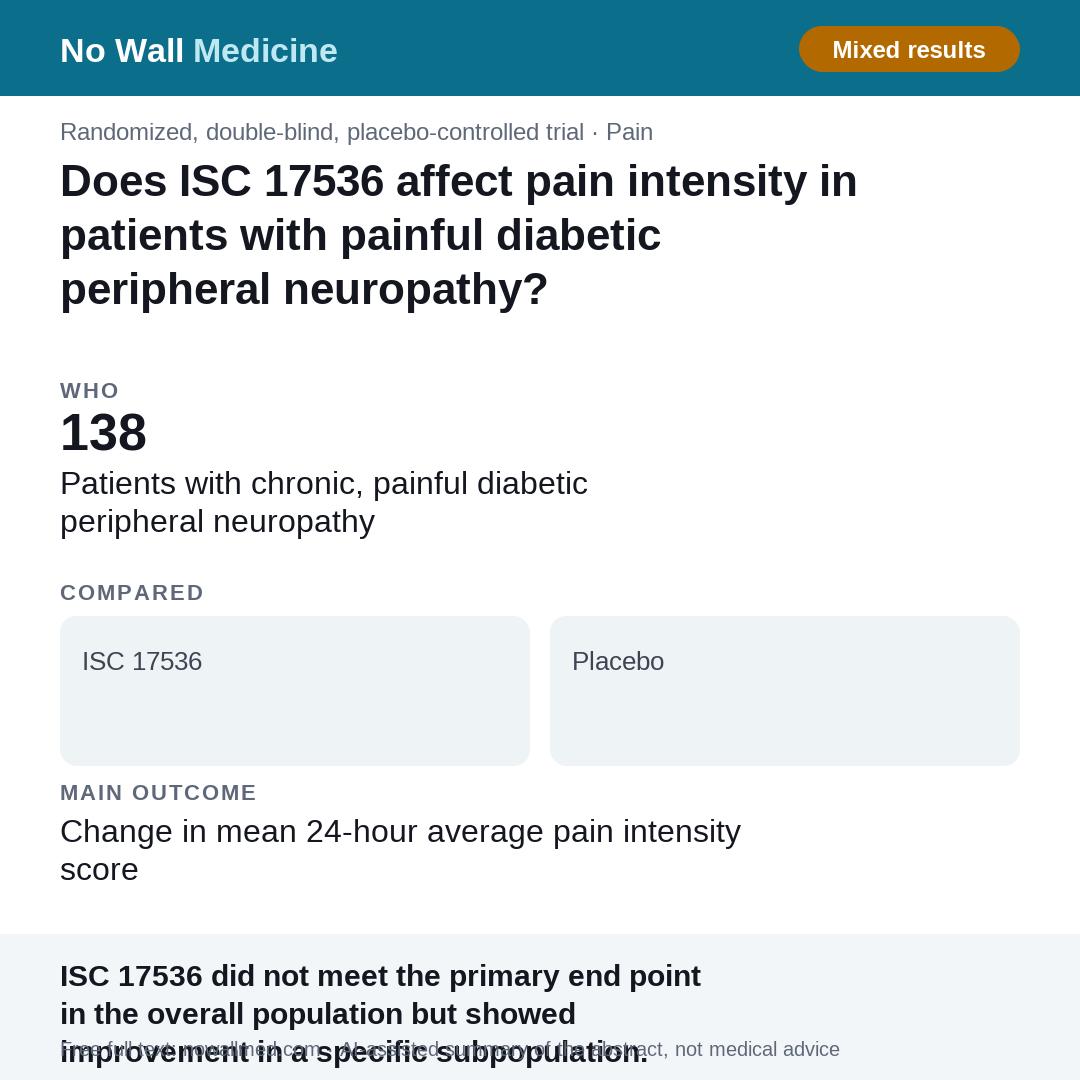
- The study involved 138 patients with chronic, painful diabetic peripheral neuropathy receiving either ISC 17536 or a placebo for 28 days.
- The drug did not meet the primary endpoint of changing the mean 24-hour average pain intensity score in the overall patient population.
- An exploratory subpopulation with preserved small nerve fiber function, defined by quantitative sensory testing, showed statistically significant and clinically meaningful improvement in pain.
Why it matters: Patients with chronic pain syndromes like diabetic peripheral neuropathy have limited treatment options and require safer and more effective therapies.
Discussion prompts
- Would these patients look like yours? Who was left out?
- Is the main outcome one that matters to patients?
- Is the difference large enough to change what you do?
Cite: Jain SM, Balamurugan R, Tandon M, et al. Randomized, double-blind, placebo-controlled trial of ISC 17536, an oral inhibitor of transient receptor potential ankyrin 1, in patients with painful diabetic peripheral neuropathy: impact of preserved small nerve fiber function. Pain. 2021. doi:10.1097/j.pain.0000000000002470
Free full text: PubMed Central · Summary and visual abstract: nowallmed.com/a/randomized-double-blind-placebo-controlled-trial-of-isc-17536-an-oral-56on6r/ (AI-assisted from the abstract; check the paper before relying on it).