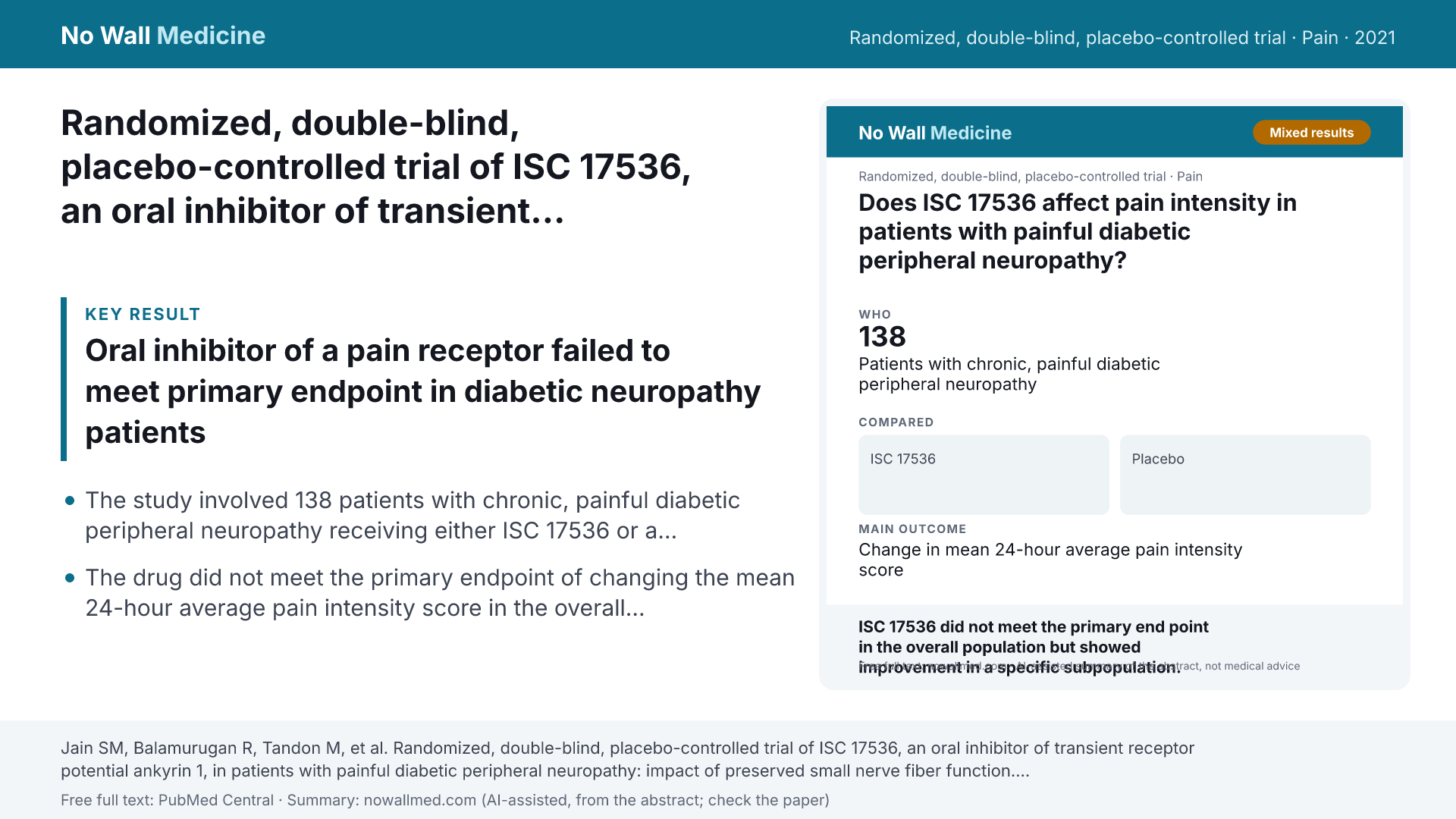
Oral inhibitor of a pain receptor failed to meet primary endpoint in diabetic neuropathy patients
Randomized, double-blind, placebo-controlled trial of ISC 17536, an oral inhibitor of transient receptor potential ankyrin 1, in patients with painful diabetic peripheral neuropathy: impact of preserved small nerve fiber function
Randomized, double-blind, placebo-controlled trialMixed results
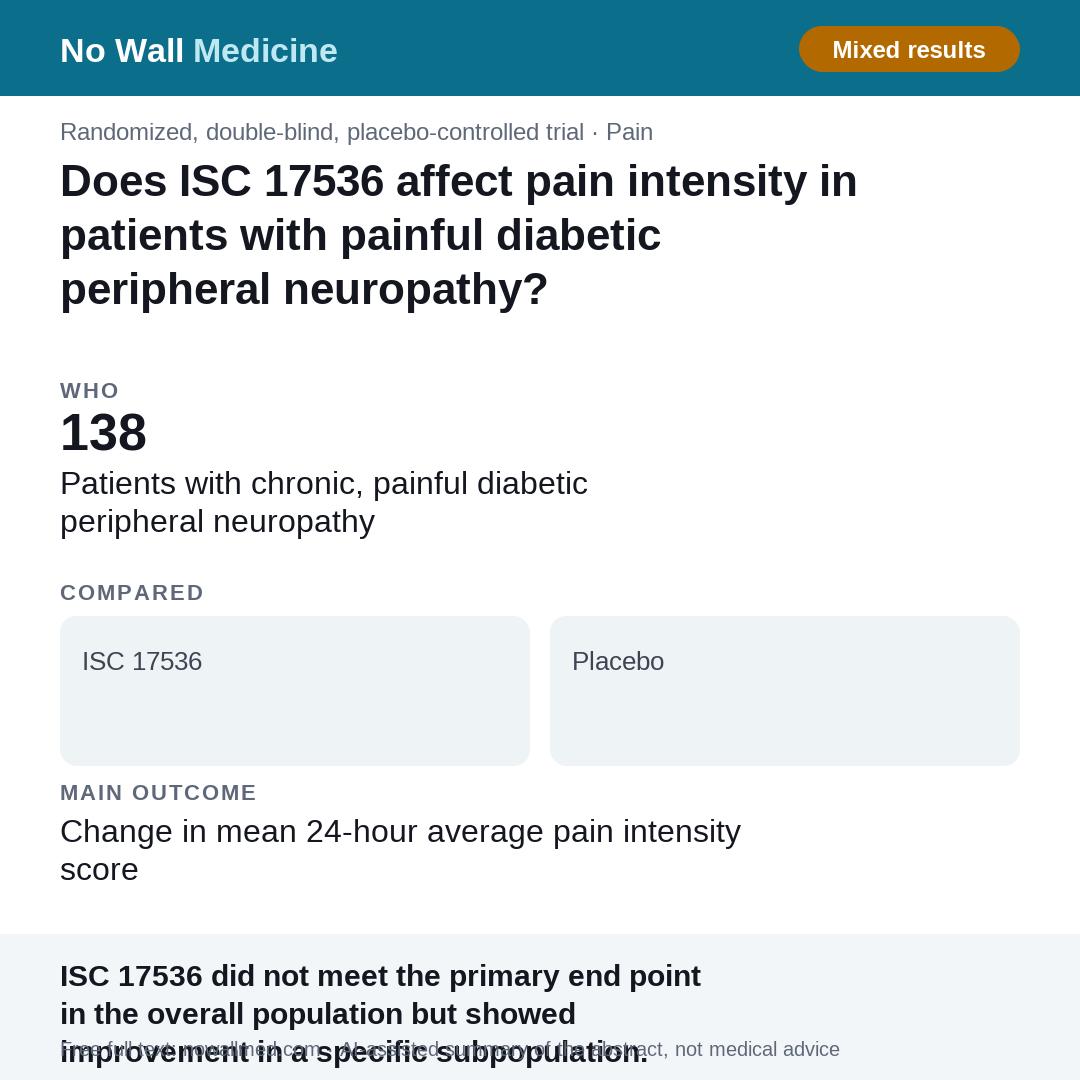
Does ISC 17536 affect pain intensity in patients with painful diabetic peripheral neuropathy?
Who
138
Patients with chronic, painful diabetic peripheral neuropathy
Compared
ISC 17536
Placebo
Main outcome
Change in mean 24-hour average pain intensity score
Bottom line: ISC 17536 did not meet the primary end point in the overall population but showed improvement in a specific subpopulation.
Limitation: The study was a proof-of-concept trial with an exploratory hypothesis-generating subpopulation.
Pain · 2021-09-02Download image
Clinical question: Does ISC 17536 affect pain intensity in patients with painful diabetic peripheral neuropathy?
Why it matters: Patients with chronic pain syndromes like diabetic peripheral neuropathy have limited treatment options and require safer and more effective therapies.
Key points
- The study involved 138 patients with chronic, painful diabetic peripheral neuropathy receiving either ISC 17536 or a placebo for 28 days.
- The drug did not meet the primary endpoint of changing the mean 24-hour average pain intensity score in the overall patient population.
- An exploratory subpopulation with preserved small nerve fiber function, defined by quantitative sensory testing, showed statistically significant and clinically meaningful improvement in pain.
Headline and key points written with AI from the paper’s abstract, with every number checked against it. Read the paper before relying on them.
Was this summary helpful?
Subject terms
Cite this article
Jain SM, Balamurugan R, Tandon M, Mozaffarian N, Gudi G, Salhi Y. Randomized, double-blind, placebo-controlled trial of ISC 17536, an oral inhibitor of transient receptor potential ankyrin 1, in patients with painful diabetic peripheral neuropathy: impact of preserved small nerve fiber function. Pain. 2021. doi:10.1097/j.pain.0000000000002470
Spotted a mistake? Suggest a correction