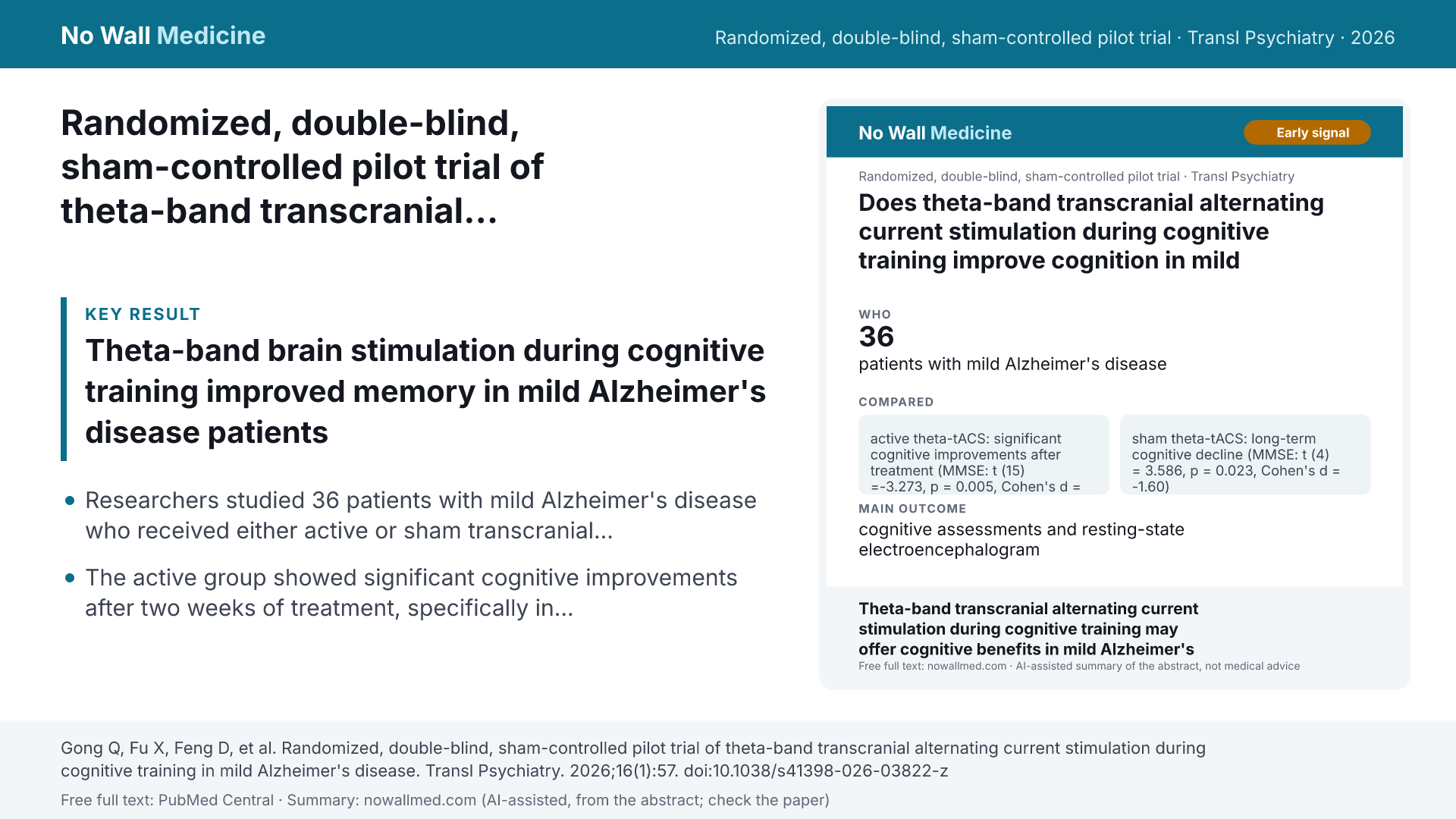
Theta-band brain stimulation during cognitive training improved memory in mild Alzheimer's disease patients
Randomized, double-blind, sham-controlled pilot trial of theta-band transcranial alternating current stimulation during cognitive training in mild Alzheimer's disease
Randomized, double-blind, sham-controlled pilot trialEarly signal
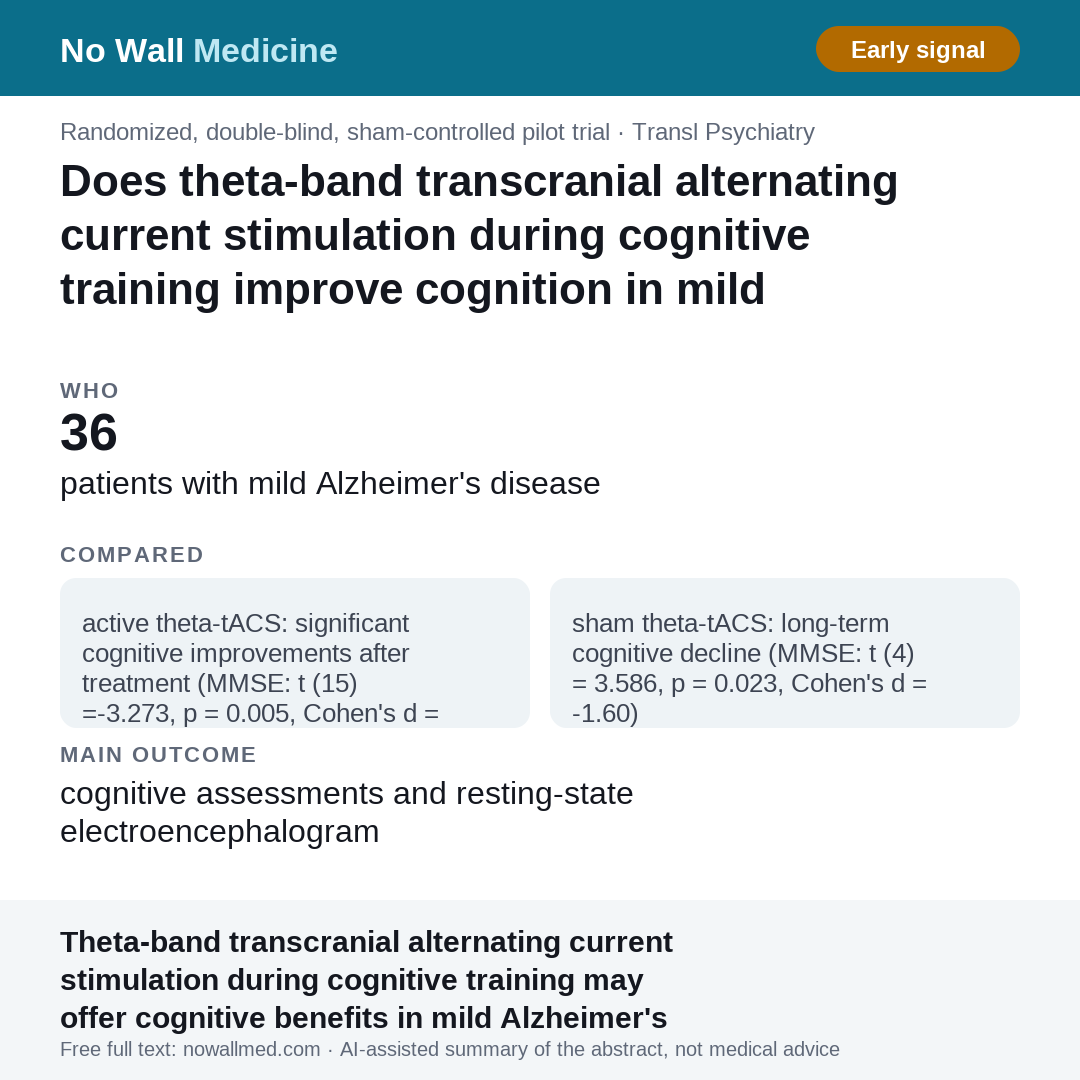
Does theta-band transcranial alternating current stimulation during cognitive training improve cognition in mild Alzheimer's disease?
Who
36
patients with mild Alzheimer's disease
Compared
active theta-tACS: significant cognitive improvements after treatment (MMSE: t (15) =-3.273, p = 0.005, Cohen's d = 0.82)
sham theta-tACS: long-term cognitive decline (MMSE: t (4) = 3.586, p = 0.023, Cohen's d = -1.60)
Main outcome
cognitive assessments and resting-state electroencephalogram
Bottom line: Theta-band transcranial alternating current stimulation during cognitive training may offer cognitive benefits in mild Alzheimer's disease.
Transl Psychiatry · 2026-01-31Download image
Clinical question: Does theta-band transcranial alternating current stimulation during cognitive training improve cognition in mild Alzheimer's disease?
Why it matters: Effective treatments for the cognitive deficits that characterize Alzheimer's disease remain elusive.
Key points
- Researchers studied 36 patients with mild Alzheimer's disease who received either active or sham transcranial alternating current stimulation, a non-invasive brain stimulation technique, during memory tasks.
- The active group showed significant cognitive improvements after two weeks of treatment, specifically in short-term memory, and these benefits were maintained after a 10-week follow-up.
- The sham group, which received inactive stimulation, showed long-term cognitive decline during the same period.
Headline and key points written with AI from the paper’s abstract, with every number checked against it. Read the paper before relying on them.
Was this summary helpful?
Subject terms
Headline, design, result, key points, caveat and citation as plain text.
Cite this article
Gong Q, Fu X, Feng D, et al. Randomized, double-blind, sham-controlled pilot trial of theta-band transcranial alternating current stimulation during cognitive training in mild Alzheimer's disease. Transl Psychiatry. 2026. doi:10.1038/s41398-026-03822-z
Spotted a mistake? Suggest a correction