Adding low-dose cyclophosphamide to anti-thymocyte globulin did not reduce graft-versus-host disease in certain transplants
Randomized trial of anti-thymocyte globulin plus lowdose post-transplant cyclophosphamide to prevent graft-versus- host disease in haploidentical transplantation
HematologyAdult and pediatric
Open-label, phase III, randomized controlled trialNo clear difference
Does adding low-dose post-transplant cyclophosphamide to anti-thymocyte globulin prevent graft-versus-host disease?
Who
66
Non-maternal, non-collateral haploidentical transplant recipients
Compared
ATG plus low-dose PTCy: 18.2% (95% CI: 6.6-29.7) grade 2-4 acute GVHD
ATG: 18.2% (95% CI: 1.7-34.7) grade 2-4 acute GVHD
Main outcome
100-day cumulative incidences of grade 2-4 acute graft-versus-host disease
Bottom line: Adding low-dose post-transplant cyclophosphamide to anti-thymocyte globulin showed no advantage for preventing graft-versus-host disease in this population.
Haematologica · 2025-06-19Download image
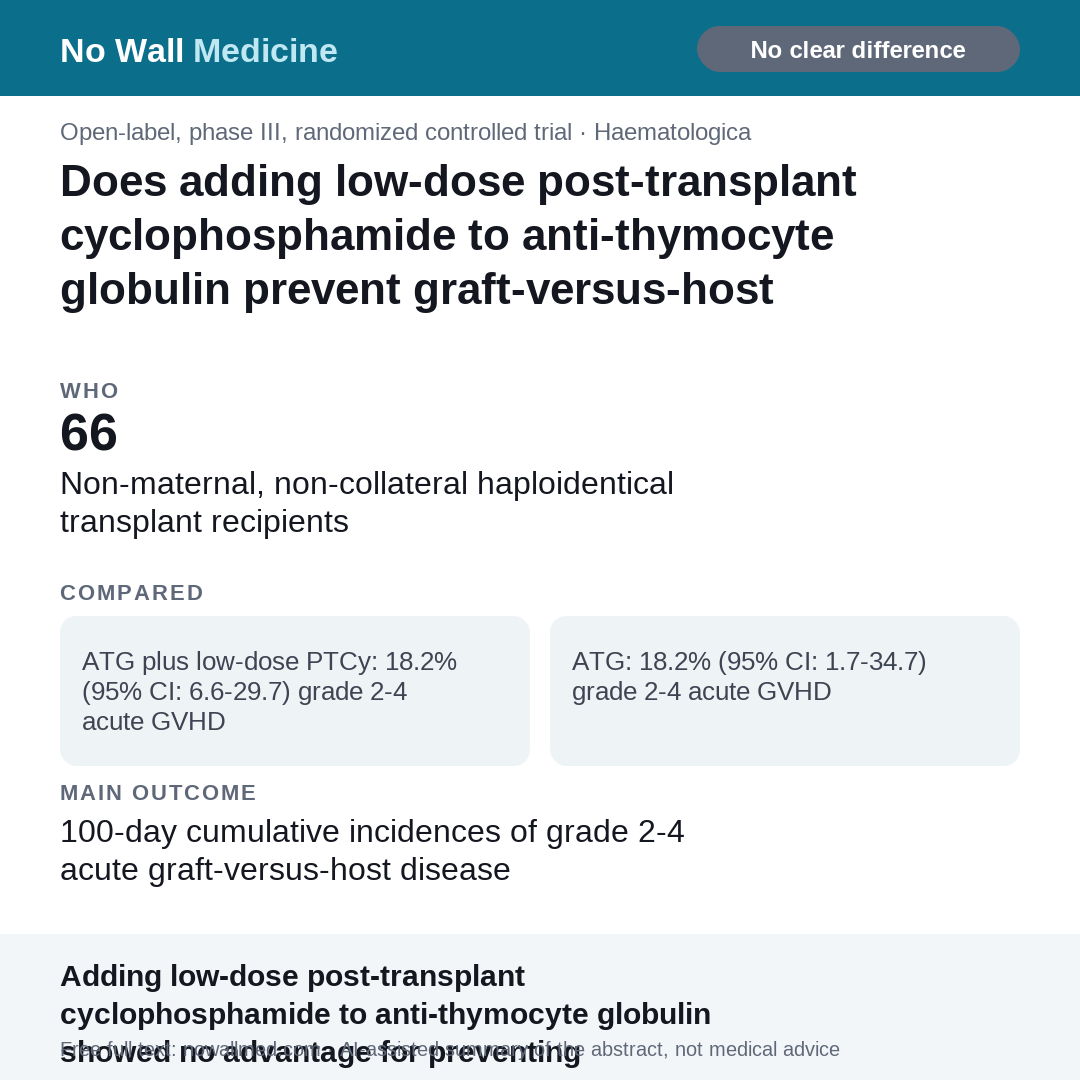
Clinical question: Does adding low-dose post-transplant cyclophosphamide to anti-thymocyte globulin prevent graft-versus-host disease?
Why it matters: Most evidence for combining anti-thymocyte globulin and post-transplant cyclophosphamide comes from retrospective studies without uniform protocols.
Key points
- Researchers studied 66 patients receiving haploidentical transplants from fathers, children, or siblings, comparing anti-thymocyte globulin alone to a combination with low-dose post-transplant cyclophosphamide.
- The 100-day cumulative incidence of grade 2-4 graft-versus-host disease was 18.2% in both groups (P=0.996), and 1-year disease-free survival was 95.5% versus 95.2% (P=0.979).
- The study found no difference in the rates of grade 3-4 acute graft-versus-host disease or chronic graft-versus-host disease at 1 year between the two groups.
Headline and key points written with AI from the paper’s abstract, with every number checked against it. Read the paper before relying on them.
Topics
Cite this article
Xu ZL, Han TT, Zhu XL, Liu J, Lv M, Sun YQ. Randomized trial of anti-thymocyte globulin plus lowdose post-transplant cyclophosphamide to prevent graft-versus- host disease in haploidentical transplantation. Haematologica. 2025. doi:10.3324/haematol.2025.287504
Spotted a mistake? Suggest a correction
Top studies every Monday
The week’s key trials and guidelines in your specialties, plus any topics you follow. By email, free.
Get the weekly digest