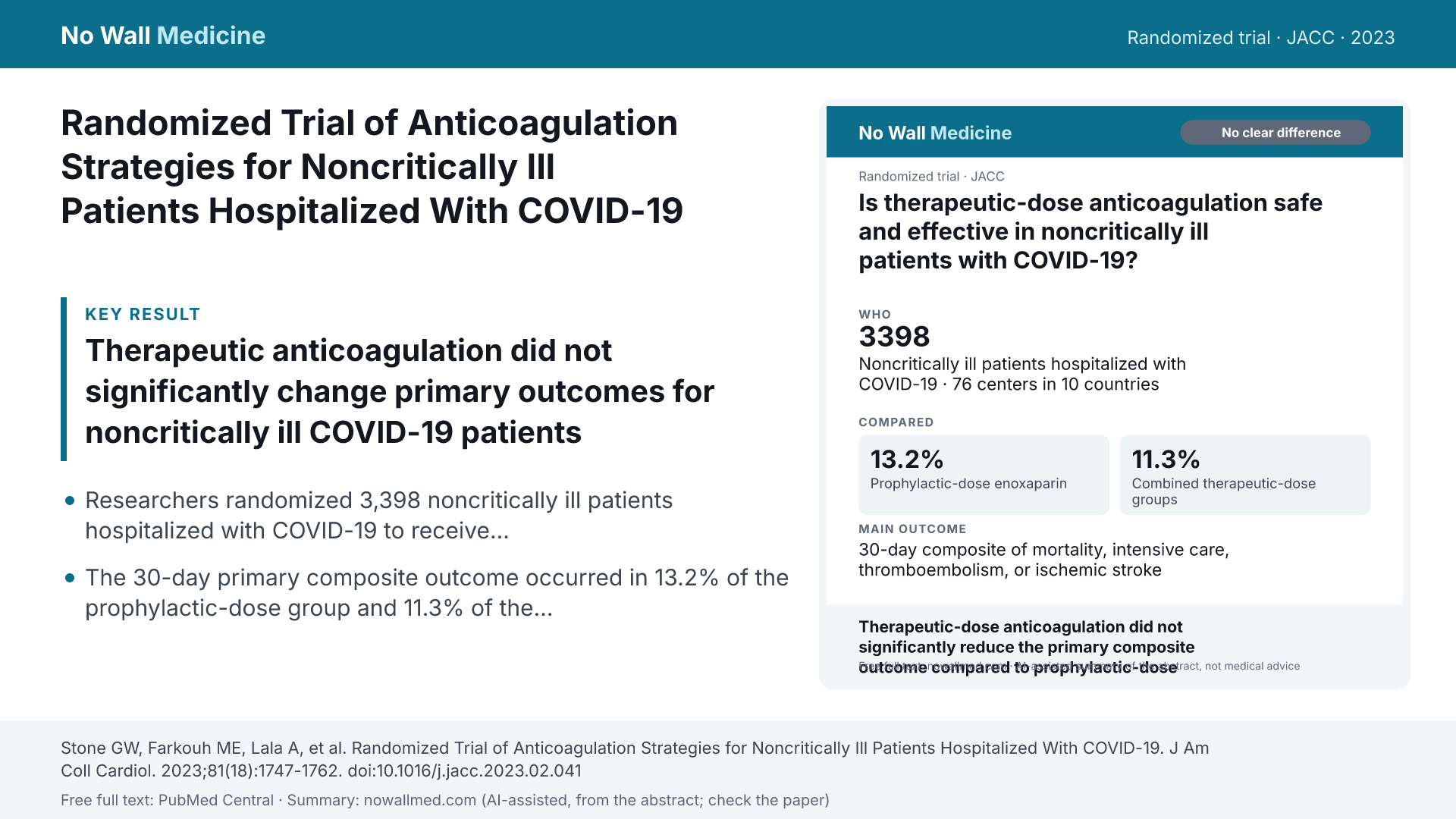
Therapeutic anticoagulation did not significantly change primary outcomes for noncritically ill COVID-19 patients
Randomized Trial of Anticoagulation Strategies for Noncritically Ill Patients Hospitalized With COVID-19
Randomized trialNo clear difference
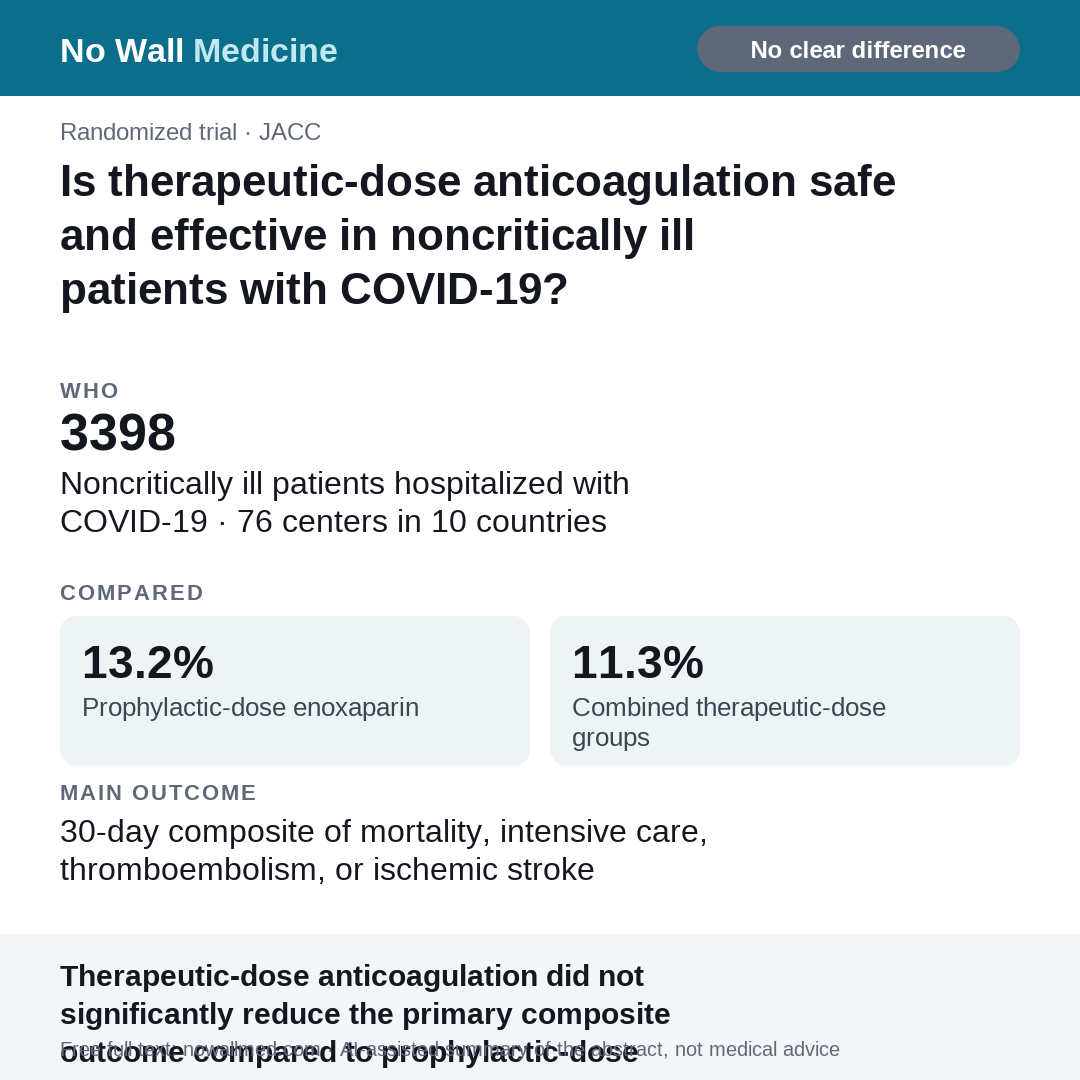
Is therapeutic-dose anticoagulation safe and effective in noncritically ill patients with COVID-19?
Who
3398
Noncritically ill patients hospitalized with COVID-19 · 76 centers in 10 countries
Compared
13.2%Prophylactic-dose enoxaparin
11.3%Combined therapeutic-dose groups
Main outcome
30-day composite of mortality, intensive care, thromboembolism, or ischemic stroke
Result: hazard ratio 0.85 (95% CI 0.69-1.04)
Bottom line: Therapeutic-dose anticoagulation did not significantly reduce the primary composite outcome compared to prophylactic-dose anticoagulation.
JACC · 2023-03-06Download image
Clinical question: Is therapeutic-dose anticoagulation safe and effective in noncritically ill patients with COVID-19?
Why it matters: Prior studies of therapeutic-dose anticoagulation, which is blood-thinning medication at higher doses, in patients with COVID-19 have reported conflicting results.
Key points
- Researchers randomized 3,398 noncritically ill patients hospitalized with COVID-19 to receive prophylactic-dose enoxaparin, therapeutic-dose enoxaparin, or therapeutic-dose apixaban.
- The 30-day primary composite outcome occurred in 13.2% of the prophylactic-dose group and 11.3% of the combined therapeutic-dose groups, which was not a statistically significant difference.
- All-cause mortality occurred in 7.0% of the prophylactic-dose group and 4.9% of the therapeutic-dose group, while intubation was required in 8.4% versus 6.4% respectively.
Headline and key points written with AI from the paper’s abstract, with every number checked against it. Read the paper before relying on them.
Was this summary helpful?
Subject terms
Headline, design, result, key points, caveat and citation as plain text.
Cite this article
Stone GW, Farkouh ME, Lala A, et al. Randomized Trial of Anticoagulation Strategies for Noncritically Ill Patients Hospitalized With COVID-19. JACC. 2023. doi:10.1016/j.jacc.2023.02.041
Spotted a mistake? Suggest a correction