Risk-directed blood clot prevention reduces thromboembolism and mortality in lung and gastrointestinal cancer patients
Risk-Directed Ambulatory Thromboprophylaxis in Lung and Gastrointestinal Cancers: The TARGET-TP Randomized Clinical Trial
Open-label, phase 3 randomized clinical trialBenefit found
Does biomarker-driven thromboprophylaxis improve clinical benefits and safety in lung and gastrointestinal cancers?
Who
328
Adults with lung or gastrointestinal cancers commencing systemic anticancer therapies · 1 metropolitan and 4 regional hospitals in Australia
Compared
8%High-risk enoxaparin
23%High-risk control
Main outcome
Objectively confirmed thromboembolism at 180 days
Result: hazard ratio 0.31 (95% CI 0.15-0.70)
Bottom line: Risk-directed thromboprophylaxis using biomarkers reduced thromboembolism and mortality without increasing major bleeding in high-risk patients.
JAMA Oncol · 2023-09-21Download image
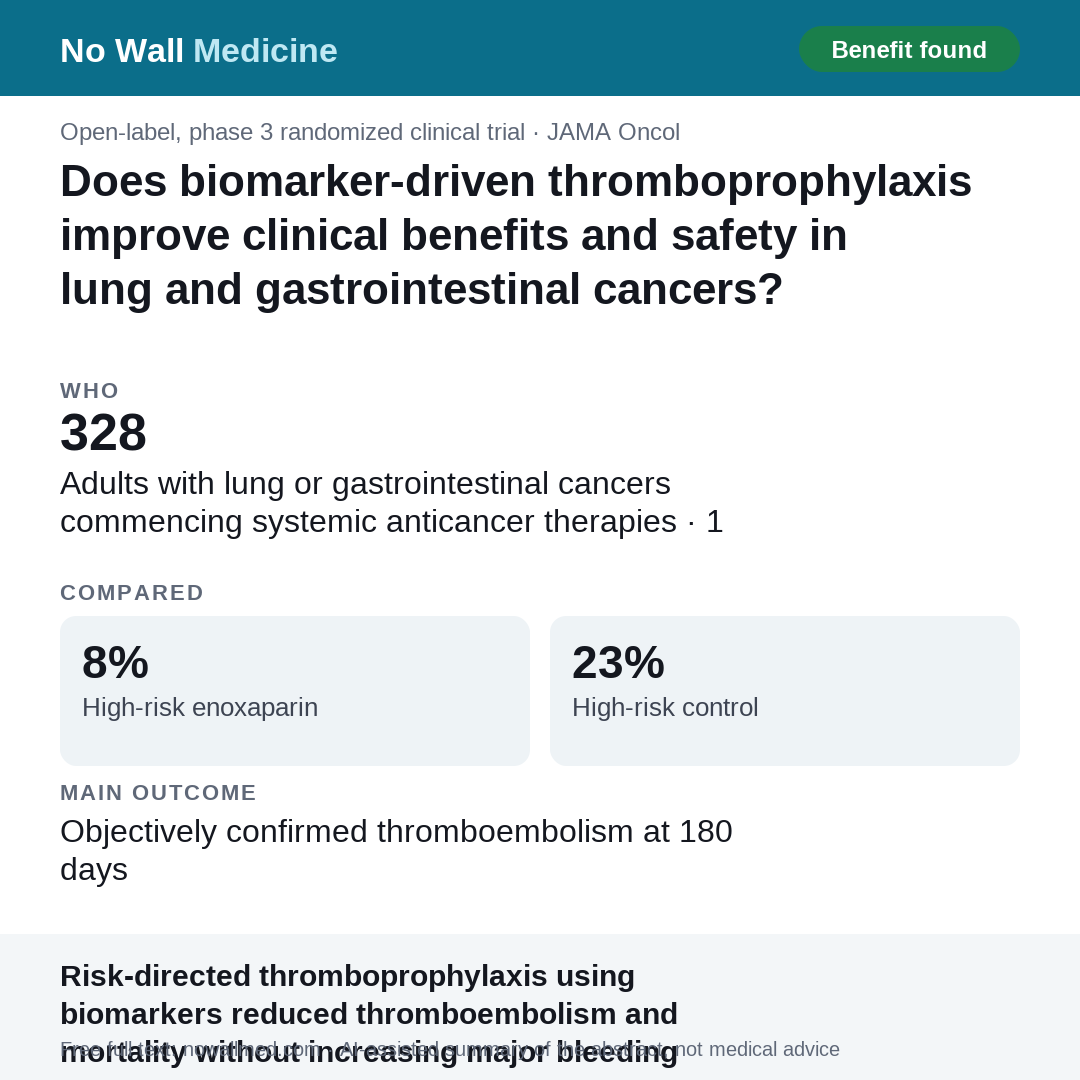
Clinical question: Does biomarker-driven thromboprophylaxis improve clinical benefits and safety in lung and gastrointestinal cancers?
Why it matters: Existing risk models for preventing blood clots underperform in patients with lung and gastrointestinal cancers.
Key points
- In this trial of 328 adults with lung or gastrointestinal cancers, high-risk patients were randomized to receive either enoxaparin, a blood thinner, or no prevention.
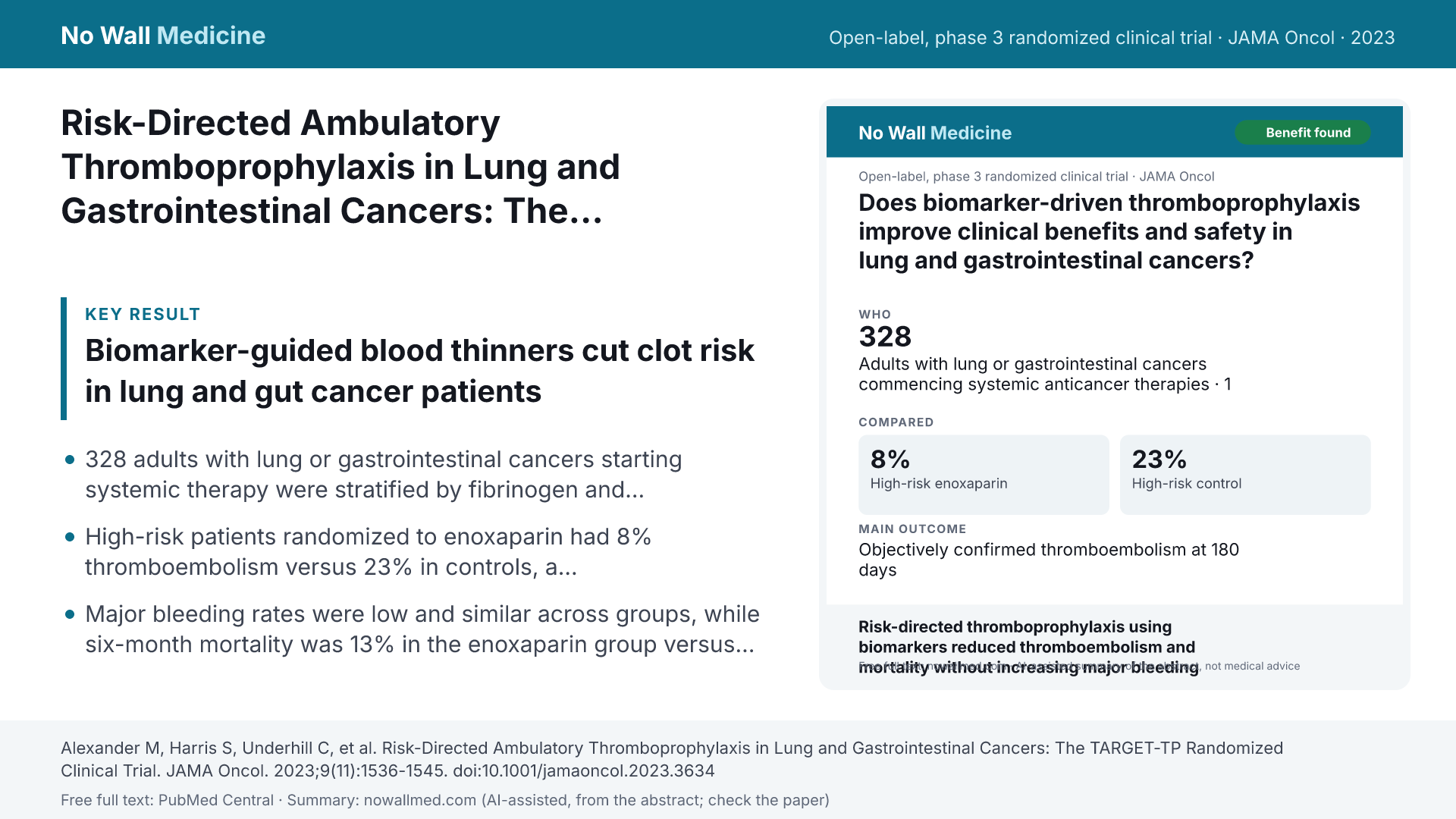
- Thromboembolism occurred in 8% of the enoxaparin group compared to 23% of the high-risk control group, and six-month mortality was 13% versus 26%.
- Major bleeding rates were low, occurring in 1% of the enoxaparin group, 2% of the high-risk control group, and 2% of the low-risk group.
Headline and key points written with AI from the paper’s abstract, with every number checked against it. Read the paper before relying on them.
Was this summary helpful?
Subject terms
Cite this article
Alexander M, Harris S, Underhill C, Torres J, Sharma S, Lee N. Risk-Directed Ambulatory Thromboprophylaxis in Lung and Gastrointestinal Cancers: The TARGET-TP Randomized Clinical Trial. JAMA Oncol. 2023. doi:10.1001/jamaoncol.2023.3634
Spotted a mistake? Suggest a correction
Top studies every Monday
The week’s key trials and guidelines in your specialties, plus any topics you follow. By email, free.
Get the weekly digest