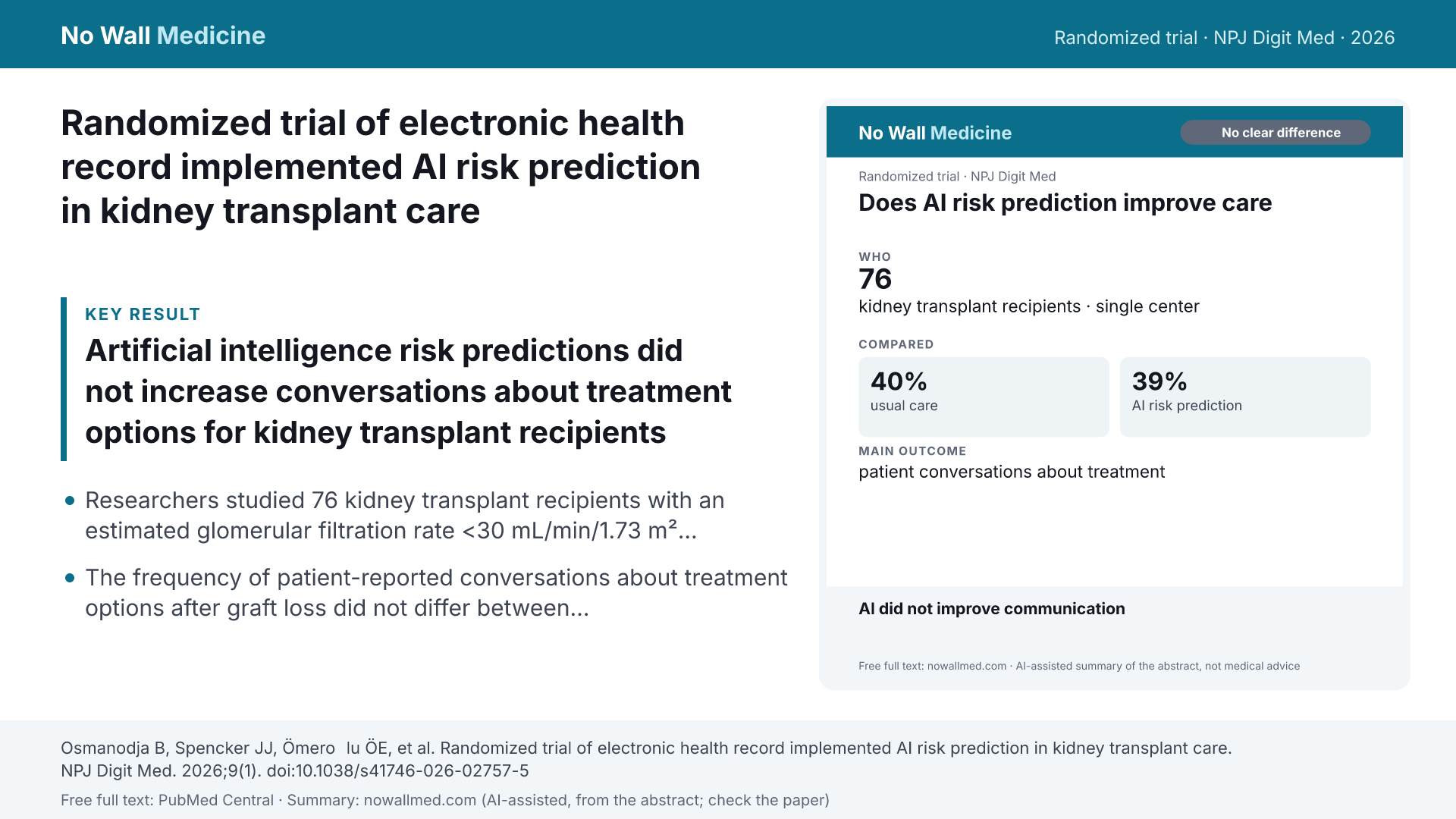
Artificial intelligence risk predictions did not increase conversations about treatment options for kidney transplant recipients
Randomized trial of electronic health record implemented AI risk prediction in kidney transplant care
Randomized trialNo clear difference
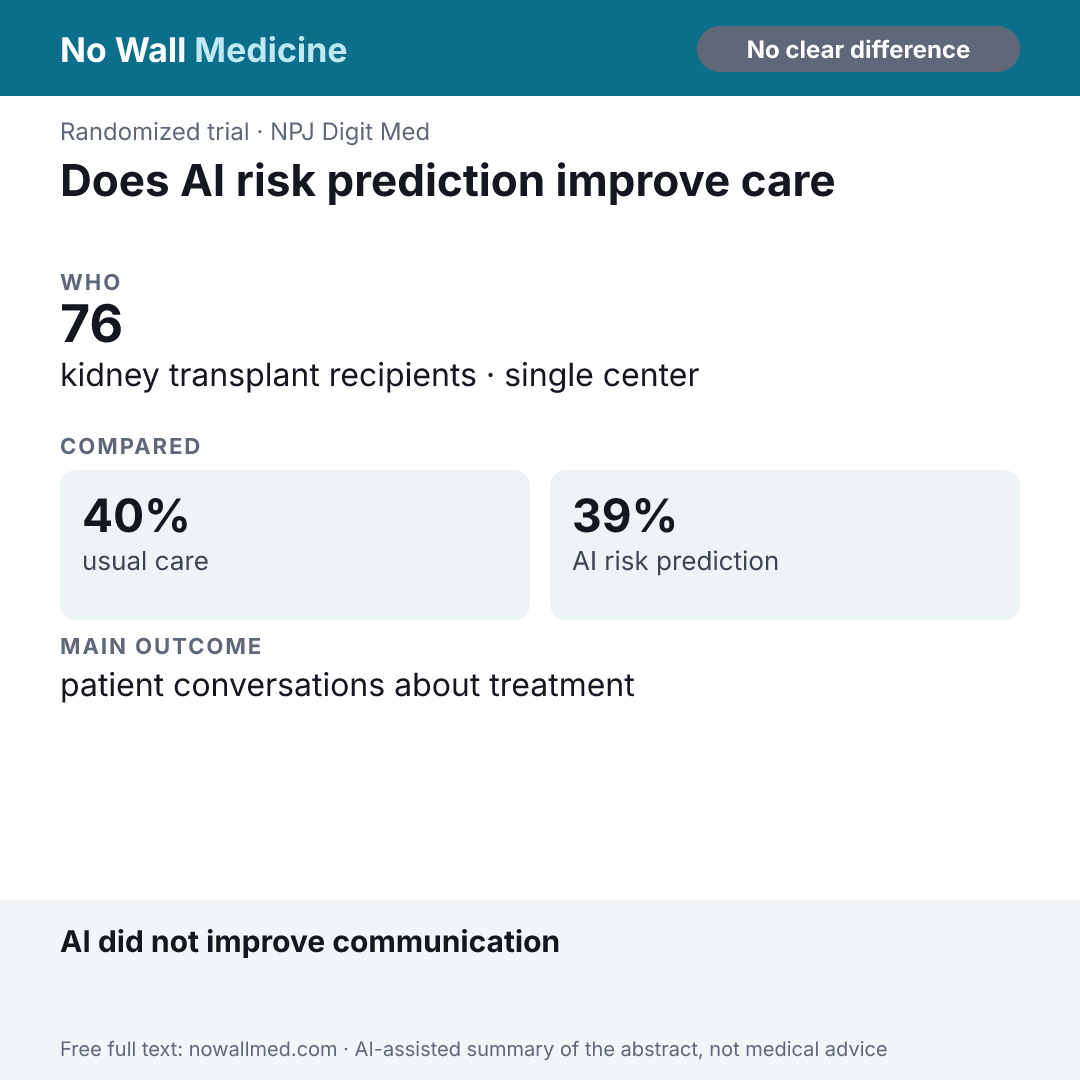
Does AI risk prediction improve care
Who
76
kidney transplant recipients · single center
Compared
40%usual care (16/40)
39%AI risk prediction (14/36)
Main outcome
patient conversations about treatment
Bottom line: AI did not improve communication
Limitation: low tool uptake and workflow barriers
NPJ Digit Med · 2026-05-14 · Save PNG
Key points
- Researchers studied 76 kidney transplant recipients with an estimated glomerular filtration rate <30 mL/min/1.73 m² who were randomized to usual care or usual care plus an electronic health record-integrated machine-learning model.
- The frequency of patient-reported conversations about treatment options after graft loss did not differ between the intervention group (39%) and the control group (40%).
- No significant differences were observed between groups for secondary clinical, shared decision-making, relationship, or distress outcomes.
Limitation the authors note: The study was a single-center trial and user feedback suggested low and variable tool uptake due to workflow barriers.
Headline and key points written with AI from the paper’s abstract, with every number checked against it. Read the paper before relying on them.
Was this summary helpful?
Headline, design, result, key points, caveat and citation as plain text.
Cite this article
Osmanodja B, Spencker JJ, Ömeroğlu ÖE, et al. Randomized trial of electronic health record implemented AI risk prediction in kidney transplant care. NPJ Digit Med. 2026;9(1). doi:10.1038/s41746-026-02757-5
Spotted a mistake? Suggest a correction