Onsite hepatitis C testing and treatment increased treatment initiation among people who use drugs
Rapid hepatitis C test and treat with peer support at opioid treatment programs (RAPID HCV): a hybrid effectiveness-implementation type 1 randomized control trial
Multicenter, open label randomized controlled trialBenefit found
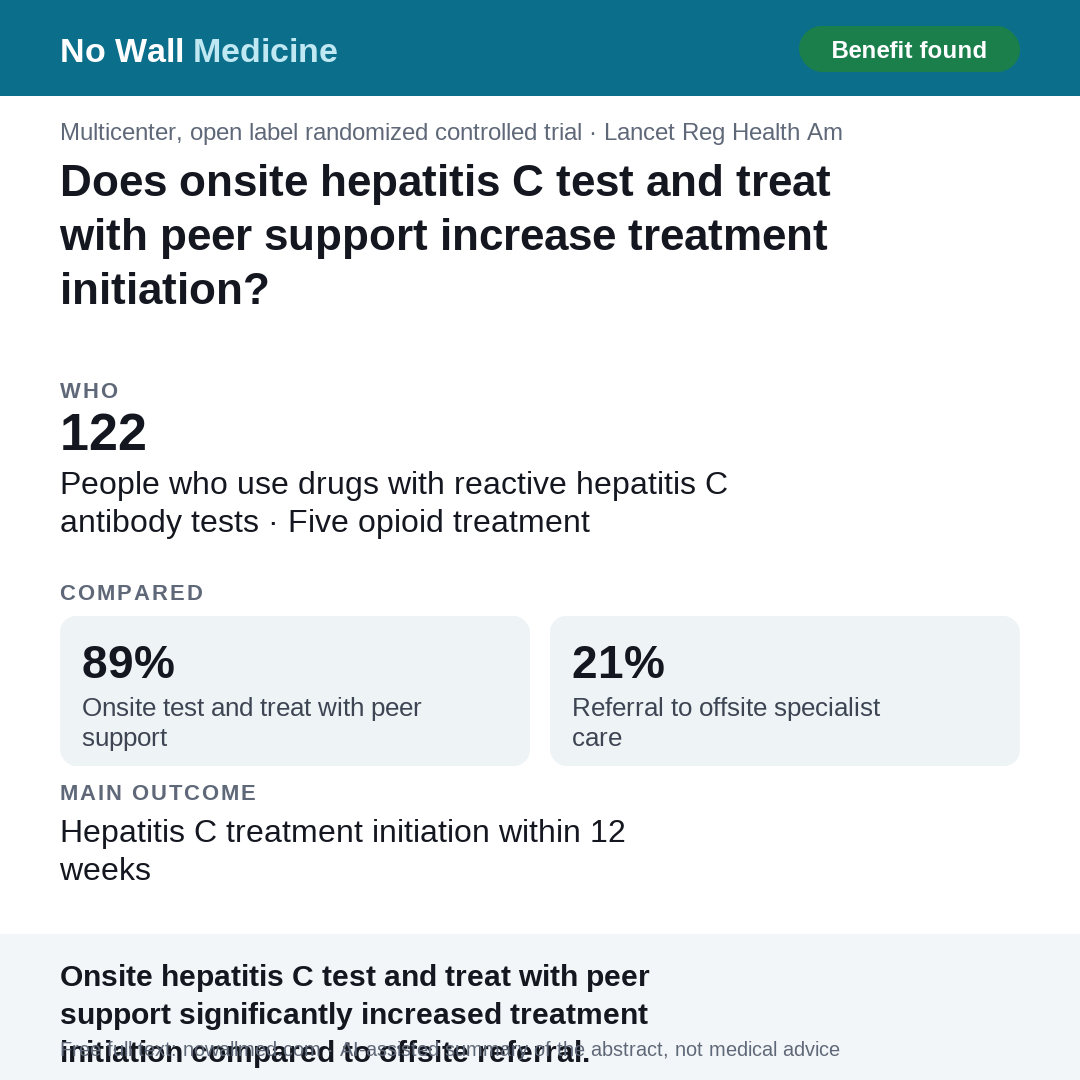
Does onsite hepatitis C test and treat with peer support increase treatment initiation?
Who
122
People who use drugs with reactive hepatitis C antibody tests · Five opioid treatment programs in United States and Canada
Compared
89%Onsite test and treat with peer support (59/66)
21%Referral to offsite specialist care (12/56)
Main outcome
Hepatitis C treatment initiation within 12 weeks
Bottom line: Onsite hepatitis C test and treat with peer support significantly increased treatment initiation compared to offsite referral.
Funded by: AbbVie
Lancet Reg Health Am · 2026-03-24Download image
Clinical question: Does onsite hepatitis C test and treat with peer support increase treatment initiation?
Why it matters: People who use drugs face persistent barriers to hepatitis C virus treatment, which threatens global elimination goals.
Key points
- Researchers studied 182 people who use drugs at five opioid treatment programs in the United States and Canada.
- The onsite test and treat model with peer support led to 89% of eligible participants starting treatment compared to 21% in the referral group.
- The study included 122 participants in the main analysis group after excluding those ineligible for treatment or administratively excluded.
Headline and key points written with AI from the paper’s abstract, with every number checked against it. Read the paper before relying on them.
Spotted a mistake? Suggest a correction