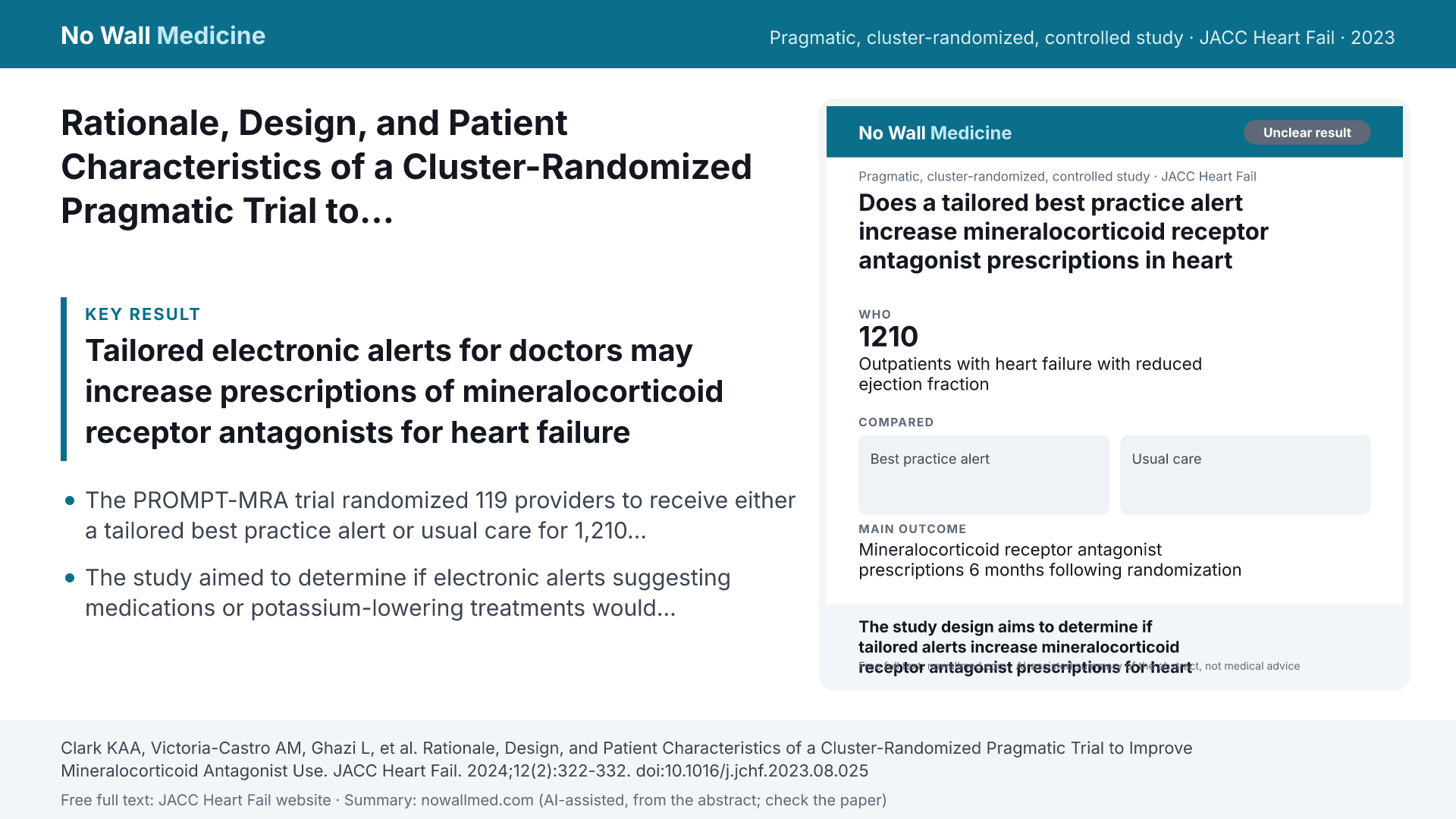
Rationale, Design, and Patient Characteristics of a Cluster-Randomized Pragmatic Trial to Improve Mineralocorticoid Antagonist Use
Key result: Tailored electronic alerts for doctors may increase prescriptions of mineralocorticoid receptor antagonists for heart failure
Key points
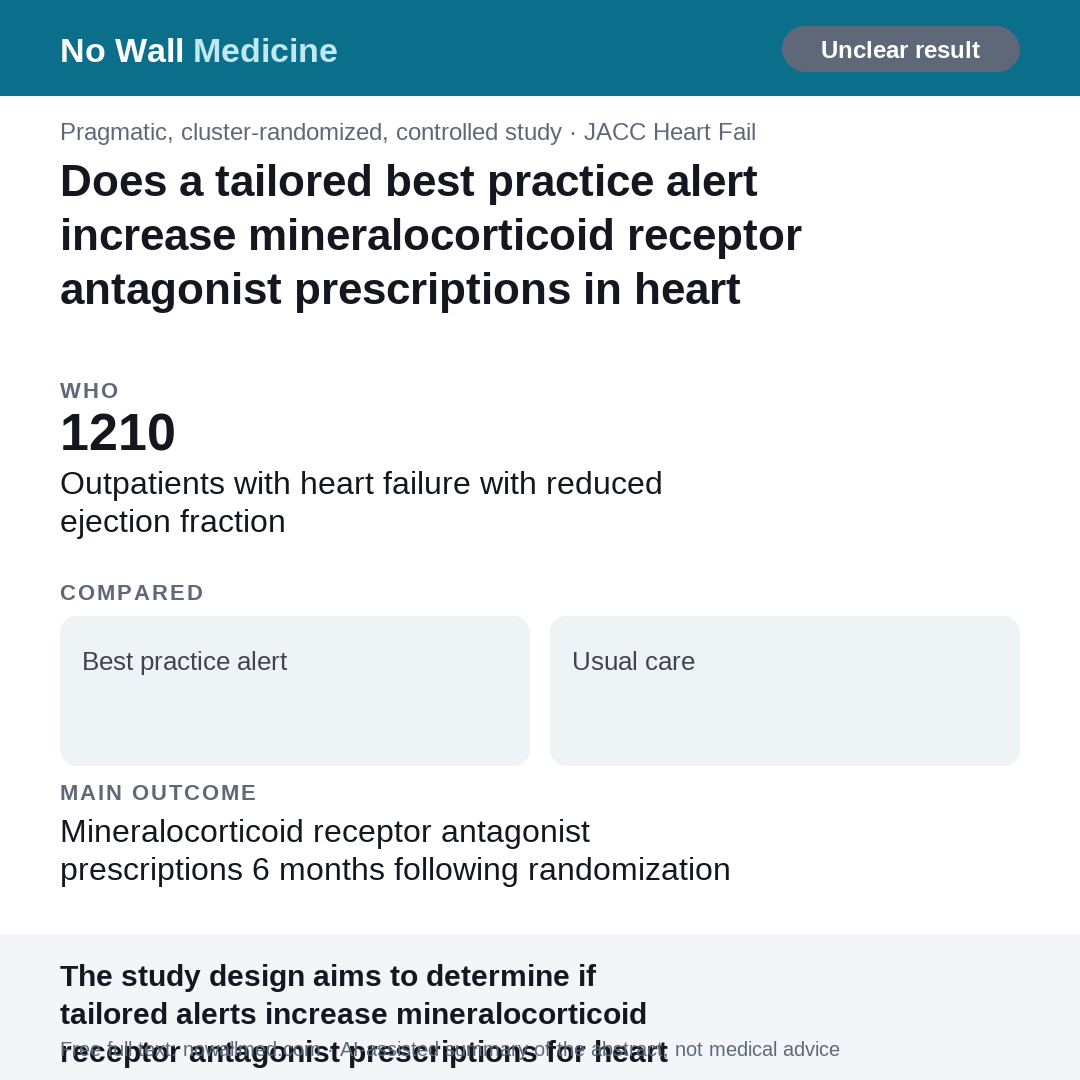
- The PROMPT-MRA trial randomized 119 providers to receive either a tailored best practice alert or usual care for 1,210 patients with heart failure with reduced ejection fraction.
- The study aimed to determine if electronic alerts suggesting medications or potassium-lowering treatments would increase prescriptions of mineralocorticoid receptor antagonists within 6 months of randomization.
- Secondary outcomes measured in the trial included the incidence of hyperkalemia, use of novel potassium binders, heart failure hospitalizations, and mortality.
Why it matters: Mineralocorticoid receptor antagonists remain underused in clinical practice despite strong guideline recommendations for patients with heart failure with reduced ejection fraction.
Discussion prompts
- Would these patients look like yours? Who was left out?
- Is the main outcome one that matters to patients?
- Is the difference large enough to change what you do?
Cite: Clark KAA, Victoria-Castro AM, Ghazi L, et al. Rationale, Design, and Patient Characteristics of a Cluster-Randomized Pragmatic Trial to Improve Mineralocorticoid Antagonist Use. JACC Heart Fail. 2023. doi:10.1016/j.jchf.2023.08.025
Free full text: JACC Heart Fail website · Summary and visual abstract: nowallmed.com/a/rationale-design-and-patient-characteristics-of-a-cluster-randomized-1qfj94/ (AI-assisted from the abstract; check the paper before relying on it).