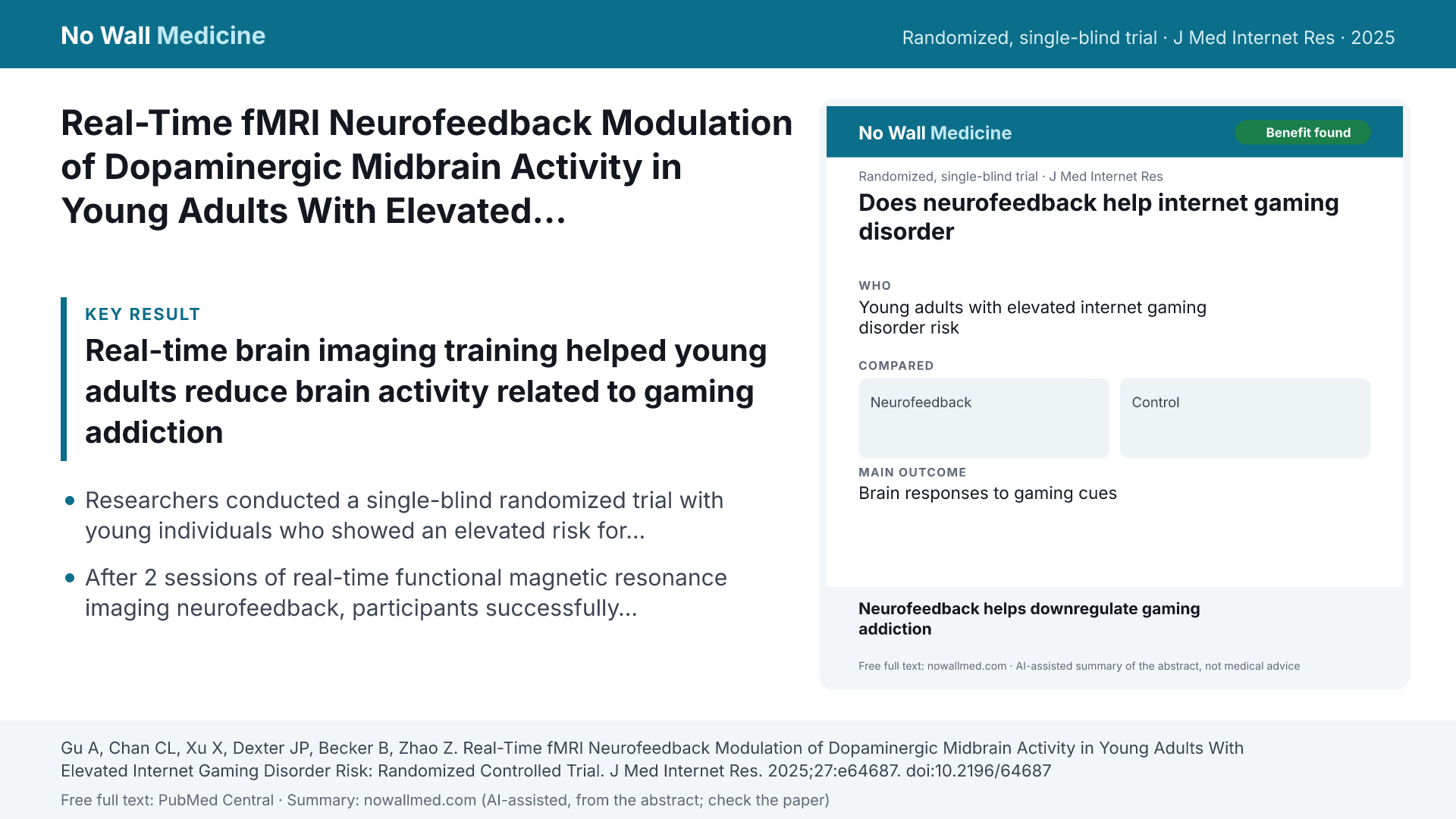
Real-time brain imaging training helped young adults reduce brain activity related to gaming addiction
Real-Time fMRI Neurofeedback Modulation of Dopaminergic Midbrain Activity in Young Adults With Elevated Internet Gaming Disorder Risk: Randomized Controlled Trial
Randomized, single-blind trialBenefit found
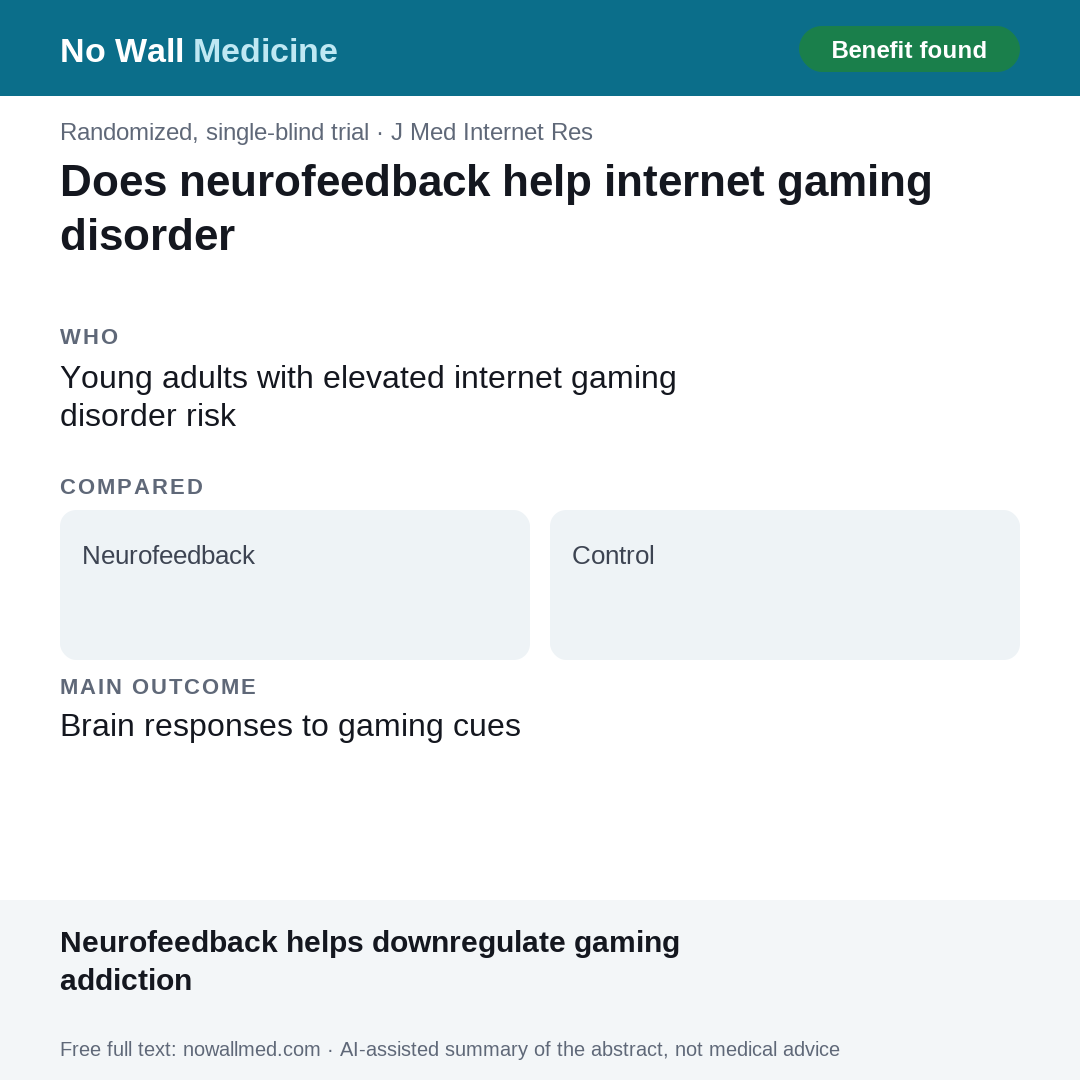
Does neurofeedback help internet gaming disorder
Who
Young adults with elevated internet gaming disorder risk
Compared
Neurofeedback
Control
Main outcome
Brain responses to gaming cues
Bottom line: Neurofeedback helps downregulate gaming addiction
J Med Internet Res · 2025-01-29Download image
Why it matters: It was unknown if real-time functional magnetic resonance imaging neurofeedback could help individuals with an elevated risk of internet gaming disorder regulate brain activity related to gaming addiction.
Key points
- Researchers conducted a single-blind randomized trial with young individuals who showed an elevated risk for internet gaming disorder.
- After 2 sessions of real-time functional magnetic resonance imaging neurofeedback, participants successfully downregulated brain responses to gaming cues.
Headline and key points written with AI from the paper’s abstract, with every number checked against it. Read the paper before relying on them.
Was this summary helpful?
Subject terms
Cite this article
Gu A, Chan CL, Xu X, Dexter JP, Becker B, Zhao Z. Real-Time fMRI Neurofeedback Modulation of Dopaminergic Midbrain Activity in Young Adults With Elevated Internet Gaming Disorder Risk: Randomized Controlled Trial. J Med Internet Res. 2025. doi:10.2196/64687
Spotted a mistake? Suggest a correction
Top studies every Monday
The week’s key trials and guidelines in your specialties, plus any topics you follow. By email, free.
Get the weekly digest