Real-Time fMRI Neurofeedback Modulation of Dopaminergic Midbrain Activity in Young Adults With Elevated Internet Gaming Disorder Risk: Randomized Controlled Trial
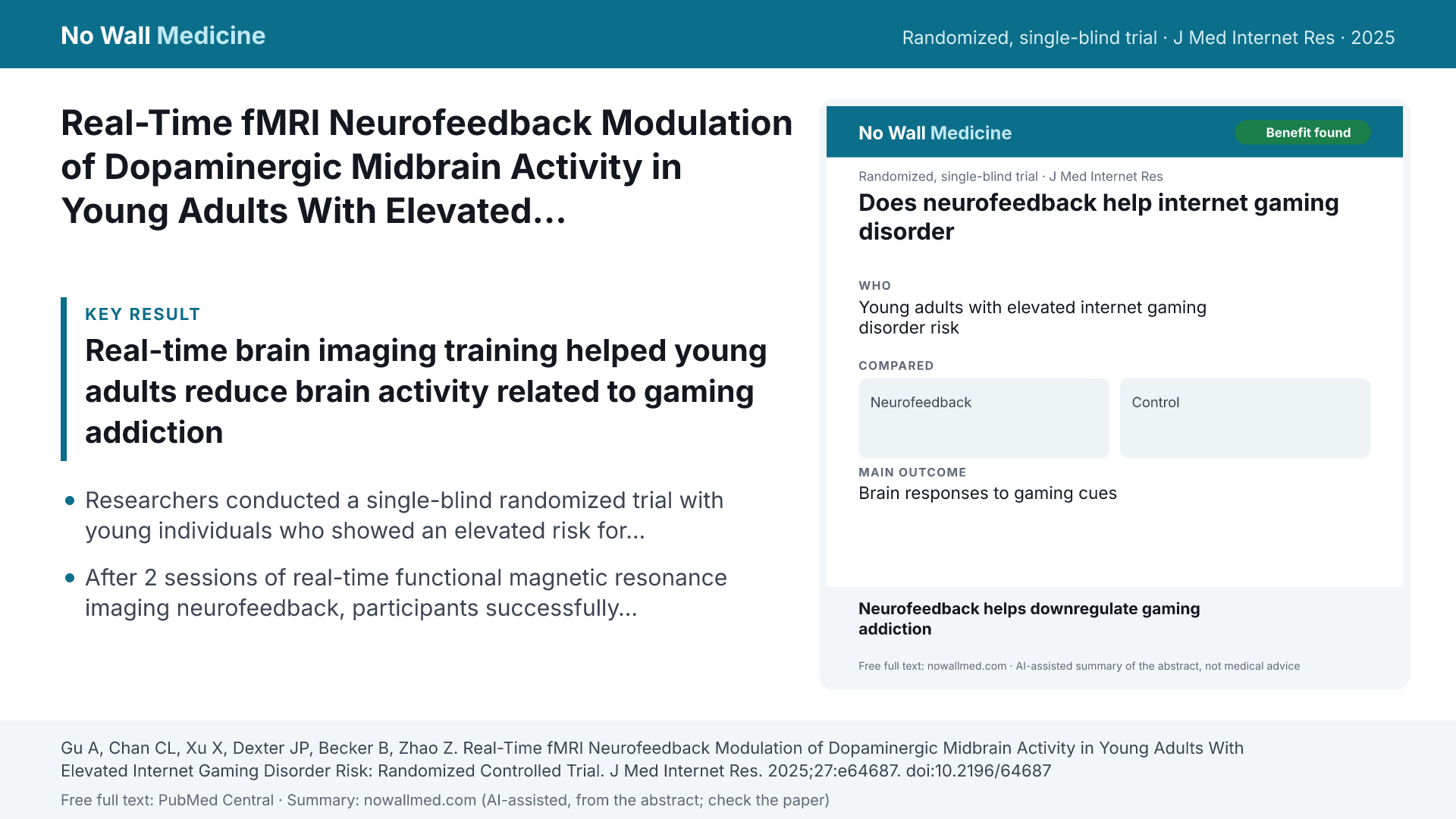
Key result: Real-time brain imaging training helped young adults reduce brain activity related to gaming addiction
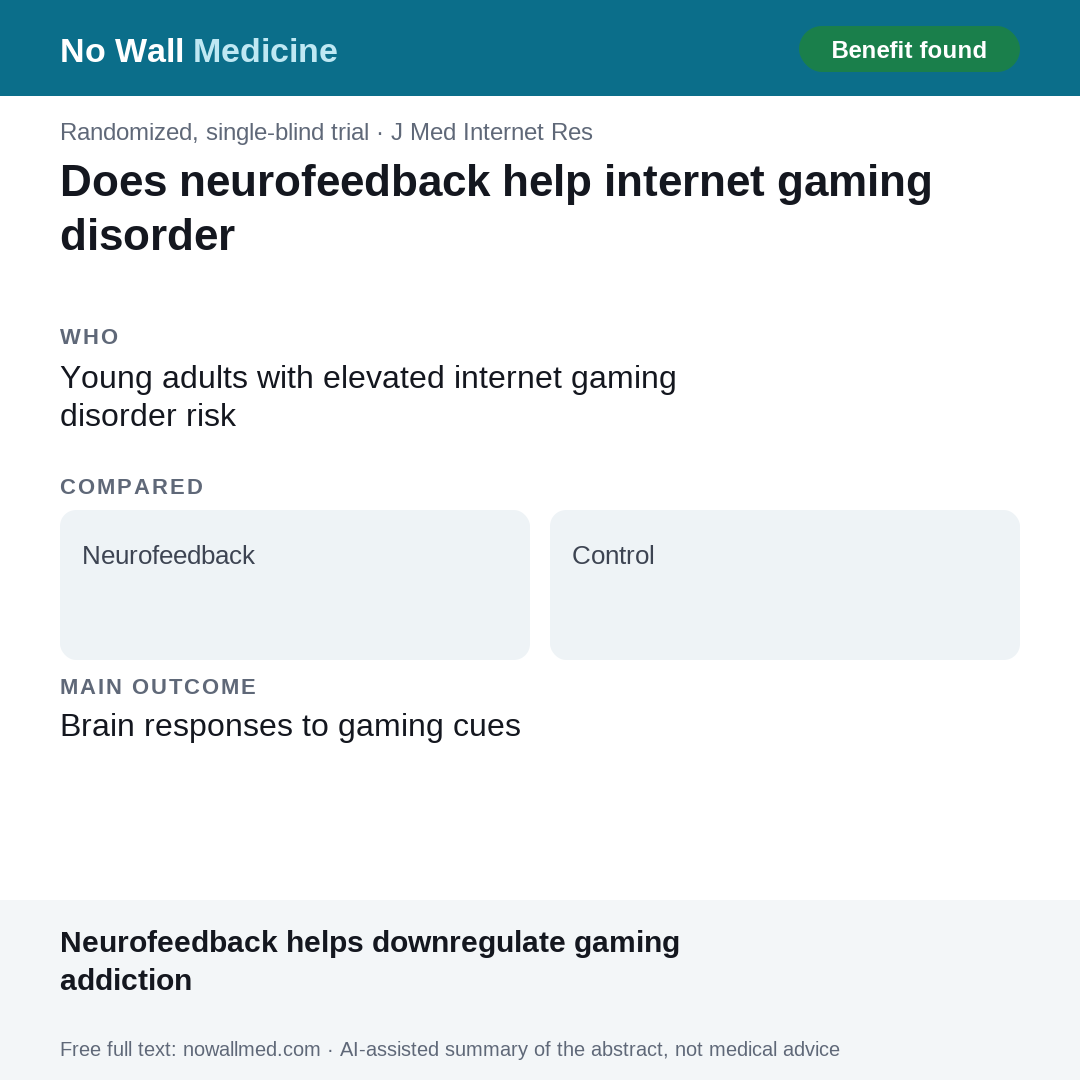
Randomized, single-blind trialBenefit found
Does neurofeedback help internet gaming disorder
Who
Young adults with elevated internet gaming disorder risk
Compared
Neurofeedback
Control
Main outcome
Brain responses to gaming cues
Bottom line: Neurofeedback helps downregulate gaming addiction
J Med Internet Res · 2025-01-29Download image
Key points
- Researchers conducted a single-blind randomized trial with young individuals who showed an elevated risk for internet gaming disorder.
- After 2 sessions of real-time functional magnetic resonance imaging neurofeedback, participants successfully downregulated brain responses to gaming cues.
Discussion prompts
- Would these patients look like yours? Who was left out?
- Is the main outcome one that matters to patients?
- Is the difference large enough to change what you do?
Cite: Gu A, Chan CL, Xu X, Dexter JP, Becker B, Zhao Z. Real-Time fMRI Neurofeedback Modulation of Dopaminergic Midbrain Activity in Young Adults With Elevated Internet Gaming Disorder Risk: Randomized Controlled Trial. J Med Internet Res. 2025. doi:10.2196/64687
Free full text: PubMed Central · Summary and visual abstract: nowallmed.com/a/real-time-fmri-neurofeedback-modulation-of-dopaminergic-midbrain-5ezboe/ (AI-assisted from the abstract; check the paper before relying on it).