Peer-led group programme reduced self-stigma in adults with mental illness over six months
Real-World Effectiveness of the Peer-Led Honest, Open, Proud Programme for Self-Stigma Among Adults With Mental Illness: A Pragmatic, Multicentre, Randomised Controlled Trial
Open-label, pragmatic, multicentre, randomised controlled trialBenefit found
Does the peer-led Honest, Open, Proud programme reduce self-stigma in adults with mental illness?
Who
457
Working-age adults with mental illness · Nine sites in Germany
Compared
-1.83Honest, Open, Proud and treatment as usual (95%-CI -2.96 to -0.70)
Treatment as usual alone
Main outcome
Self-stigma at 6 weeks
Result: -1.83, 95%-CI -2.96 to -0.70
Bottom line: The Honest, Open, Proud programme effectively reduces self-stigma and improves secondary clinical and social outcomes.
Funded by: Federal Department of Health, Germany
Lancet Reg Health Eur · 2026-06-19Download image
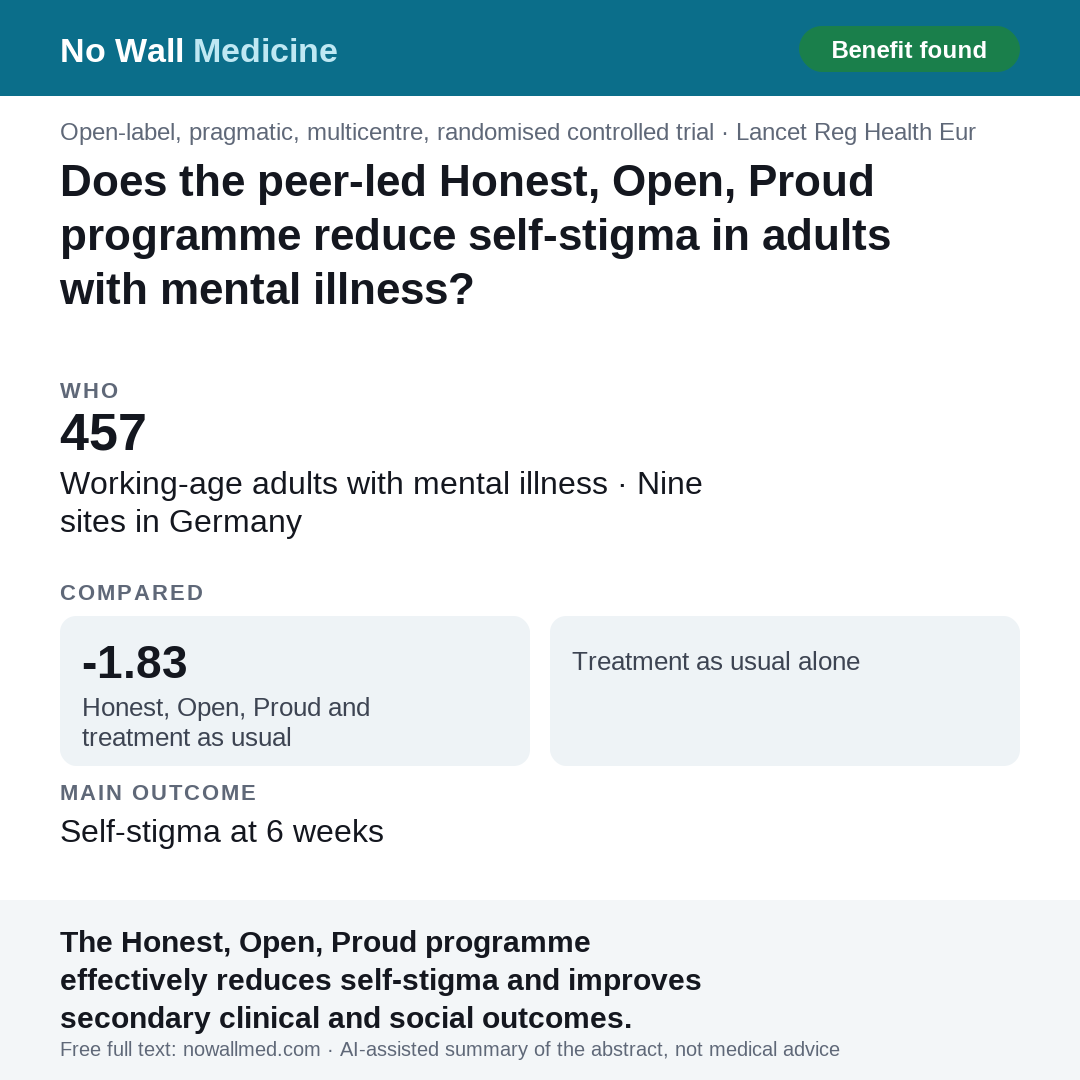
Clinical question: Does the peer-led Honest, Open, Proud programme reduce self-stigma in adults with mental illness?
Why it matters: Stigma of mental illness acts as a barrier to recovery, help-seeking, and social inclusion, making disclosure decisions difficult for many people.
Key points
- Researchers studied 457 working-age adults with mental illness across nine sites in Germany, comparing a peer-led programme to usual care.
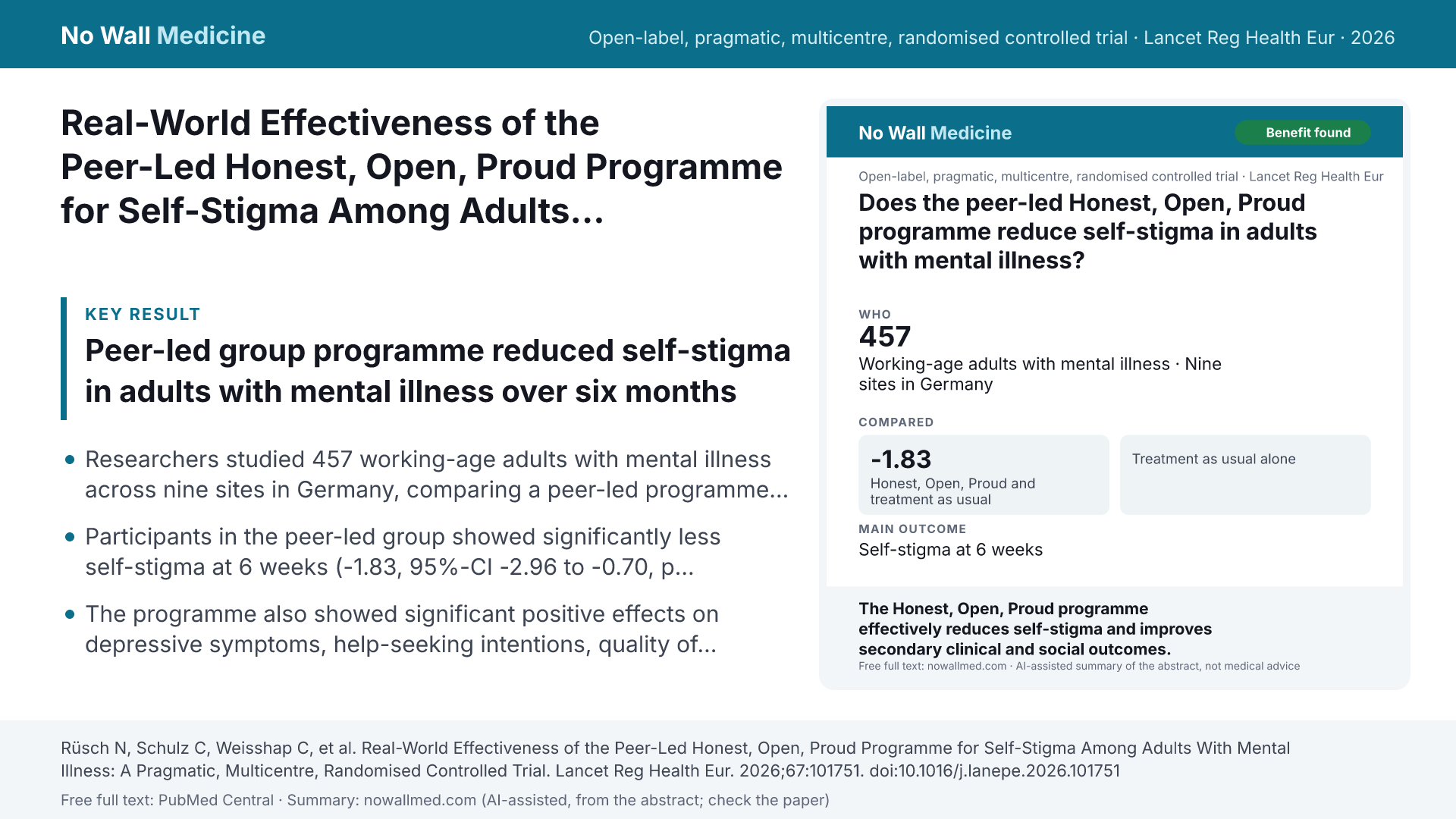
- Participants in the peer-led group showed significantly less self-stigma at 6 weeks (-1.83, 95%-CI -2.96 to -0.70, p = 0.0015) and at 6-month follow-up (-1.20, 95%-CI -2.36 to -0.05, p = 0.042).
- The programme also showed significant positive effects on depressive symptoms, help-seeking intentions, quality of life, and social inclusion at 6 weeks.
Headline and key points written with AI from the paper’s abstract, with every number checked against it. Read the paper before relying on them.
Was this summary helpful?
Cite this article
Rüsch N, Schulz C, Weisshap C, et al. Real-World Effectiveness of the Peer-Led Honest, Open, Proud Programme for Self-Stigma Among Adults With Mental Illness: A Pragmatic, Multicentre, Randomised Controlled Trial. Lancet Reg Health Eur. 2026. doi:10.1016/j.lanepe.2026.101751
Spotted a mistake? Suggest a correction