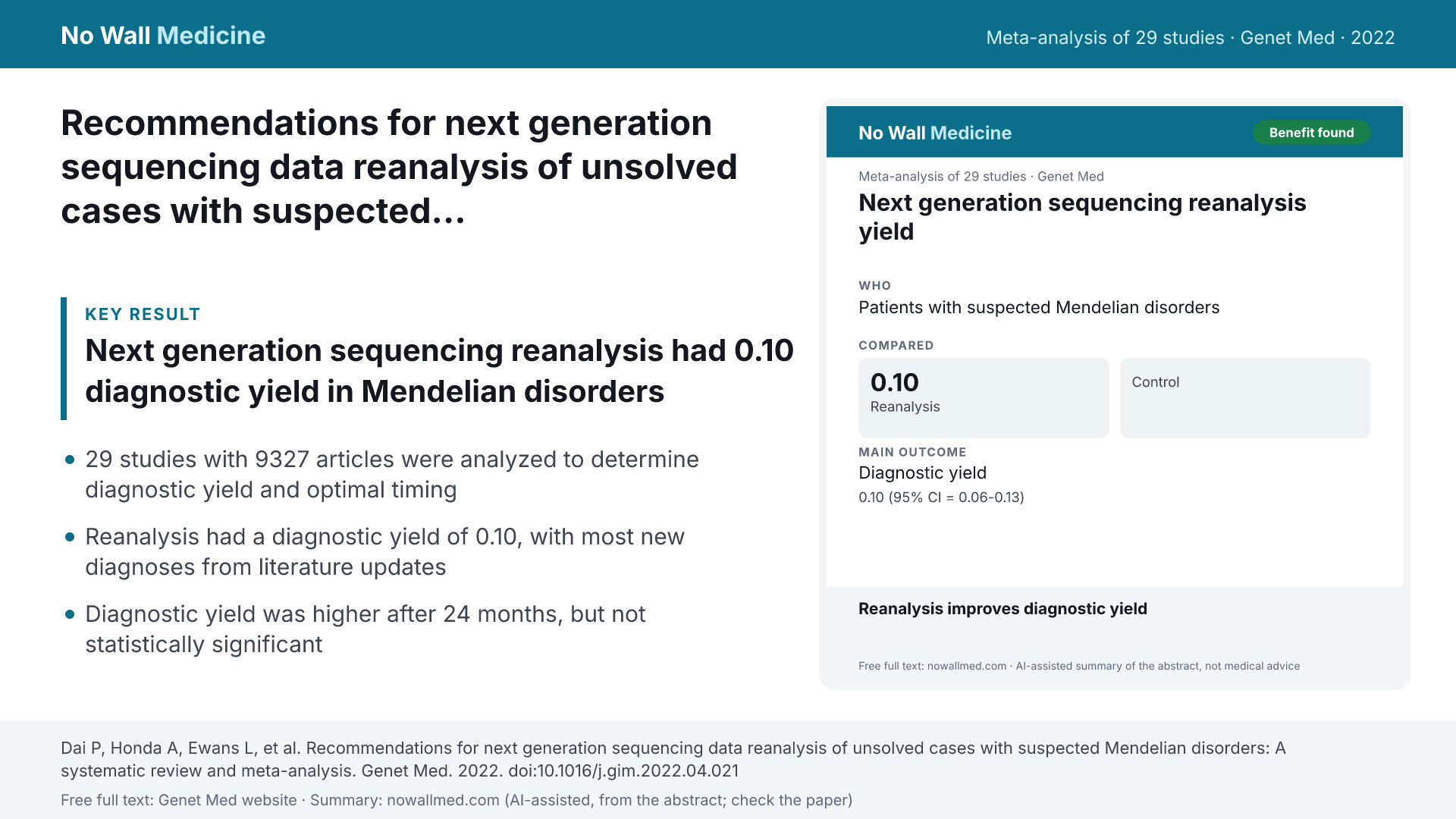
Next generation sequencing reanalysis had 0.10 diagnostic yield in Mendelian disorders
Recommendations for next generation sequencing data reanalysis of unsolved cases with suspected Mendelian disorders: A systematic review and meta-analysis
Meta-analysis of 29 studiesBenefit found
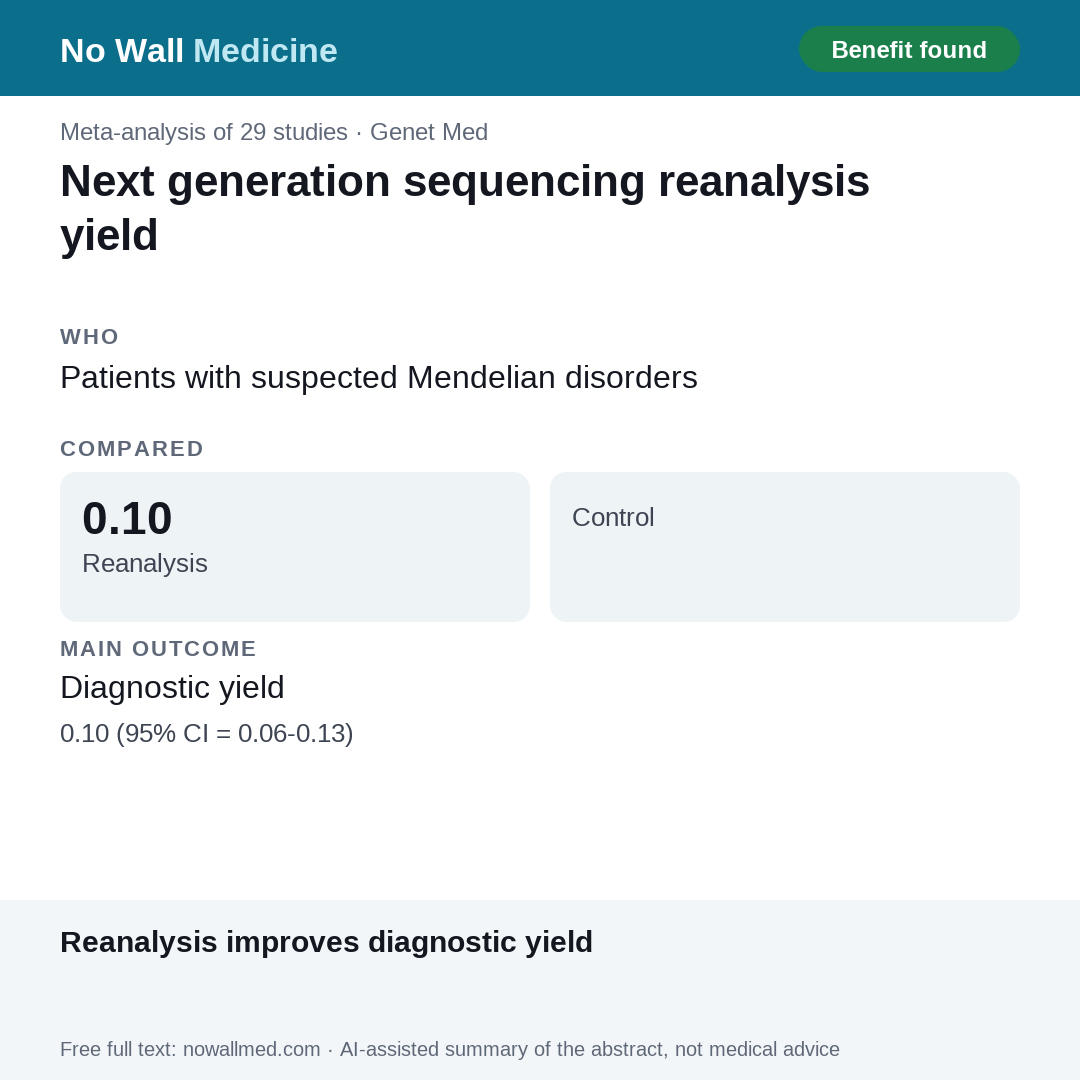
Next generation sequencing reanalysis yield
Who
Patients with suspected Mendelian disorders
Compared
0.10Reanalysis (95% CI = 0.06-0.13)
Control
Main outcome
Diagnostic yield
Result: 0.10 (95% CI = 0.06-0.13)
Bottom line: Reanalysis improves diagnostic yield
Genet Med · 2022-05-14Download image
Why it matters: Optimal timing and methodology of next generation sequencing data reanalysis were unknown
Key points
- 29 studies with 9327 articles were analyzed to determine diagnostic yield and optimal timing.
- Reanalysis had a diagnostic yield of 0.10, with most new diagnoses from literature updates.
- Diagnostic yield was higher after 24 months, but not statistically significant.
Headline and key points written with AI from the paper’s abstract, with every number checked against it. Read the paper before relying on them.
Was this summary helpful?
Subject terms
Cite this article
Dai P, Honda A, Ewans L, et al. Recommendations for next generation sequencing data reanalysis of unsolved cases with suspected Mendelian disorders: A systematic review and meta-analysis. Genet Med. 2022. doi:10.1016/j.gim.2022.04.021
Spotted a mistake? Suggest a correction