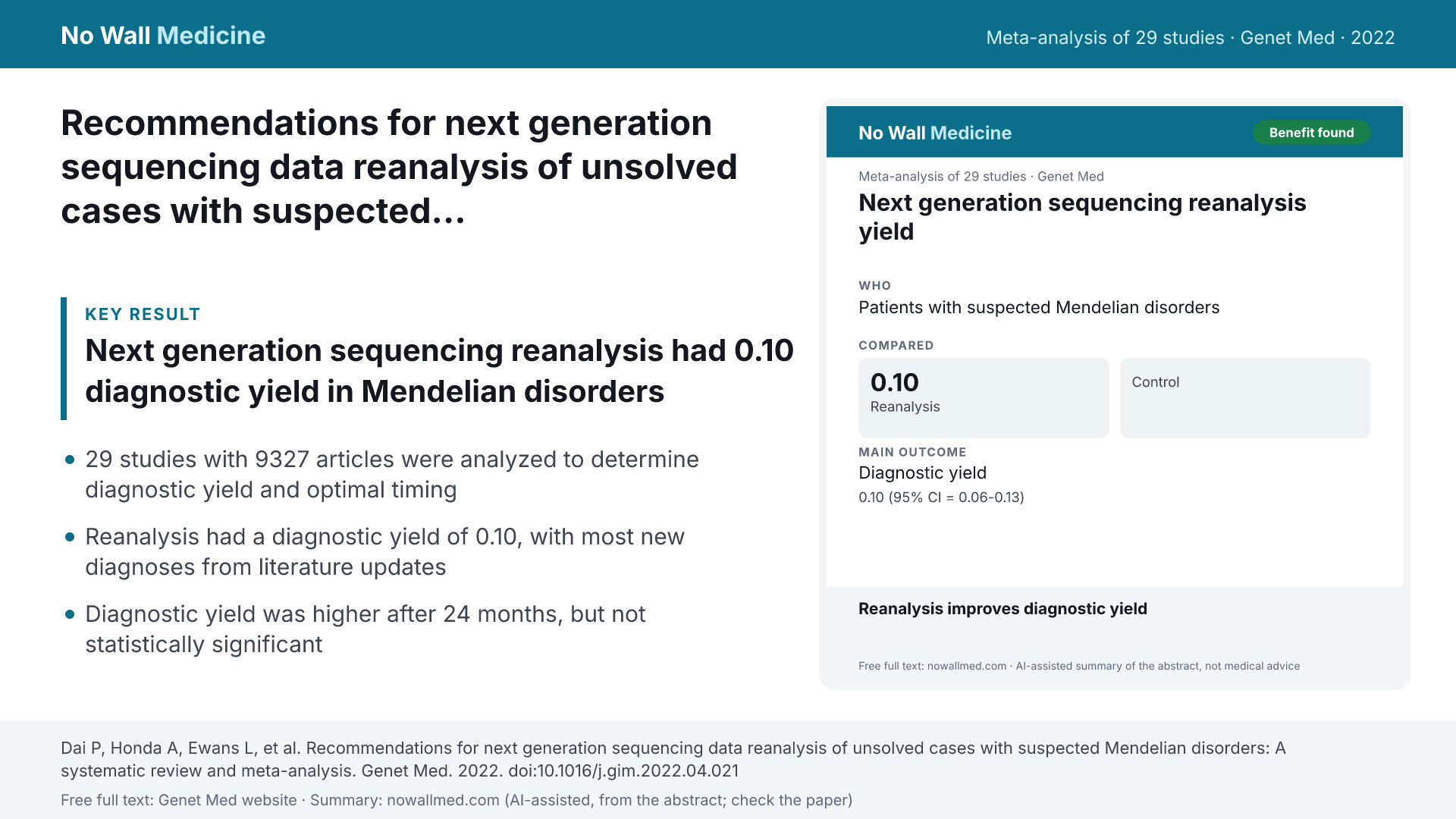
Recommendations for next generation sequencing data reanalysis of unsolved cases with suspected Mendelian disorders: A systematic review and meta-analysis
Key result: Next generation sequencing reanalysis had 0.10 diagnostic yield in Mendelian disorders
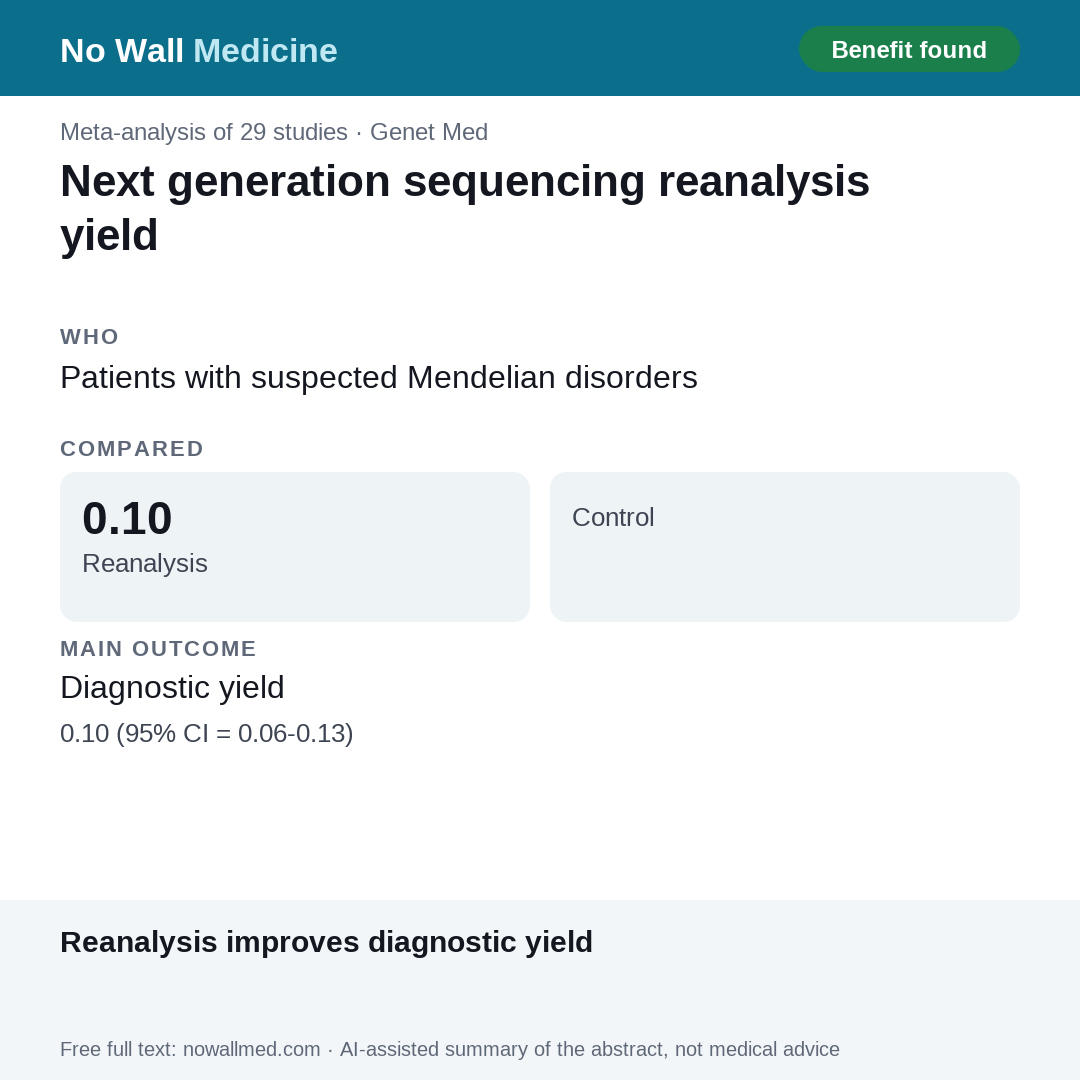
Meta-analysis of 29 studiesBenefit found
Next generation sequencing reanalysis yield
Who
Patients with suspected Mendelian disorders
Compared
0.10Reanalysis (95% CI = 0.06-0.13)
Control
Main outcome
Diagnostic yield
Result: 0.10 (95% CI = 0.06-0.13)
Bottom line: Reanalysis improves diagnostic yield
Genet Med · 2022-05-14Download image
Key points
- 29 studies with 9327 articles were analyzed to determine diagnostic yield and optimal timing.
- Reanalysis had a diagnostic yield of 0.10, with most new diagnoses from literature updates.
- Diagnostic yield was higher after 24 months, but not statistically significant.
Why it matters: Optimal timing and methodology of next generation sequencing data reanalysis were unknown
Discussion prompts
- Would these patients look like yours? Who was left out?
- Is the main outcome one that matters to patients?
- Is the difference large enough to change what you do?
Cite: Dai P, Honda A, Ewans L, et al. Recommendations for next generation sequencing data reanalysis of unsolved cases with suspected Mendelian disorders: A systematic review and meta-analysis. Genet Med. 2022. doi:10.1016/j.gim.2022.04.021
Free full text: Genet Med website · Summary and visual abstract: nowallmed.com/a/recommendations-for-next-generation-sequencing-data-reanalysis-of-nso5bd/ (AI-assisted from the abstract; check the paper before relying on it).