Reductions in diabetes distress were linked to better self-care and glycemic outcomes in adults
Reductions in Management Distress Following a Randomized Distress Intervention Are Associated With Improved Diabetes Behavioral and Glycemic Outcomes Over Time
Two-arm randomized clinical trialBenefit found
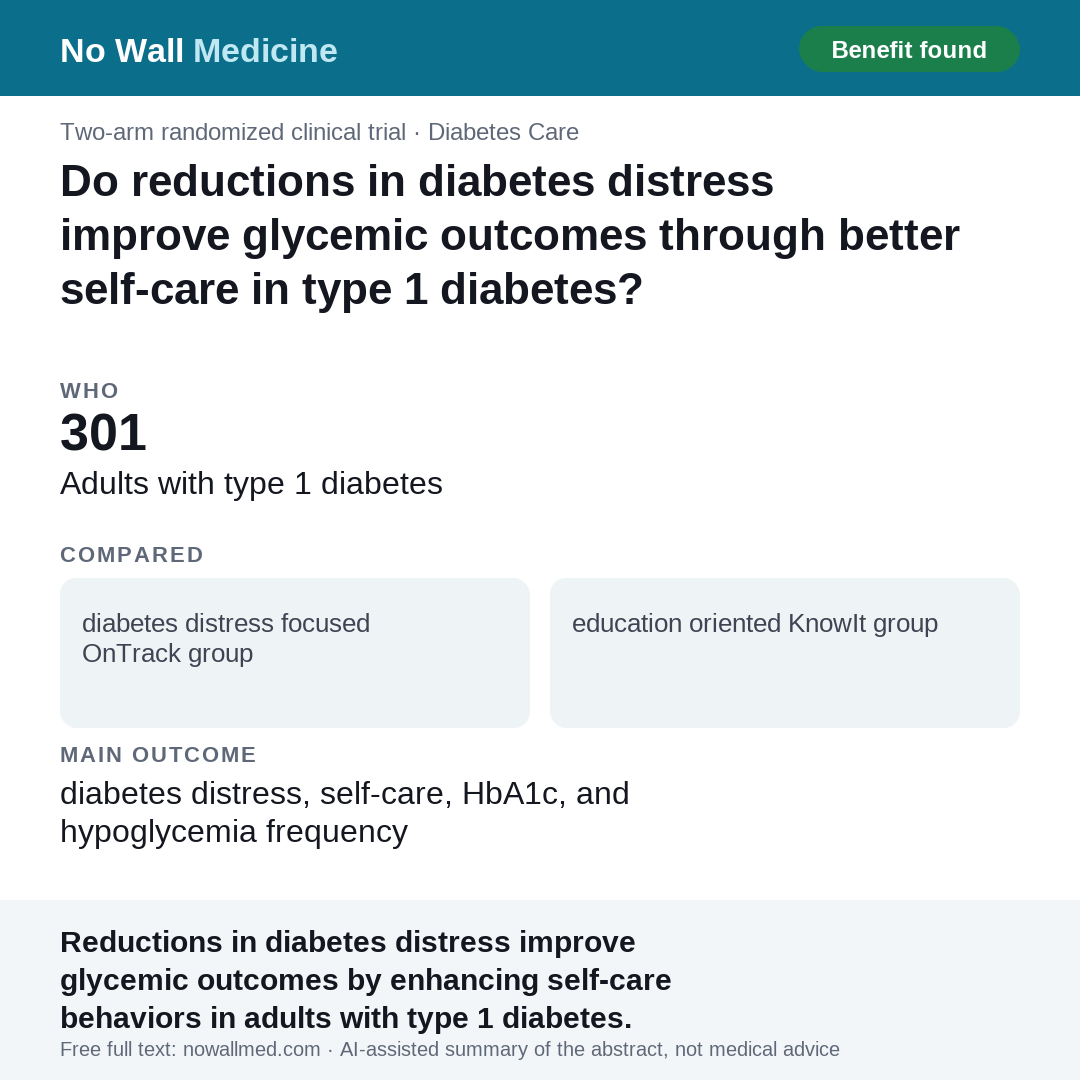
Do reductions in diabetes distress improve glycemic outcomes through better self-care in type 1 diabetes?
Who
301
Adults with type 1 diabetes
Compared
diabetes distress focused OnTrack group
education oriented KnowIt group
Main outcome
diabetes distress, self-care, HbA1c, and hypoglycemia frequency
Bottom line: Reductions in diabetes distress improve glycemic outcomes by enhancing self-care behaviors in adults with type 1 diabetes.
Diabetes Care · 2021-05-14Download image
Clinical question: Do reductions in diabetes distress improve glycemic outcomes through better self-care in type 1 diabetes?
Why it matters: It was unknown if reducing diabetes distress directly affects blood sugar levels or if it works through changes in self-care behaviors.
Key points
- Researchers studied 301 adults with type 1 diabetes who participated in a trial comparing a distress-focused group to an education-oriented group.
- Reductions in diabetes distress were associated with better self-care, such as more frequent insulin adjustment and more blood glucose monitoring.
- Better self-care was linked to improved HbA1c levels and fewer episodes of hypoglycemia over 9 months.
Headline and key points written with AI from the paper’s abstract, with every number checked against it. Read the paper before relying on them.
Was this summary helpful?
Subject terms
Cite this article
Hessler D, Strycker L, Fisher L. Reductions in Management Distress Following a Randomized Distress Intervention Are Associated With Improved Diabetes Behavioral and Glycemic Outcomes Over Time. Diabetes Care. 2021. doi:10.2337/dc20-2724
Spotted a mistake? Suggest a correction
Top studies every Monday
The week’s key trials and guidelines in your specialties, plus any topics you follow. By email, free.
Get the weekly digest