Regulation of cues therapy showed greater reduction in binge eating risk than cognitive behavioral therapy
Regulation of Cues vs Cognitive Behavioral Therapy for Binge Eating and Weight Loss Among Veterans: A Feasibility and Randomized Clinical Trial
Randomized clinical trialBenefit found
Is regulation of cues plus behavioral weight loss more effective than cognitive behavioral therapy?
Who
129
Veterans with binge eating disorder or subthreshold binge eating disorder · A university clinic
Compared
Regulation of cues plus behavioral weight loss: greater reduction in risk of binge eating
Cognitive behavioral therapy
Main outcome
Change in binge eating and body weight
Result: difference in probability, -0.23; 95% CrI, -0.22 to -0.19
Bottom line: Regulation of cues plus behavioral weight loss reduced binge eating risk more than cognitive behavioral therapy, though weight loss differences were not maintained.
JAMA Netw Open · 2025-08-01 · Save PNG
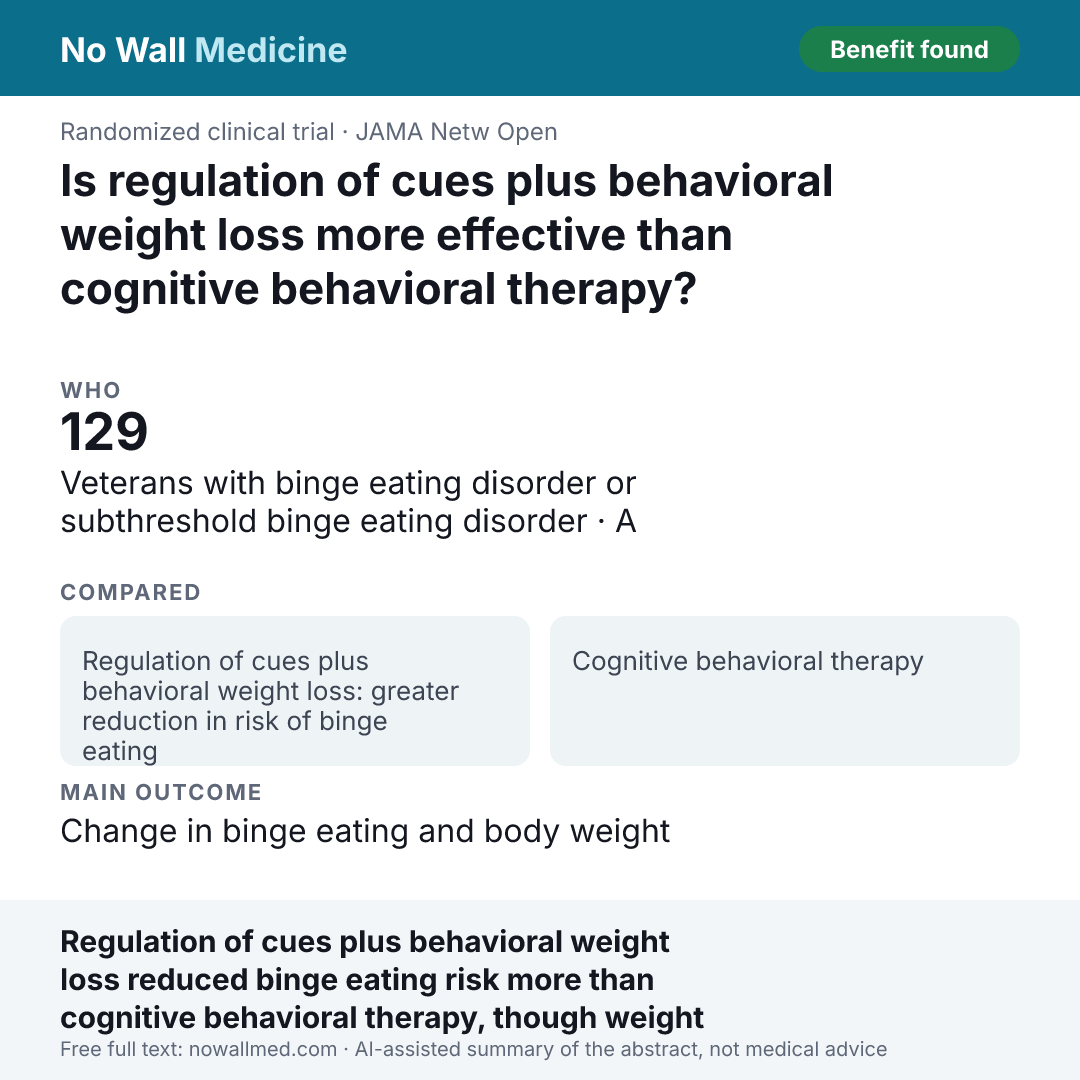
Clinical question: Is regulation of cues plus behavioral weight loss more effective than cognitive behavioral therapy?
Key points
- The study randomized 129 veterans with binge eating disorder or subthreshold binge eating disorder to receive either regulation of cues plus behavioral weight loss or cognitive behavioral therapy.
- Regulation of cues plus behavioral weight loss resulted in a greater reduction in the risk of binge eating than cognitive behavioral therapy at midtreatment, posttreatment, and 6-month follow-up.
- Regulation of cues plus behavioral weight loss showed greater weight loss at midtreatment and posttreatment, but these differences were not significant at the 6-month follow-up.
Headline and key points written with AI from the paper’s abstract, with every number checked against it. Read the paper before relying on them.
Was this summary helpful?
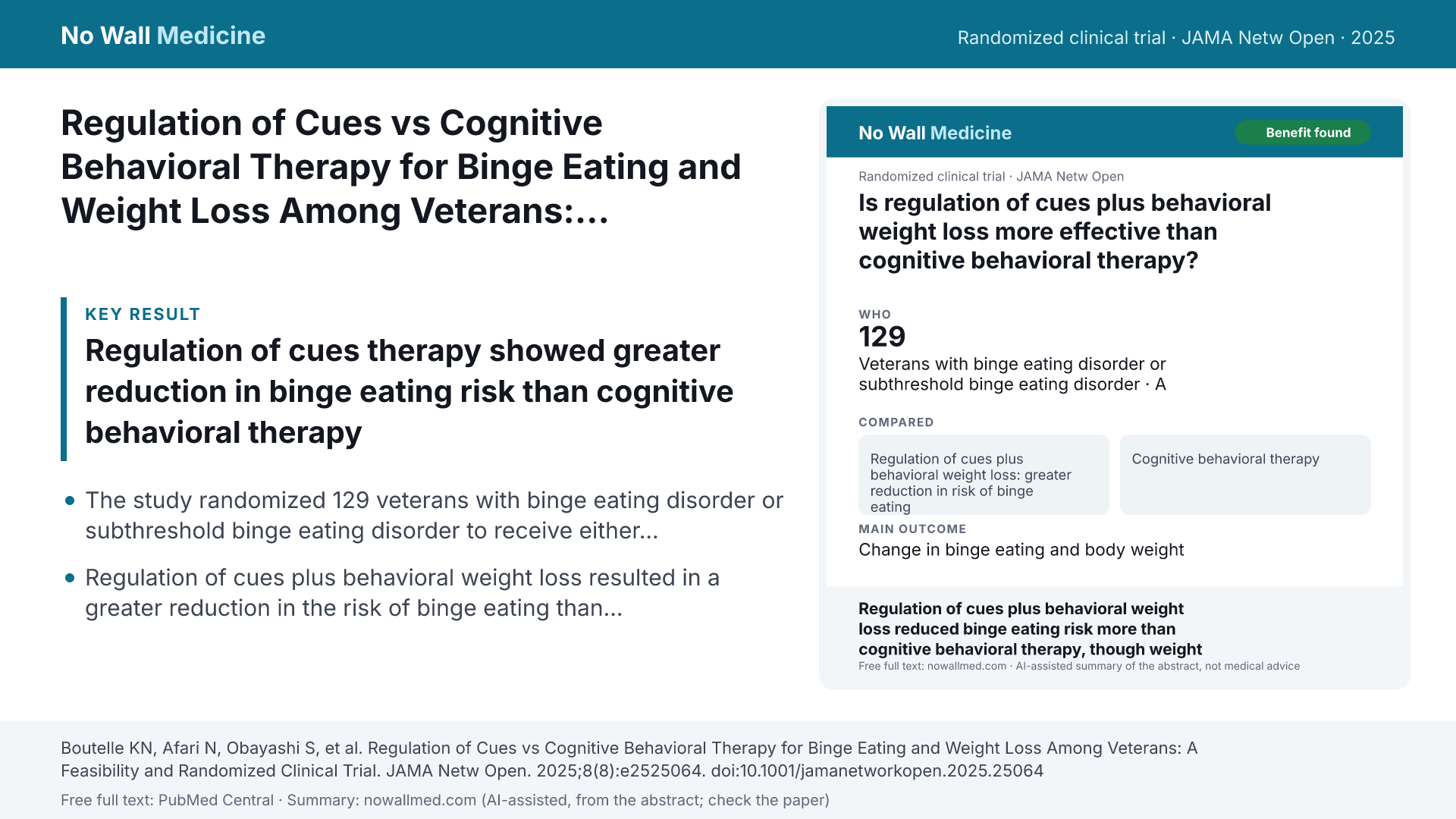
Subject terms
Headline, design, result, key points, caveat and citation as plain text.
Cite this article
Boutelle KN, Afari N, Obayashi S, et al. Regulation of Cues vs Cognitive Behavioral Therapy for Binge Eating and Weight Loss Among Veterans: A Feasibility and Randomized Clinical Trial. JAMA Netw Open. 2025;8(8):e2525064. doi:10.1001/jamanetworkopen.2025.25064
Spotted a mistake? Suggest a correction