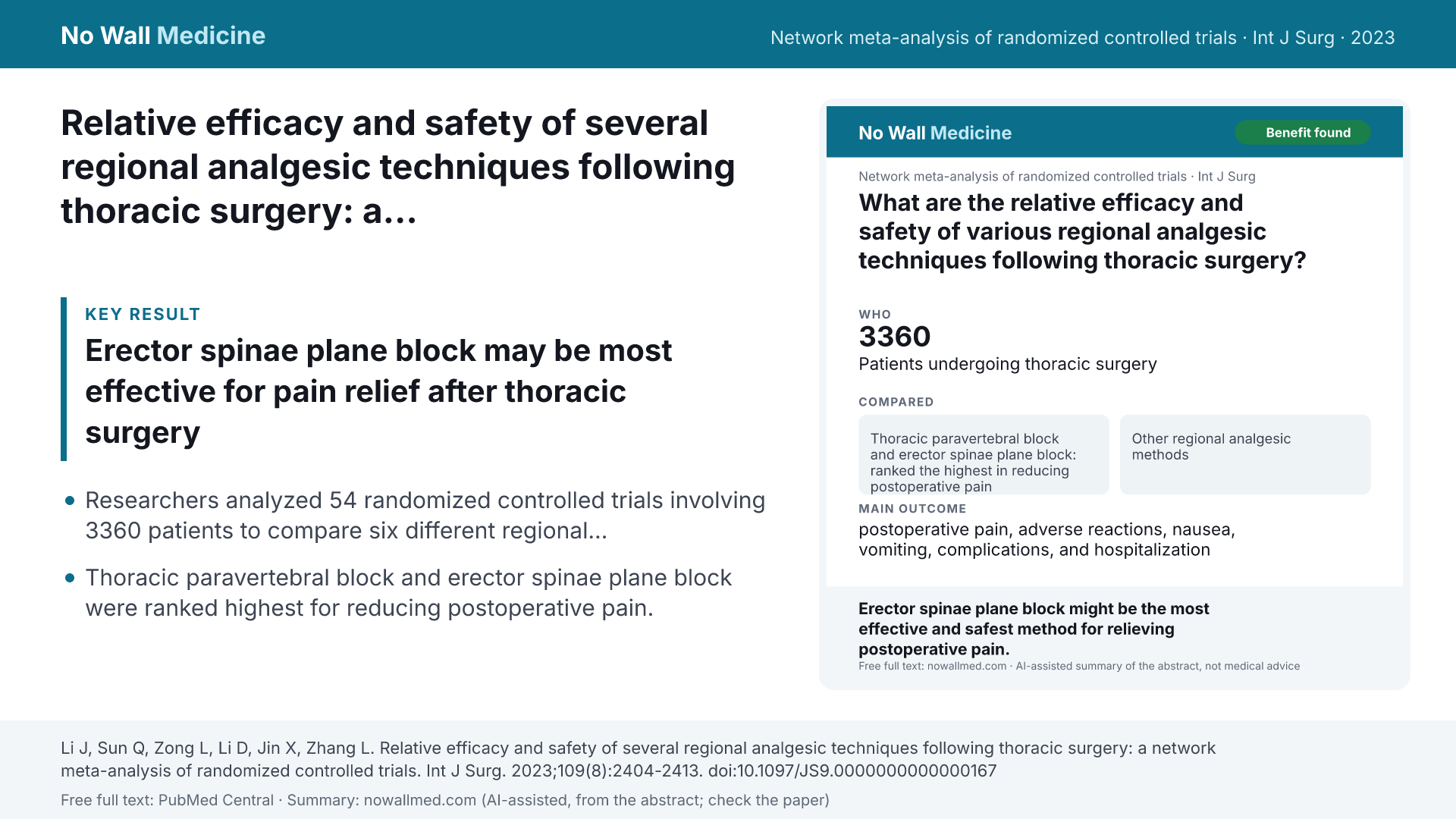
Relative efficacy and safety of several regional analgesic techniques following thoracic surgery: a network meta-analysis of randomized controlled trials
Key result: Erector spinae plane block may be most effective for pain relief after thoracic surgery
Key points
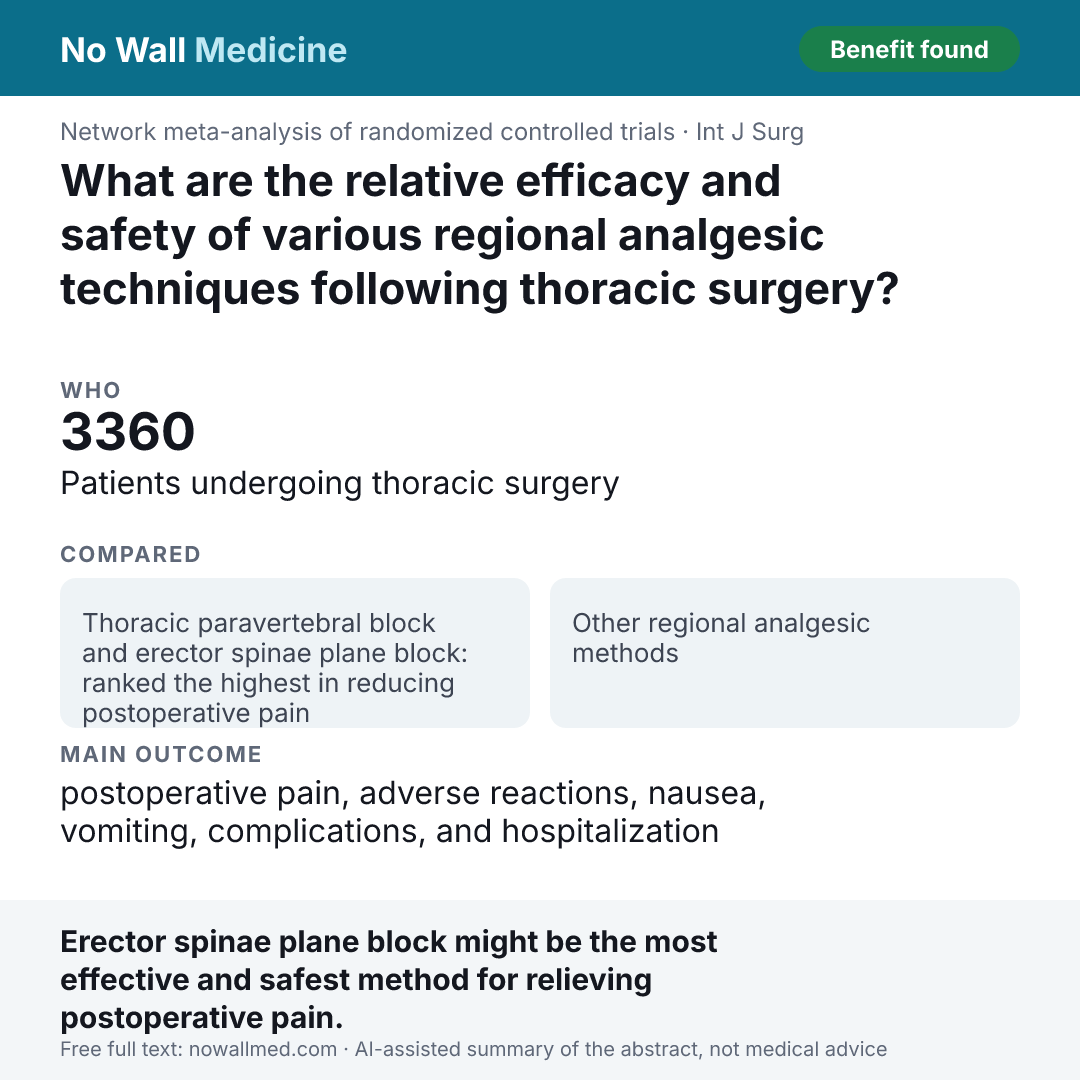
- Researchers analyzed 54 randomized controlled trials involving 3360 patients to compare six different regional anesthesia methods used after thoracic surgery.
- Thoracic paravertebral block and erector spinae plane block were ranked highest for reducing postoperative pain.
- Erector spinae plane block was associated with fewer total adverse reactions, less nausea and vomiting, fewer complications, and shorter hospital stays, though differences between methods were small.
Why it matters: The relative effectiveness and safety of different regional anesthesia techniques for managing pain after thoracic surgery were not clearly established.
Discussion prompts
- Would these patients look like yours? Who was left out?
- Is the main outcome one that matters to patients?
- Is the difference large enough to change what you do?
Cite: Li J, Sun Q, Zong L, Li D, Jin X, Zhang L. Relative efficacy and safety of several regional analgesic techniques following thoracic surgery: a network meta-analysis of randomized controlled trials. Int J Surg. 2023;109(8):2404-2413. doi:10.1097/JS9.0000000000000167
Free full text: PubMed Central · Summary and visual abstract: nowallmed.com/a/relative-efficacy-and-safety-of-several-regional-analgesic-techniques-vunpy4/ (AI-assisted from the abstract; check the paper before relying on it).