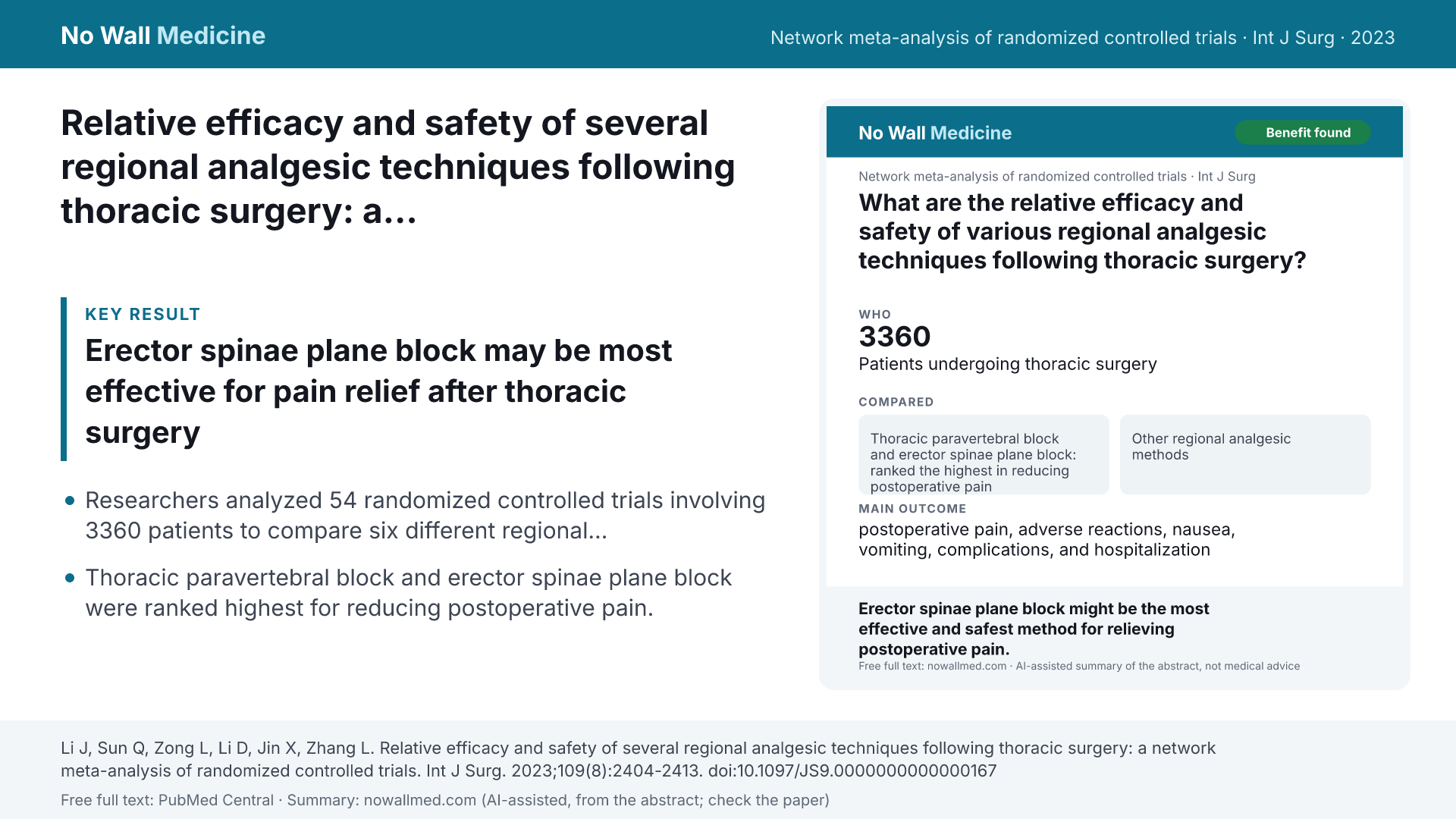
Erector spinae plane block may be most effective for pain relief after thoracic surgery
Relative efficacy and safety of several regional analgesic techniques following thoracic surgery: a network meta-analysis of randomized controlled trials
Network meta-analysis of randomized controlled trialsBenefit found
What are the relative efficacy and safety of various regional analgesic techniques following thoracic surgery?
Who
3360
Patients undergoing thoracic surgery
Compared
Thoracic paravertebral block and erector spinae plane block: ranked the highest in reducing postoperative pain
Other regional analgesic methods
Main outcome
postoperative pain, adverse reactions, nausea, vomiting, complications, and hospitalization duration
Bottom line: Erector spinae plane block might be the most effective and safest method for relieving postoperative pain.
Int J Surg · 2023-08-01Download image
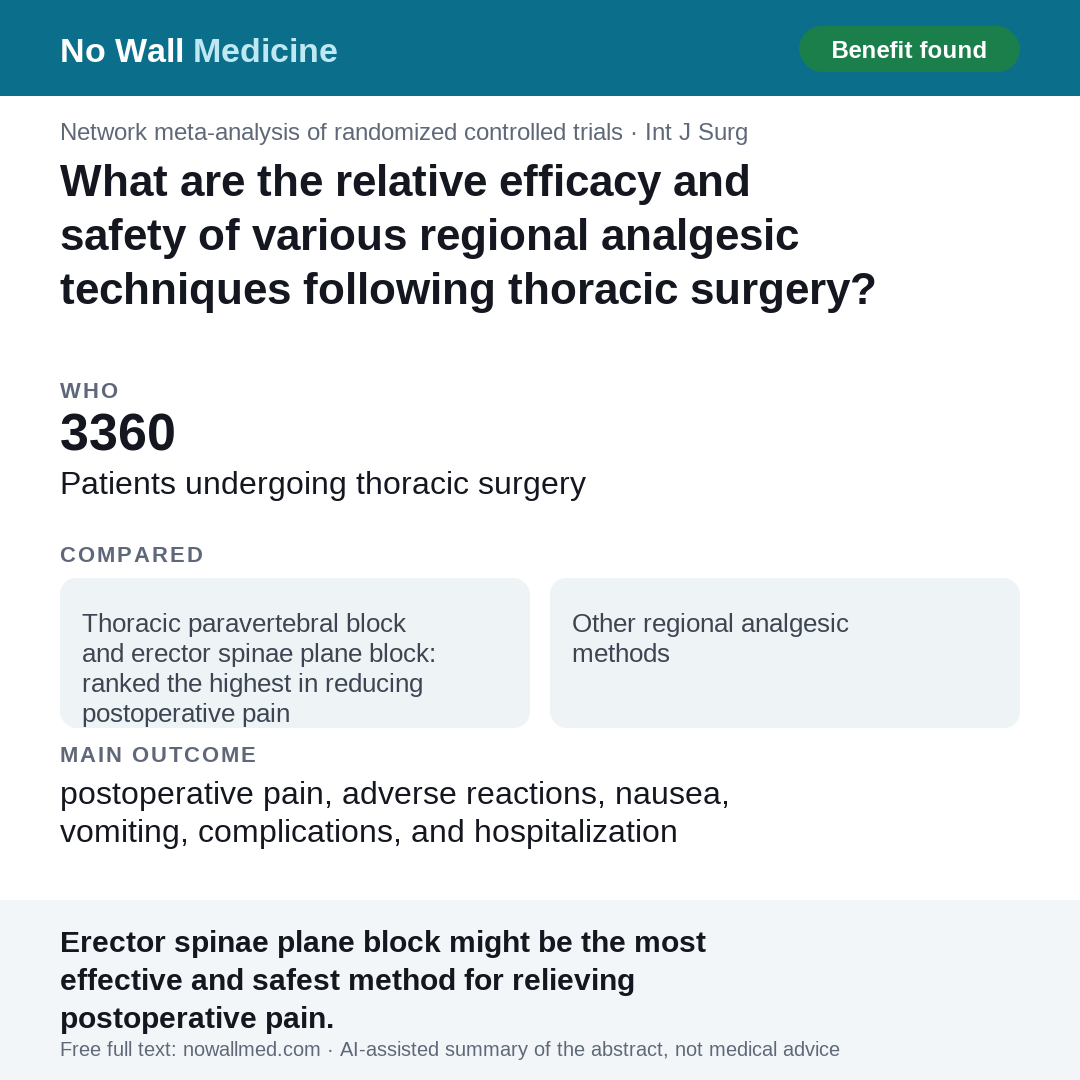
Clinical question: What are the relative efficacy and safety of various regional analgesic techniques following thoracic surgery?
Why it matters: The relative effectiveness and safety of different regional anesthesia techniques for managing pain after thoracic surgery were not clearly established.
Key points
- Researchers analyzed 54 randomized controlled trials involving 3360 patients to compare six different regional anesthesia methods used after thoracic surgery.
- Thoracic paravertebral block and erector spinae plane block were ranked highest for reducing postoperative pain.
- Erector spinae plane block was associated with fewer total adverse reactions, less nausea and vomiting, fewer complications, and shorter hospital stays, though differences between methods were small.
Headline and key points written with AI from the paper’s abstract, with every number checked against it. Read the paper before relying on them.
Was this summary helpful?
Subject terms
Cite this article
Li J, Sun Q, Zong L, Li D, Jin X, Zhang L. Relative efficacy and safety of several regional analgesic techniques following thoracic surgery: a network meta-analysis of randomized controlled trials. Int J Surg. 2023. doi:10.1097/JS9.0000000000000167
Spotted a mistake? Suggest a correction