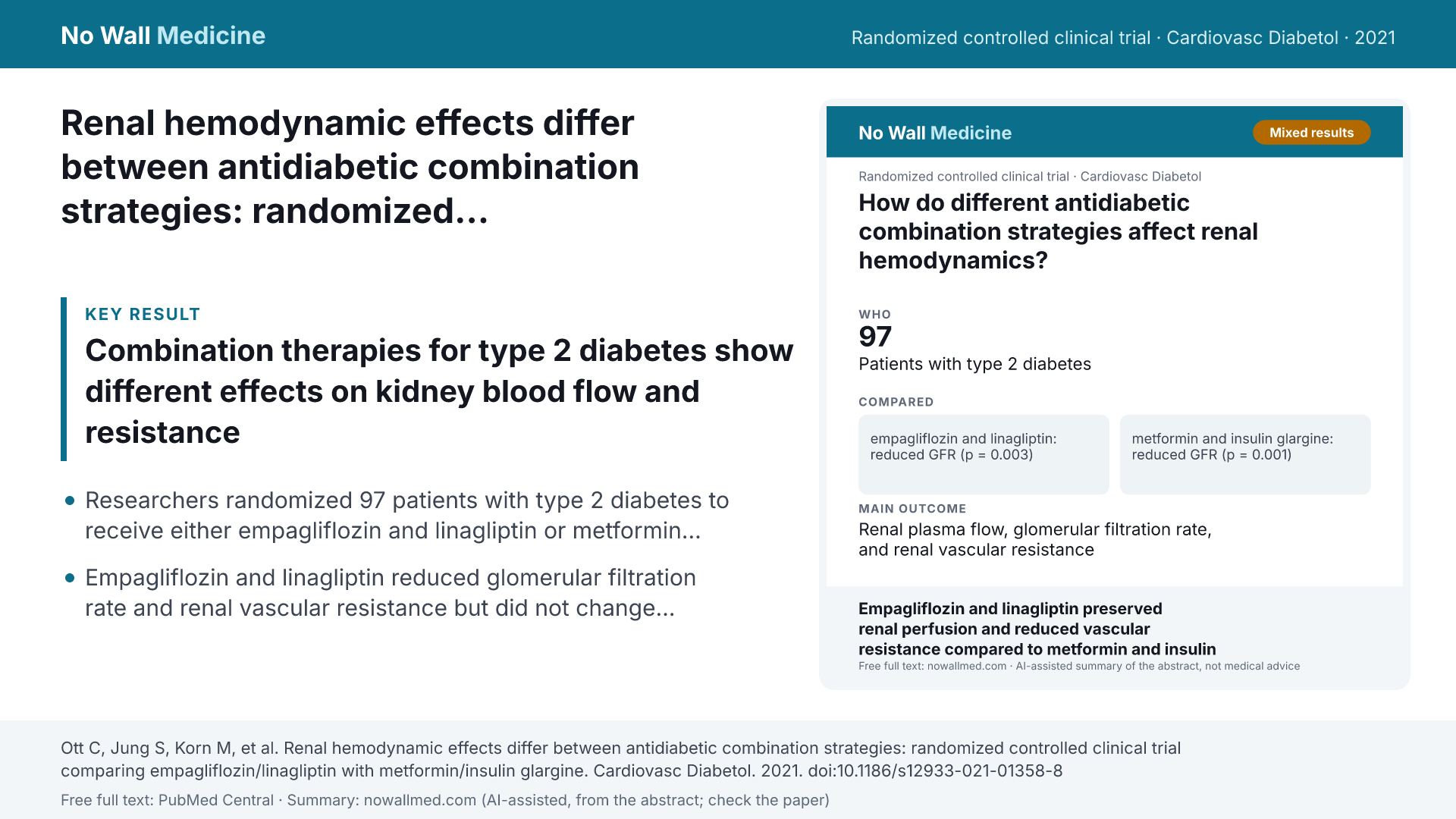
Combination therapies for type 2 diabetes show different effects on kidney blood flow and resistance
Renal hemodynamic effects differ between antidiabetic combination strategies: randomized controlled clinical trial comparing empagliflozin/linagliptin with metformin/insulin glargine
Randomized controlled clinical trialMixed results
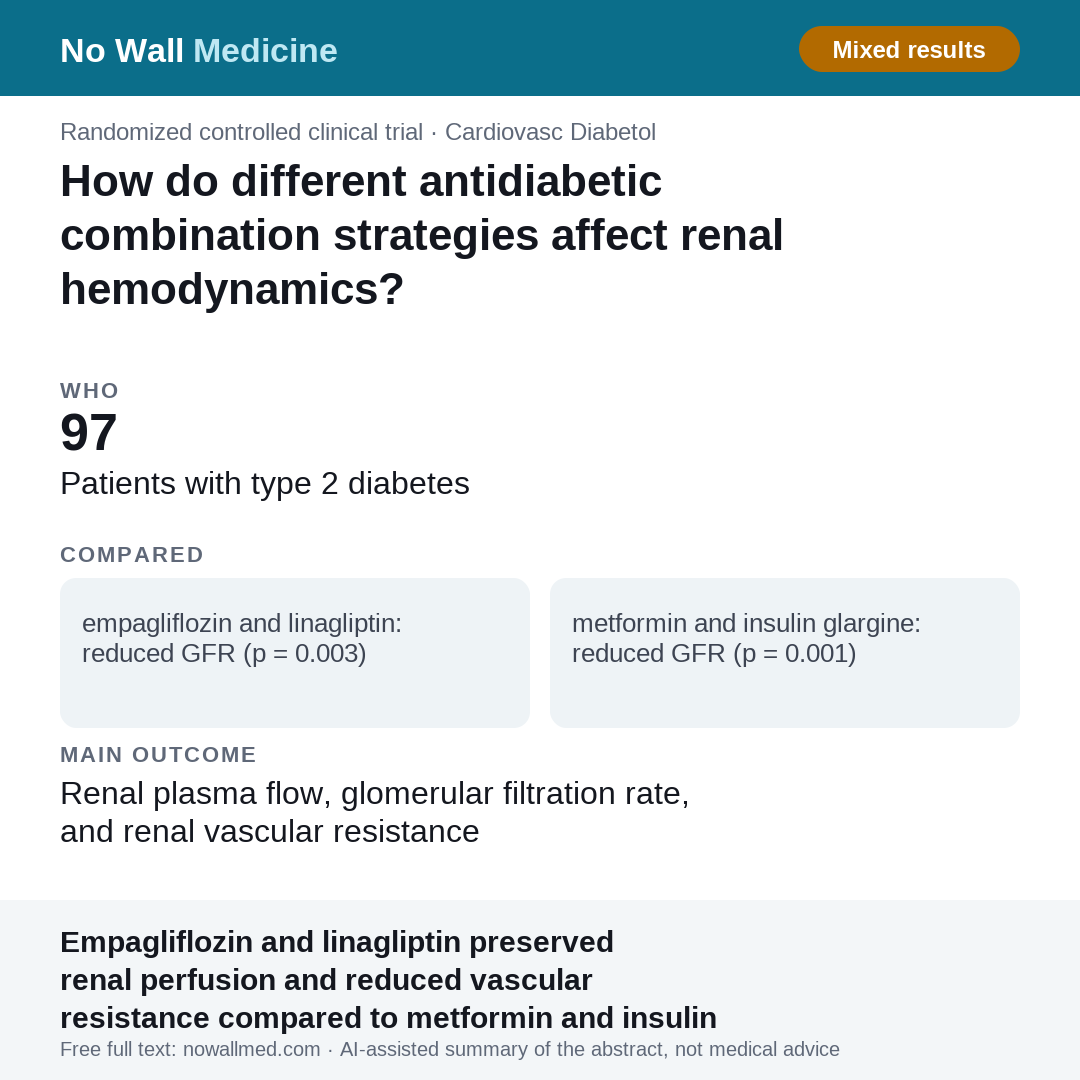
How do different antidiabetic combination strategies affect renal hemodynamics?
Who
97
Patients with type 2 diabetes
Compared
empagliflozin and linagliptin: reduced GFR (p = 0.003)
metformin and insulin glargine: reduced GFR (p = 0.001)
Main outcome
Renal plasma flow, glomerular filtration rate, and renal vascular resistance
Bottom line: Empagliflozin and linagliptin preserved renal perfusion and reduced vascular resistance compared to metformin and insulin glargine.
Cardiovasc Diabetol · 2021-09-04Download image
Clinical question: How do different antidiabetic combination strategies affect renal hemodynamics?
Why it matters: The renal hemodynamics profile, which refers to the blood flow and pressure within the kidneys, of different antidiabetic combination therapies has not been evaluated in detail.
Key points
- Researchers randomized 97 patients with type 2 diabetes to receive either empagliflozin and linagliptin or metformin and insulin glargine for 3 months.
- Empagliflozin and linagliptin reduced glomerular filtration rate and renal vascular resistance but did not change renal plasma flow.
- Metformin and insulin glargine reduced both glomerular filtration rate and renal plasma flow while increasing renal vascular resistance.
Headline and key points written with AI from the paper’s abstract, with every number checked against it. Read the paper before relying on them.
Was this summary helpful?
Subject terms
Cite this article
Ott C, Jung S, Korn M, et al. Renal hemodynamic effects differ between antidiabetic combination strategies: randomized controlled clinical trial comparing empagliflozin/linagliptin with metformin/insulin glargine. Cardiovasc Diabetol. 2021. doi:10.1186/s12933-021-01358-8
Spotted a mistake? Suggest a correction