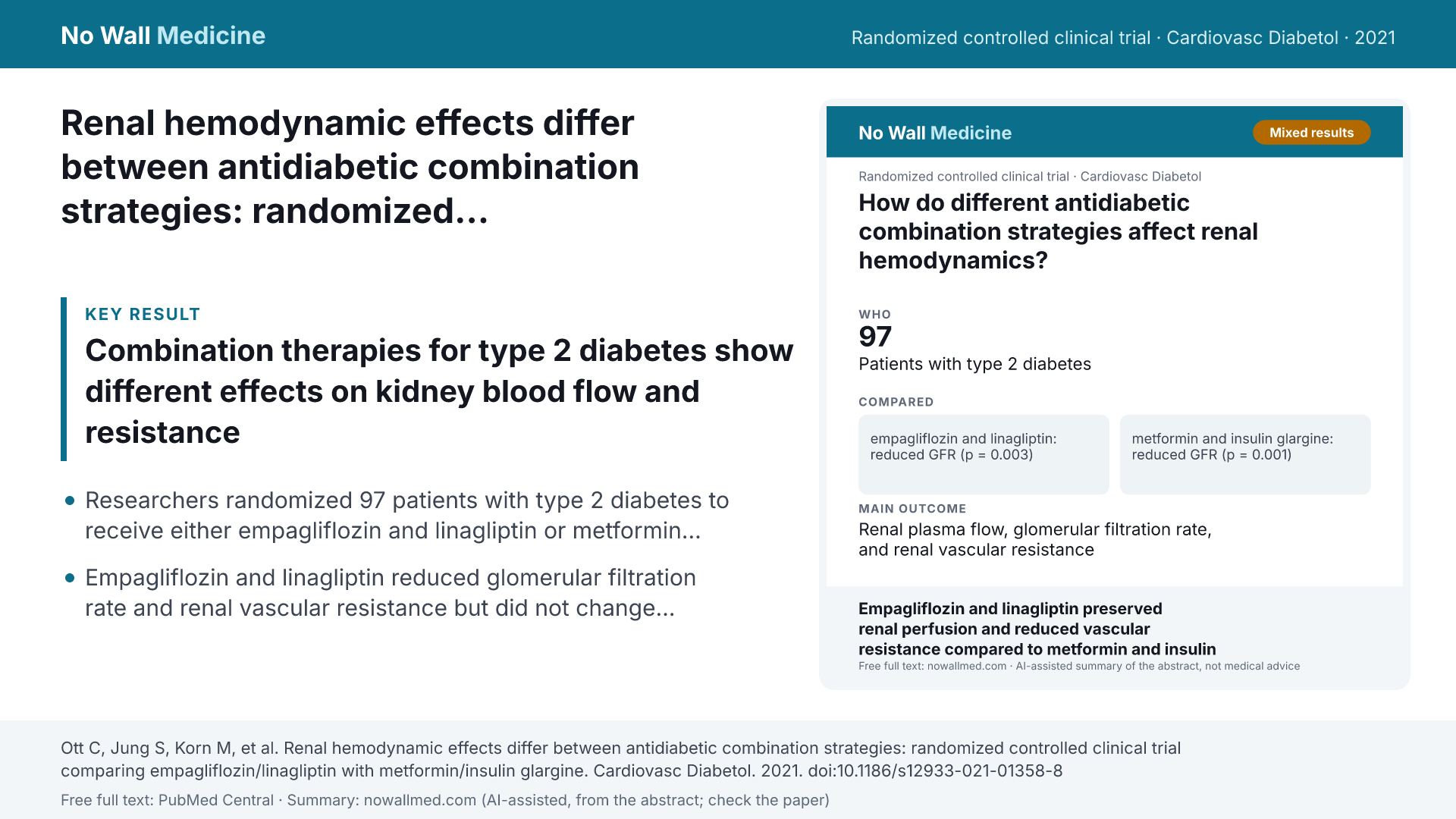
Renal hemodynamic effects differ between antidiabetic combination strategies: randomized controlled clinical trial comparing empagliflozin/linagliptin with metformin/insulin glargine
Key result: Combination therapies for type 2 diabetes show different effects on kidney blood flow and resistance
Key points
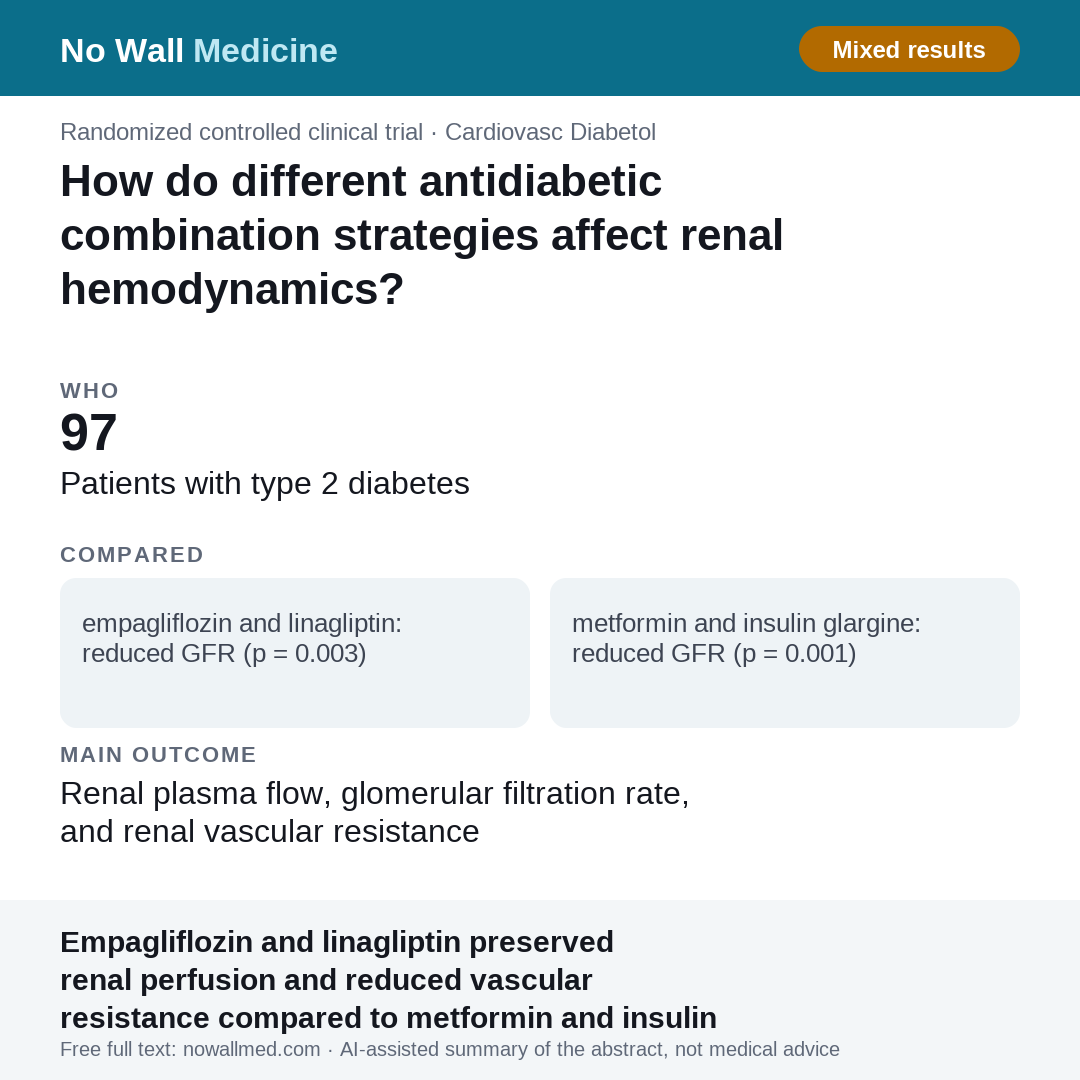
- Researchers randomized 97 patients with type 2 diabetes to receive either empagliflozin and linagliptin or metformin and insulin glargine for 3 months.
- Empagliflozin and linagliptin reduced glomerular filtration rate and renal vascular resistance but did not change renal plasma flow.
- Metformin and insulin glargine reduced both glomerular filtration rate and renal plasma flow while increasing renal vascular resistance.
Why it matters: The renal hemodynamics profile, which refers to the blood flow and pressure within the kidneys, of different antidiabetic combination therapies has not been evaluated in detail.
Discussion prompts
- Would these patients look like yours? Who was left out?
- Is the main outcome one that matters to patients?
- Is the difference large enough to change what you do?
Cite: Ott C, Jung S, Korn M, et al. Renal hemodynamic effects differ between antidiabetic combination strategies: randomized controlled clinical trial comparing empagliflozin/linagliptin with metformin/insulin glargine. Cardiovasc Diabetol. 2021. doi:10.1186/s12933-021-01358-8
Free full text: PubMed Central · Summary and visual abstract: nowallmed.com/a/renal-hemodynamic-effects-differ-between-antidiabetic-combination-1gejo79/ (AI-assisted from the abstract; check the paper before relying on it).