Repetitive Transcranial Magnetic Stimulation in Alcohol Dependence: A Randomized, Double-Blind, Sham-Controlled Proof-of-Concept Trial Targeting the Medial Prefrontal and Anterior Cingulate Cortices
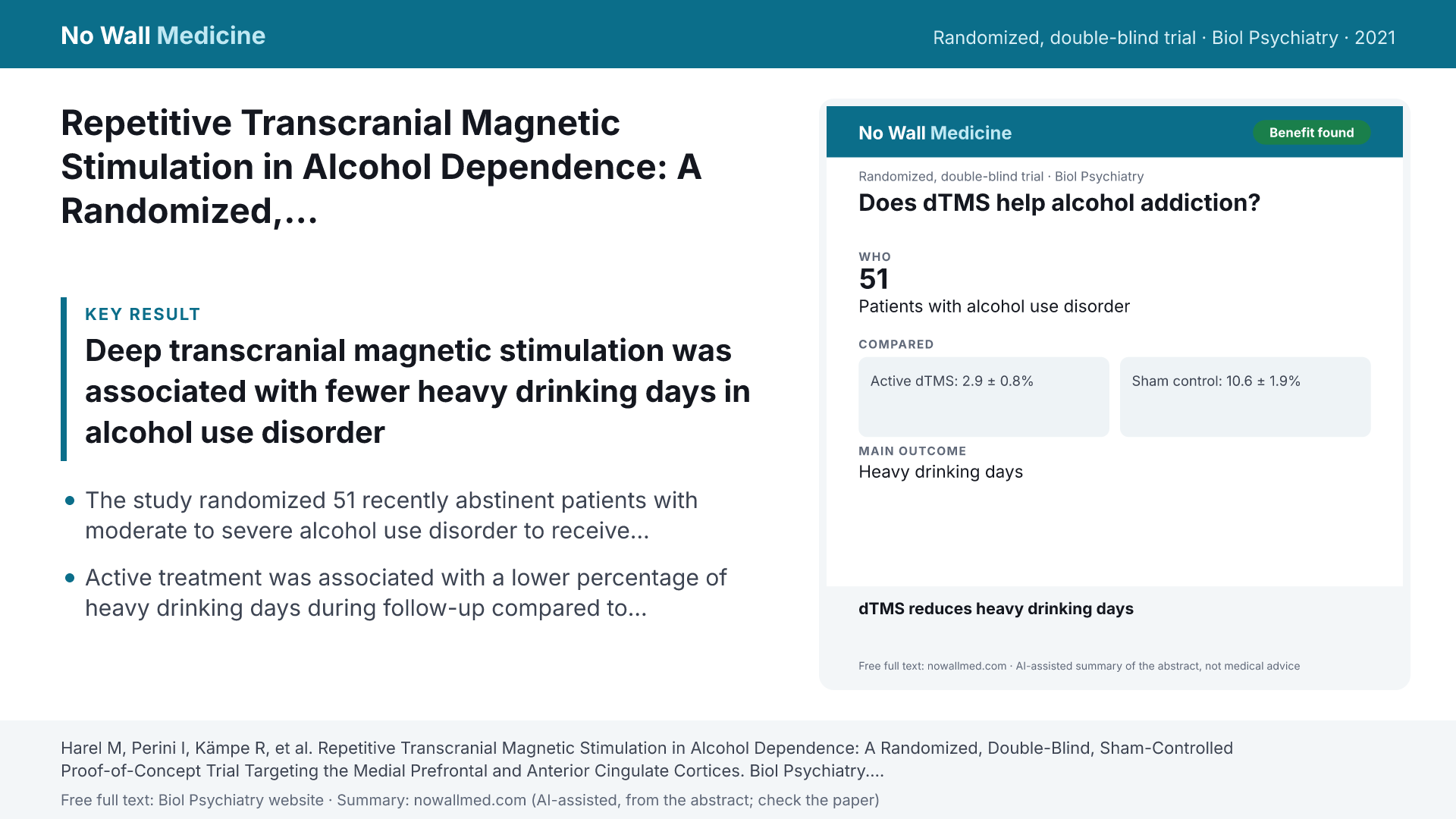
Key result: Deep transcranial magnetic stimulation was associated with fewer heavy drinking days in alcohol use disorder
Key points
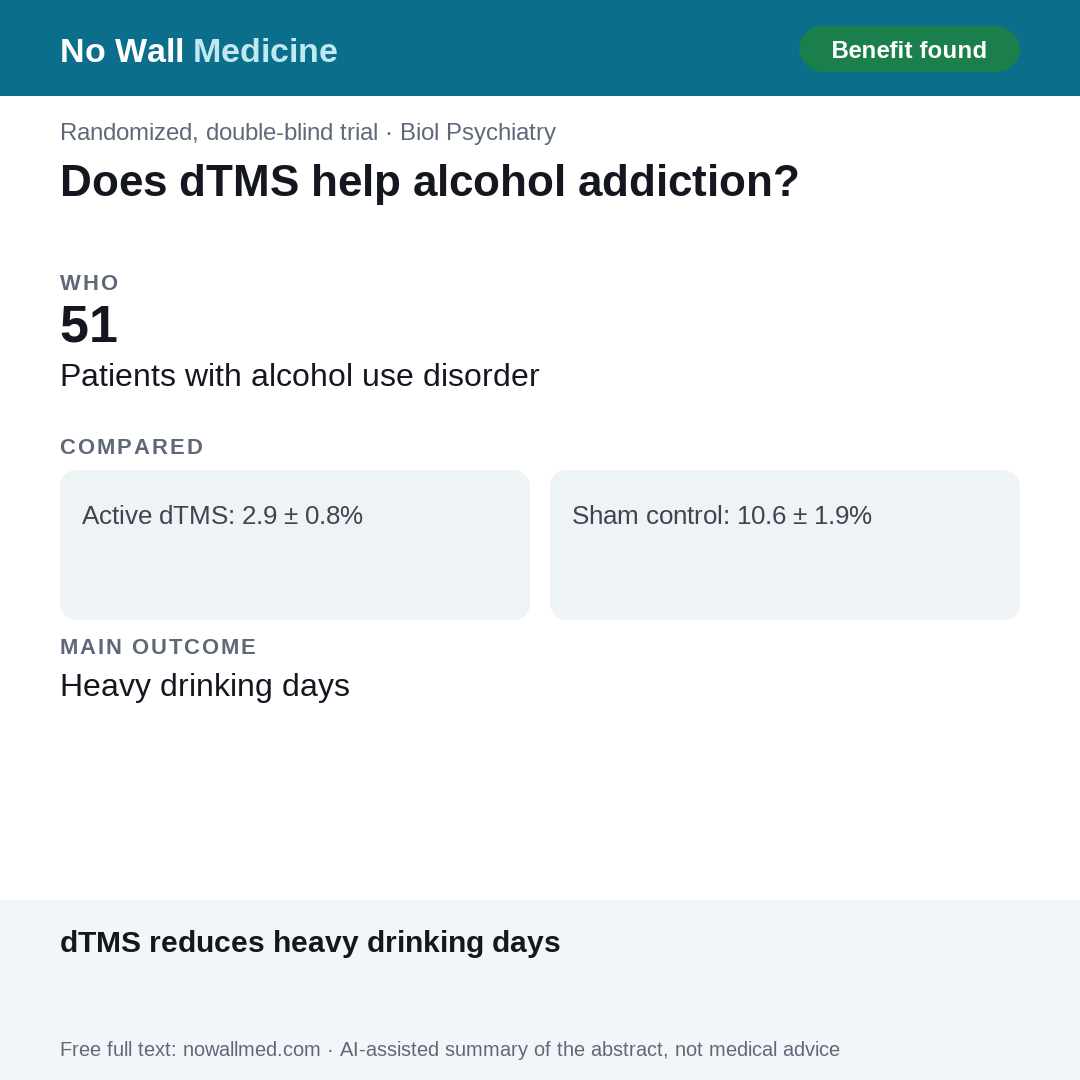
- The study randomized 51 recently abstinent patients with moderate to severe alcohol use disorder to receive either active or sham deep repetitive transcranial magnetic stimulation.
- Active treatment was associated with a lower percentage of heavy drinking days during follow-up compared to sham treatment, at 2.9 ± 0.8% versus 10.6 ± 1.9%.
- Active treatment was also associated with lower craving scores and changes in brain connectivity involving the medial prefrontal cortex and anterior cingulate cortex.
Why it matters: Treatment options for alcohol addiction are limited, and it is unknown if targeting specific brain circuitry with deep repetitive transcranial magnetic stimulation can improve clinical outcomes.
Discussion prompts
- Would these patients look like yours? Who was left out?
- Is the main outcome one that matters to patients?
- Is the difference large enough to change what you do?
Cite: Harel M, Perini I, Kämpe R, et al. Repetitive Transcranial Magnetic Stimulation in Alcohol Dependence: A Randomized, Double-Blind, Sham-Controlled Proof-of-Concept Trial Targeting the Medial Prefrontal and Anterior Cingulate Cortices. Biol Psychiatry. 2021. doi:10.1016/j.biopsych.2021.11.020
Free full text: Biol Psychiatry website · Summary and visual abstract: nowallmed.com/a/repetitive-transcranial-magnetic-stimulation-in-alcohol-dependence-a-h13luf/ (AI-assisted from the abstract; check the paper before relying on it).