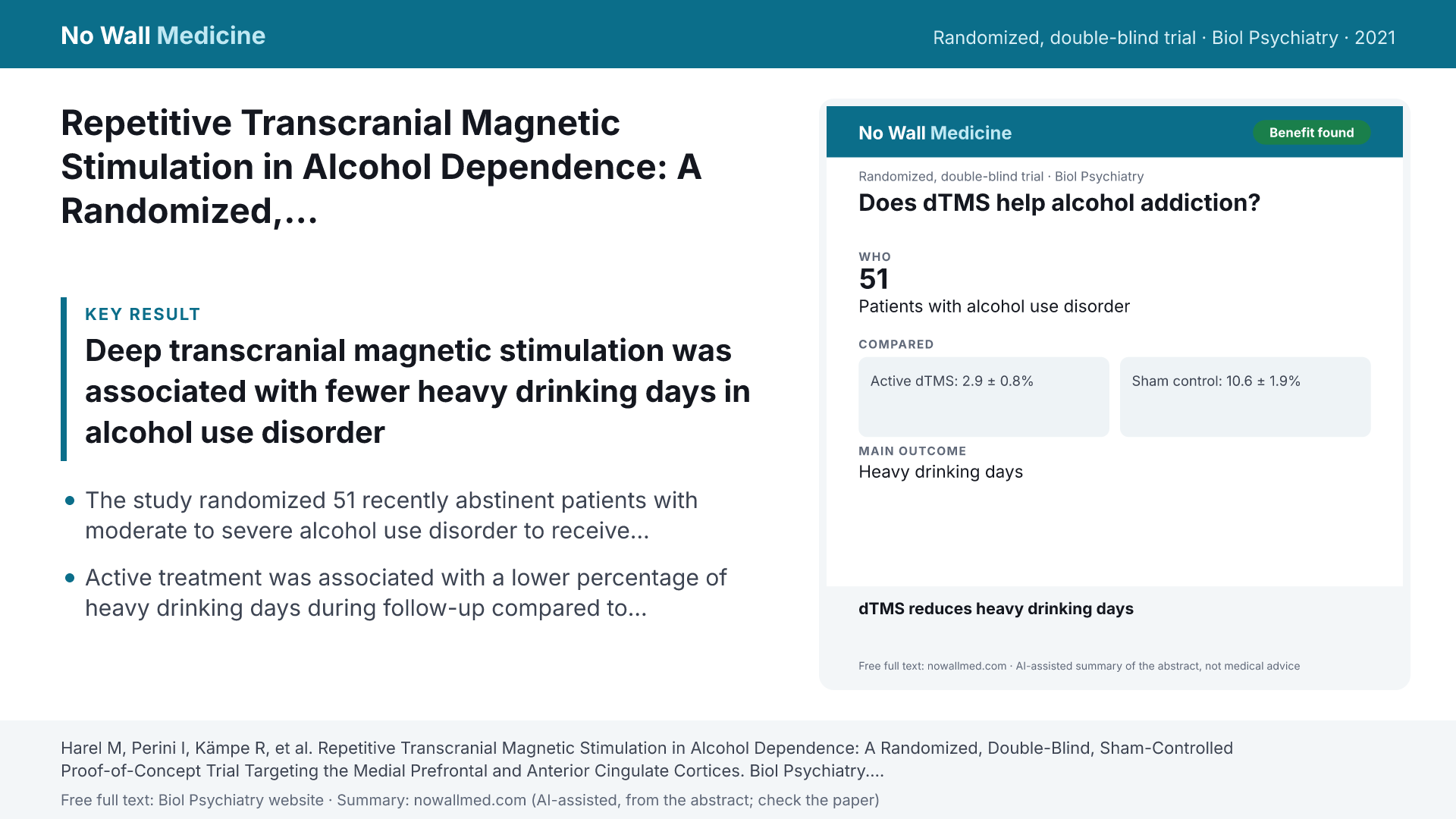
Deep transcranial magnetic stimulation was associated with fewer heavy drinking days in alcohol use disorder
Repetitive Transcranial Magnetic Stimulation in Alcohol Dependence: A Randomized, Double-Blind, Sham-Controlled Proof-of-Concept Trial Targeting the Medial Prefrontal and Anterior Cingulate Cortices
Randomized, double-blind trialBenefit found
Does dTMS help alcohol addiction?
Who
51
Patients with alcohol use disorder
Compared
Active dTMS: 2.9 ± 0.8%
Sham control: 10.6 ± 1.9%
Main outcome
Heavy drinking days
Bottom line: dTMS reduces heavy drinking days
Biol Psychiatry · 2021-12-06Download image
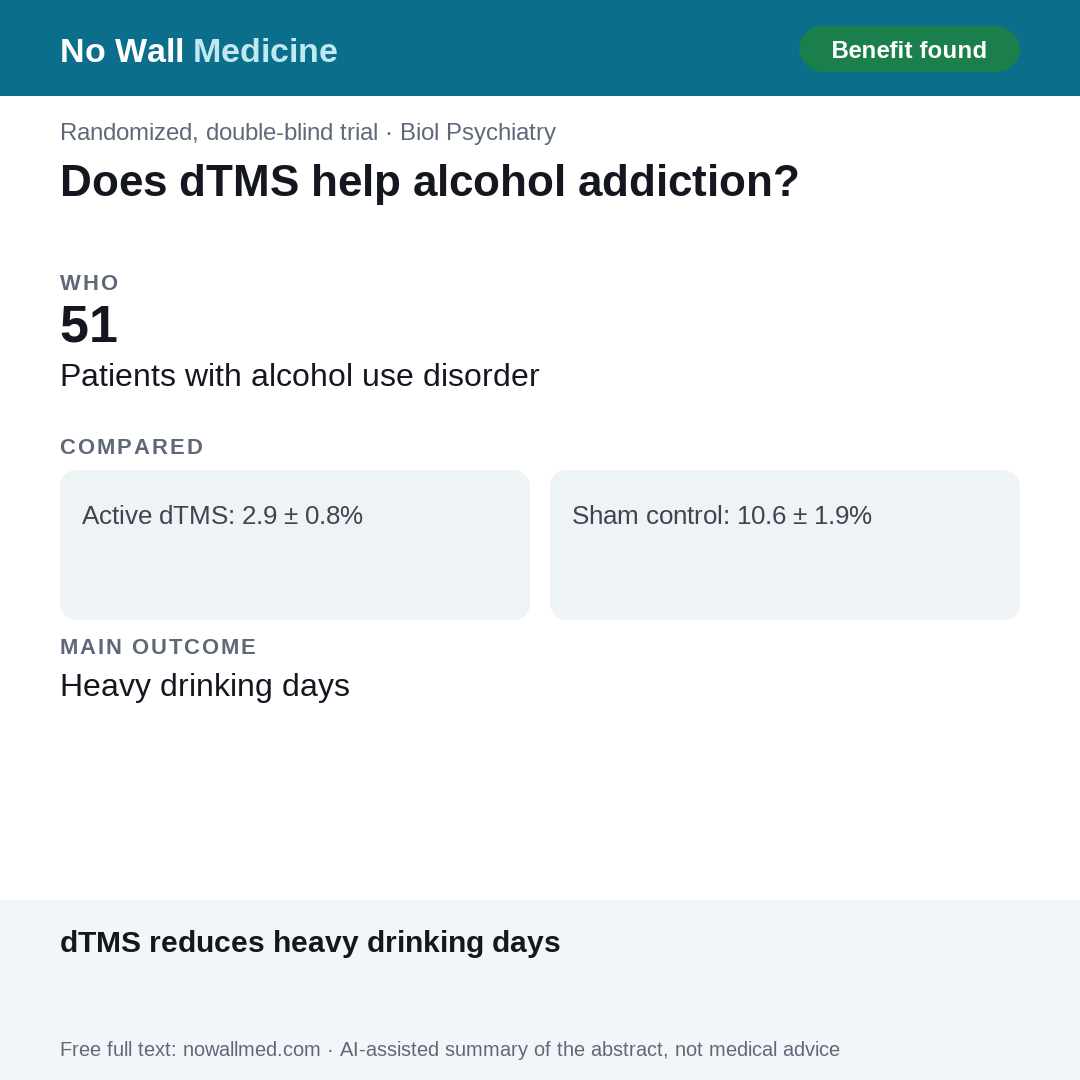
Clinical question: Does dTMS help alcohol addiction?
Why it matters: Treatment options for alcohol addiction are limited, and it is unknown if targeting specific brain circuitry with deep repetitive transcranial magnetic stimulation can improve clinical outcomes.
Key points
- The study randomized 51 recently abstinent patients with moderate to severe alcohol use disorder to receive either active or sham deep repetitive transcranial magnetic stimulation.
- Active treatment was associated with a lower percentage of heavy drinking days during follow-up compared to sham treatment, at 2.9 ± 0.8% versus 10.6 ± 1.9%.
- Active treatment was also associated with lower craving scores and changes in brain connectivity involving the medial prefrontal cortex and anterior cingulate cortex.
Headline and key points written with AI from the paper’s abstract, with every number checked against it. Read the paper before relying on them.
Was this summary helpful?
Subject terms
Cite this article
Harel M, Perini I, Kämpe R, Alyagon U, Shalev H, Besser I. Repetitive Transcranial Magnetic Stimulation in Alcohol Dependence: A Randomized, Double-Blind, Sham-Controlled Proof-of-Concept Trial Targeting the Medial Prefrontal and Anterior Cingulate Cortices. Biol Psychiatry. 2021. doi:10.1016/j.biopsych.2021.11.020
Spotted a mistake? Suggest a correction