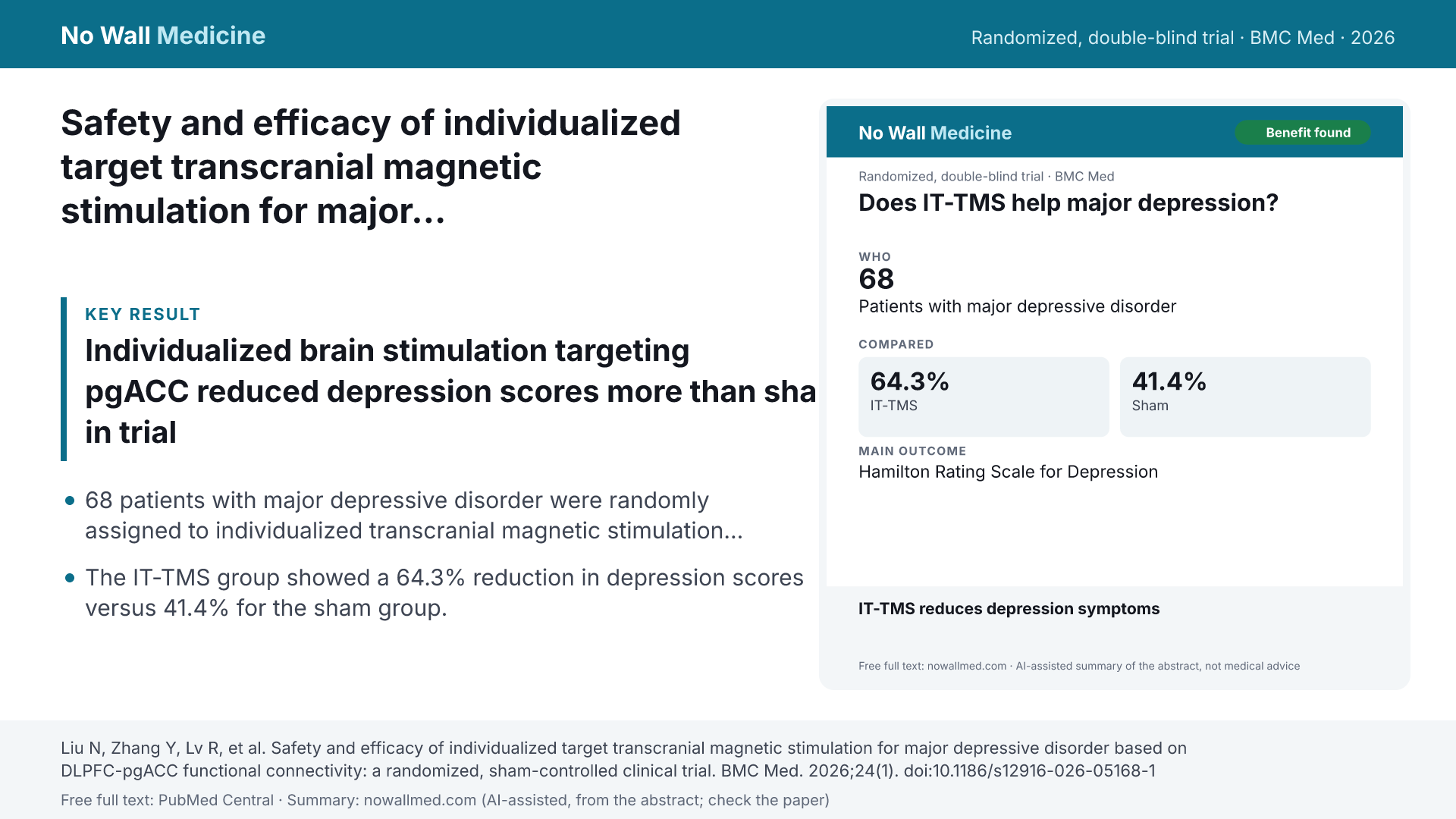
Individualized brain stimulation targeting pgACC reduced depression scores more than sham in trial
Safety and efficacy of individualized target transcranial magnetic stimulation for major depressive disorder based on DLPFC-pgACC functional connectivity: a randomized, sham-controlled clinical trial
Randomized, double-blind trialBenefit found
Does IT-TMS help major depression?
Who
68
Patients with major depressive disorder
Compared
64.3%IT-TMS (95% CI: 55.9-72.7)
41.4%Sham (95% CI: 33.9-48.8)
Main outcome
Hamilton Rating Scale for Depression
Bottom line: IT-TMS reduces depression symptoms
BMC Med · 2026-08-26Download image
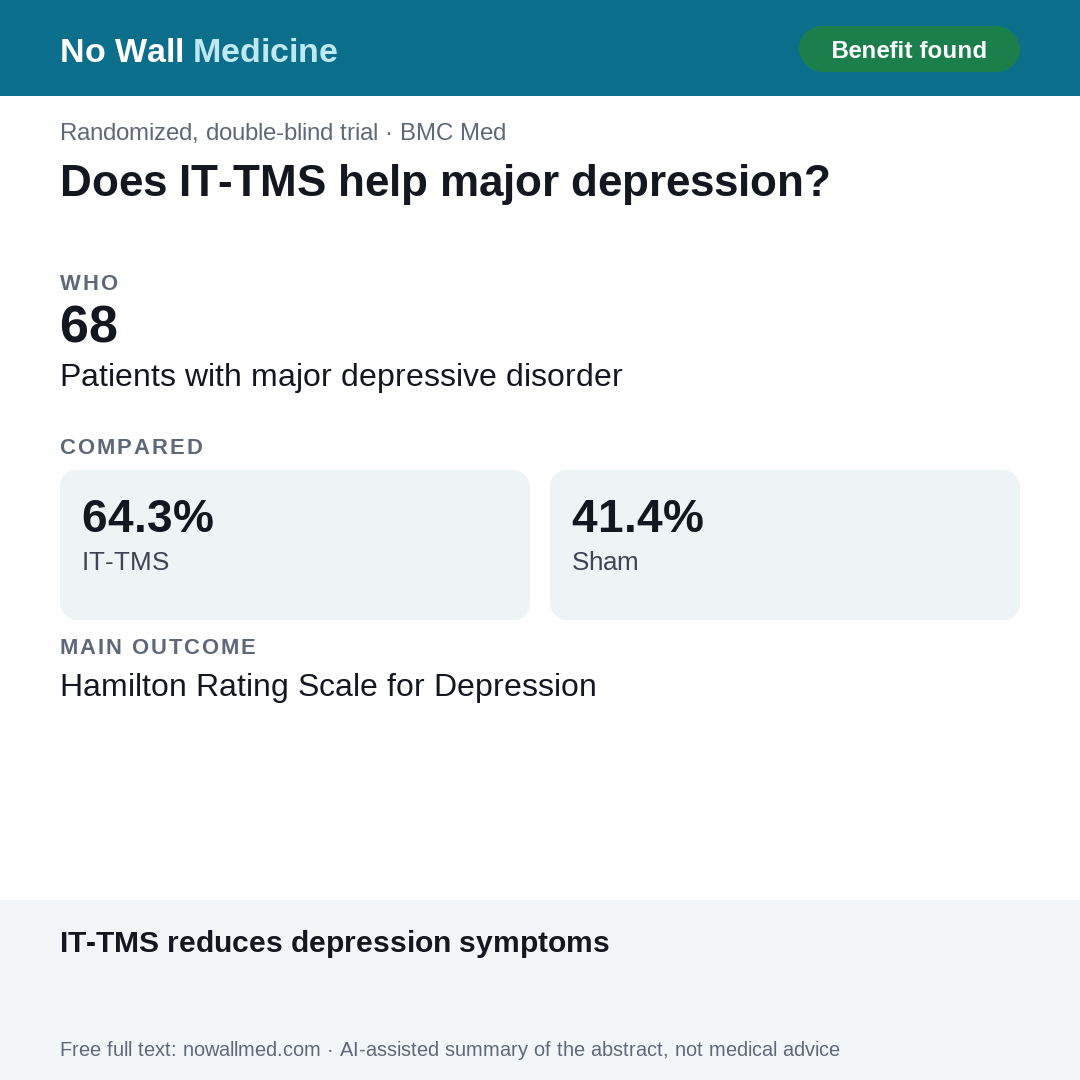
Clinical question: Does IT-TMS help major depression?
Key points
- 68 patients with major depressive disorder were randomly assigned to individualized transcranial magnetic stimulation or sham treatment.
- The IT-TMS group showed a 64.3% reduction in depression scores versus 41.4% for the sham group.
- The difference between the two groups was statistically significant with a P value of 0.0001.
Headline and key points written with AI from the paper’s abstract, with every number checked against it. Read the paper before relying on them.
Was this summary helpful?
Subject terms
Cite this article
Liu N, Zhang Y, Lv R, et al. Safety and efficacy of individualized target transcranial magnetic stimulation for major depressive disorder based on DLPFC-pgACC functional connectivity: a randomized, sham-controlled clinical trial. BMC Med. 2026. doi:10.1186/s12916-026-05168-1
Spotted a mistake? Suggest a correction