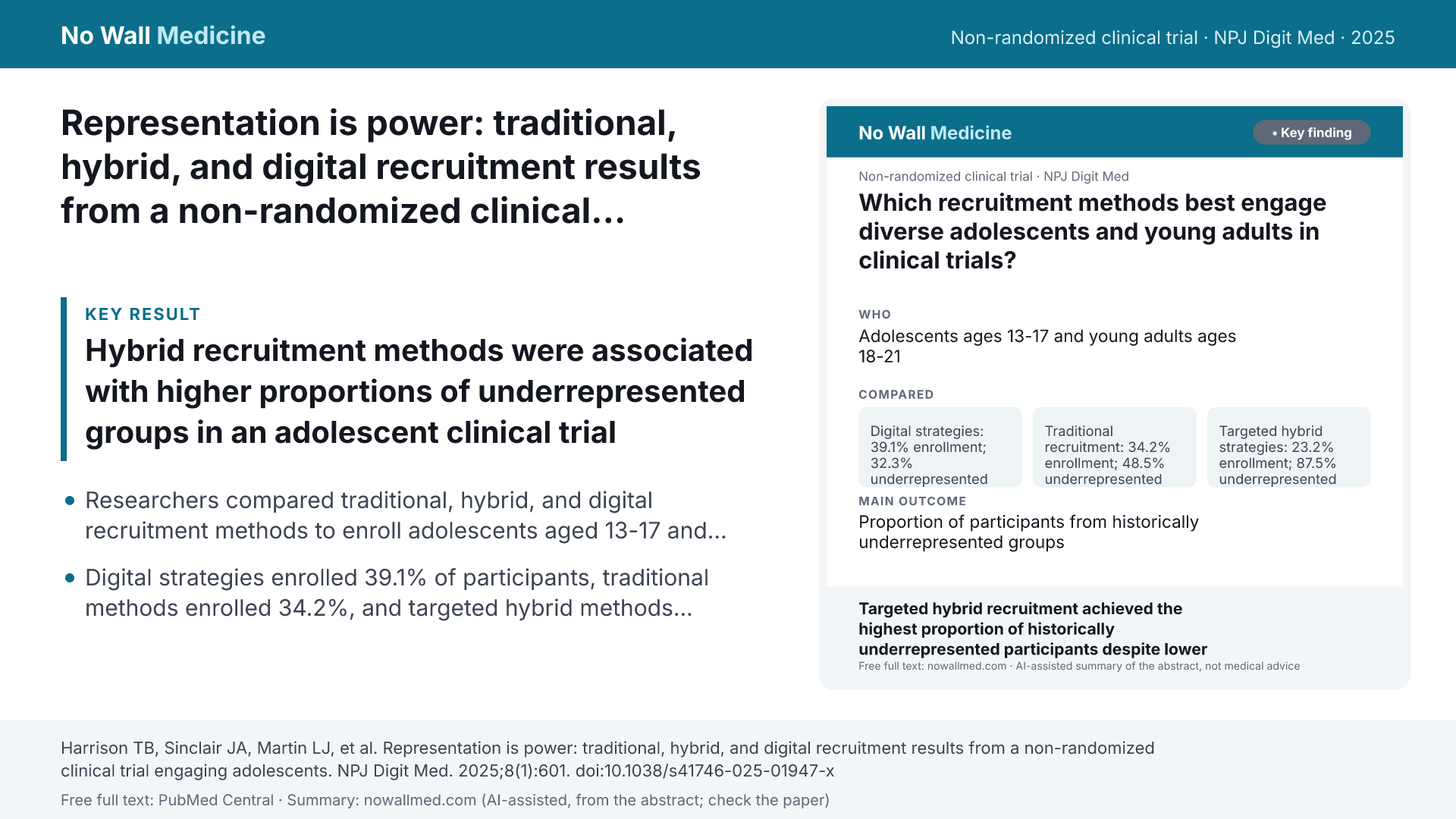
Hybrid recruitment methods were associated with higher proportions of underrepresented groups in an adolescent clinical trial
Representation is power: traditional, hybrid, and digital recruitment results from a non-randomized clinical trial engaging adolescents
Non-randomized clinical trialBenefit found
Which recruitment methods best engage diverse adolescents and young adults in clinical trials?
Who
Adolescents ages 13-17 and young adults ages 18-21
Compared
Digital strategies: 39.1% enrollment; 32.3% underrepresented groups
Traditional recruitment: 34.2% enrollment; 48.5% underrepresented groups
Targeted hybrid strategies: 23.2% enrollment; 87.5% underrepresented groups
Main outcome
Proportion of participants from historically underrepresented groups
Result: p < 0.001
Bottom line: Targeted hybrid recruitment achieved the highest proportion of historically underrepresented participants despite lower overall enrollment.
Limitation: Non-randomized clinical trial design
NPJ Digit Med · 2025-10-07Download image
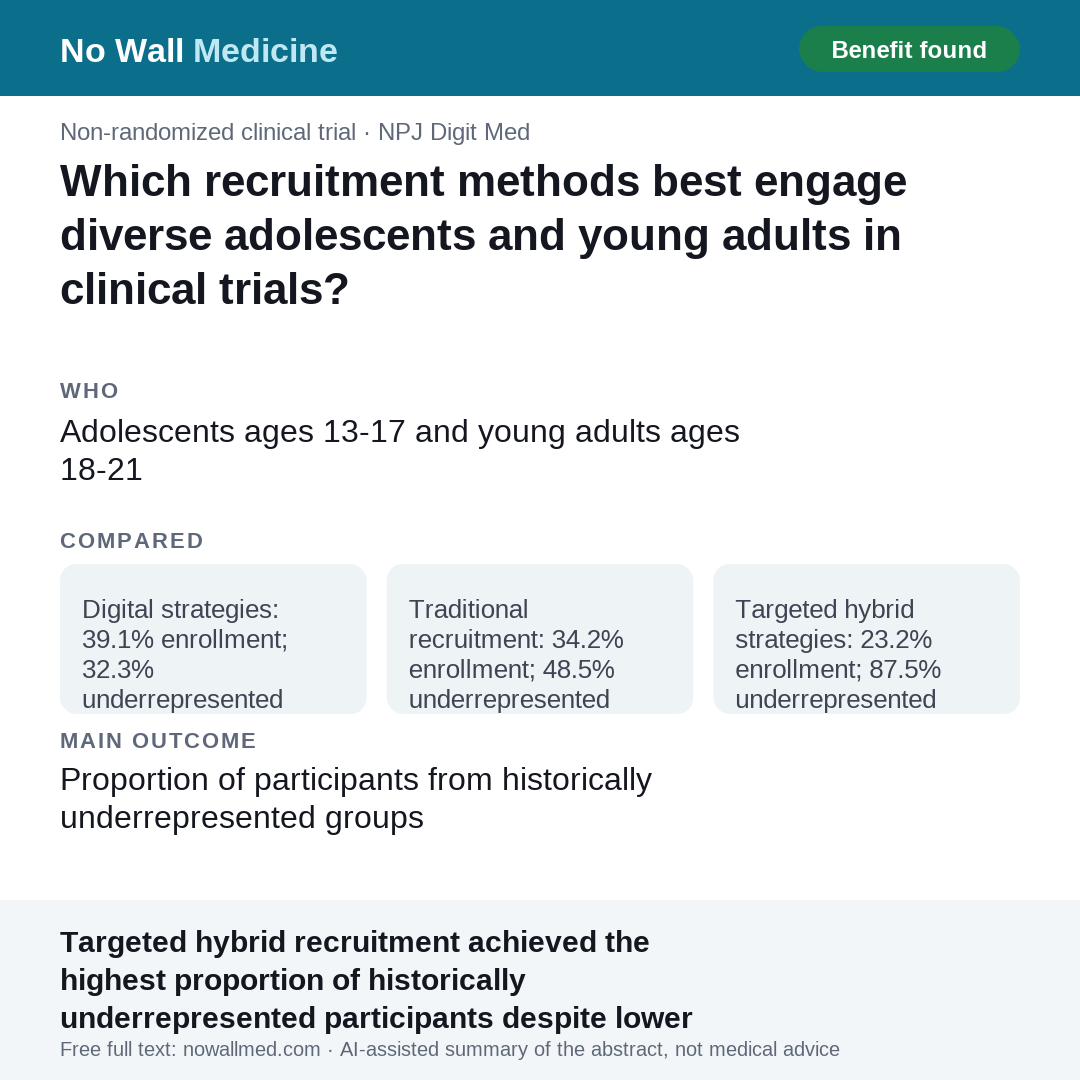
Clinical question: Which recruitment methods best engage diverse adolescents and young adults in clinical trials?
Why it matters: Clinical trials often face challenges in achieving population representativeness or participant sampling that matches the actual burden of disease.
Key points
- Researchers compared traditional, hybrid, and digital recruitment methods to enroll adolescents aged 13-17 and young adults aged 18-21 in a non-randomized clinical trial.
- Digital strategies enrolled 39.1% of participants, traditional methods enrolled 34.2%, and targeted hybrid methods involving letters and text messages enrolled 23.2%.
- Targeted hybrid recruitment was associated with the largest proportion of participants from historically underrepresented groups at 87.5%, compared to 48.5% for traditional and 32.3% for digital methods.
Limitation the authors note: non-randomized clinical trial
Headline and key points written with AI from the paper’s abstract, with every number checked against it. Read the paper before relying on them.
Was this summary helpful?
Cite this article
Harrison TB, Sinclair JA, Martin LJ, et al. Representation is power: traditional, hybrid, and digital recruitment results from a non-randomized clinical trial engaging adolescents. NPJ Digit Med. 2025. doi:10.1038/s41746-025-01947-x
Spotted a mistake? Suggest a correction