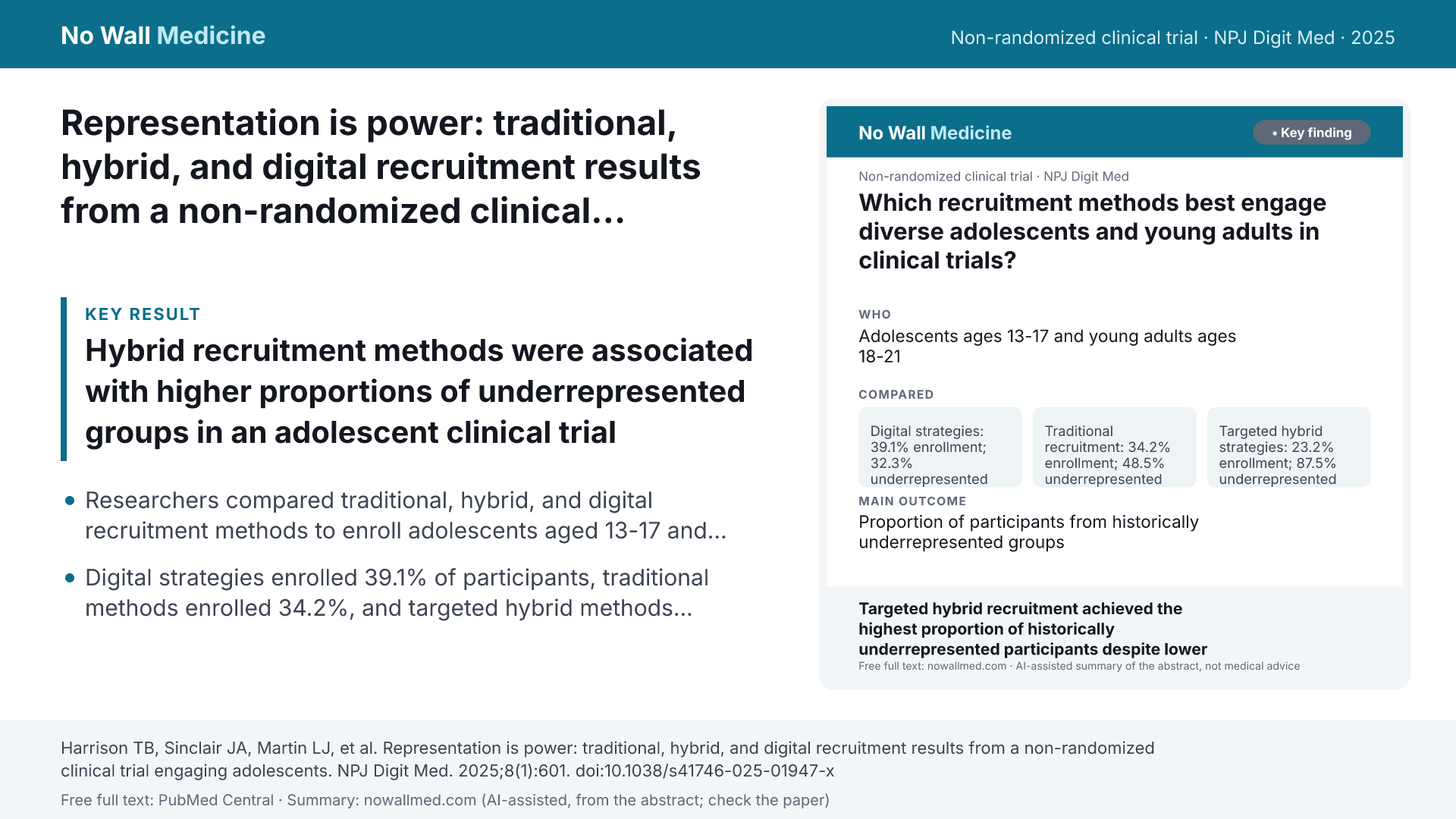
Representation is power: traditional, hybrid, and digital recruitment results from a non-randomized clinical trial engaging adolescents
Key result: Hybrid recruitment methods were associated with higher proportions of underrepresented groups in an adolescent clinical trial
Key points
- Researchers compared traditional, hybrid, and digital recruitment methods to enroll adolescents aged 13-17 and young adults aged 18-21 in a non-randomized clinical trial.
- Digital strategies enrolled 39.1% of participants, traditional methods enrolled 34.2%, and targeted hybrid methods involving letters and text messages enrolled 23.2%.
- Targeted hybrid recruitment was associated with the largest proportion of participants from historically underrepresented groups at 87.5%, compared to 48.5% for traditional and 32.3% for digital methods.
Why it matters: Clinical trials often face challenges in achieving population representativeness or participant sampling that matches the actual burden of disease.
Limitation the authors note: non-randomized clinical trial
Discussion prompts
- Would these patients look like yours? Who was left out?
- Is the main outcome one that matters to patients?
- Is the difference large enough to change what you do?
Cite: Harrison TB, Sinclair JA, Martin LJ, et al. Representation is power: traditional, hybrid, and digital recruitment results from a non-randomized clinical trial engaging adolescents. NPJ Digit Med. 2025;8(1):601. doi:10.1038/s41746-025-01947-x
Free full text: PubMed Central · Summary and visual abstract: nowallmed.com/a/representation-is-power-traditional-hybrid-and-digital-recruitment-5xprs7/ (AI-assisted from the abstract; check the paper before relying on it).