Research without prior consent was not linked to different mortality effects in critical care trials
Research without prior consent procedure and intervention effect on mortality in critical care: a meta-epidemiological study of randomized controlled trials
Meta-epidemiological study of meta-analysesNo clear difference
Do research without prior consent procedures affect intervention effects on mortality in critical care?
Who
103,011
Critically ill adults in randomized controlled trials
Compared
Research without prior consent
Standard consent
Main outcome
Intervention effect on mortality
Result: ratio of odds ratios 1.05 (95% CI 0.83-1.34)
Bottom line: Research without prior consent does not change intervention effects on mortality but improves recruitment and randomization speed.
Crit Care · 2025-07-24Download image
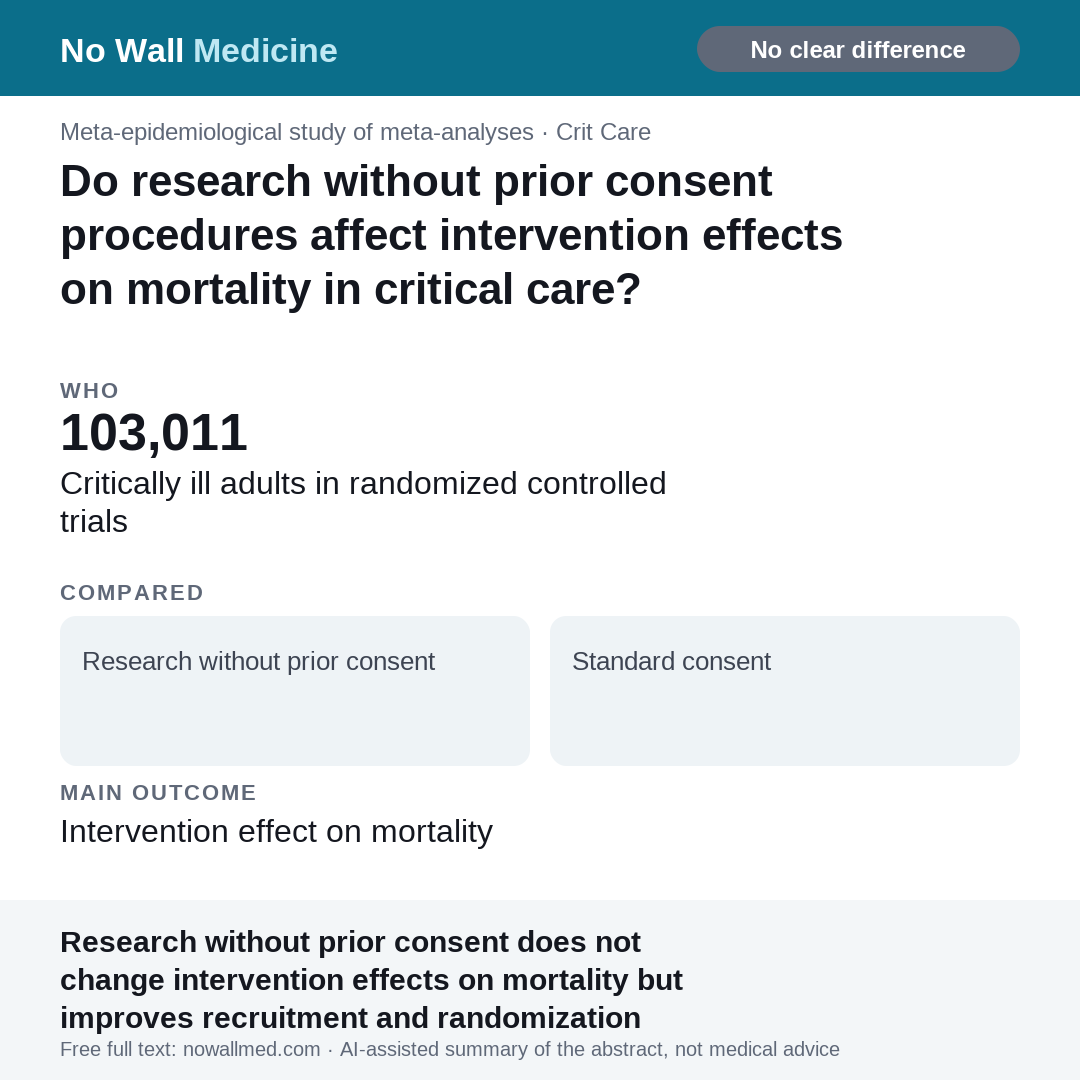
Clinical question: Do research without prior consent procedures affect intervention effects on mortality in critical care?
Why it matters: It is uncertain if using research without prior consent procedures affects how well interventions work for mortality in critically ill patients.
Key points
- Researchers analyzed 42 meta-analyses containing 323 randomized controlled trials and 103,011 patients to compare research without prior consent to standard consent procedures.
- There was no significant difference in the effect of interventions on mortality between trials using research without prior consent and those using standard consent (pooled ratio of odds ratios, 1.05 [95% CI 0.83-1.34]).
- Research without prior consent was associated with shorter time to randomization (3 [1-9] vs. 11 [4-23] hours) and higher recruitment rates (9.6 [4.7-18.7] vs. 4.5 [1.9-8.6] patients/month).
Headline and key points written with AI from the paper’s abstract, with every number checked against it. Read the paper before relying on them.
Topics
Cite this article
Hariri G, Louie J, Khan A, Tahir P, Martin GL, Dechartres A. Research without prior consent procedure and intervention effect on mortality in critical care: a meta-epidemiological study of randomized controlled trials. Crit Care. 2025. doi:10.1186/s13054-025-05480-x
Spotted a mistake? Suggest a correction
Top studies every Monday
The week’s key trials and guidelines in your specialties, by email. Free.
Get the weekly digest