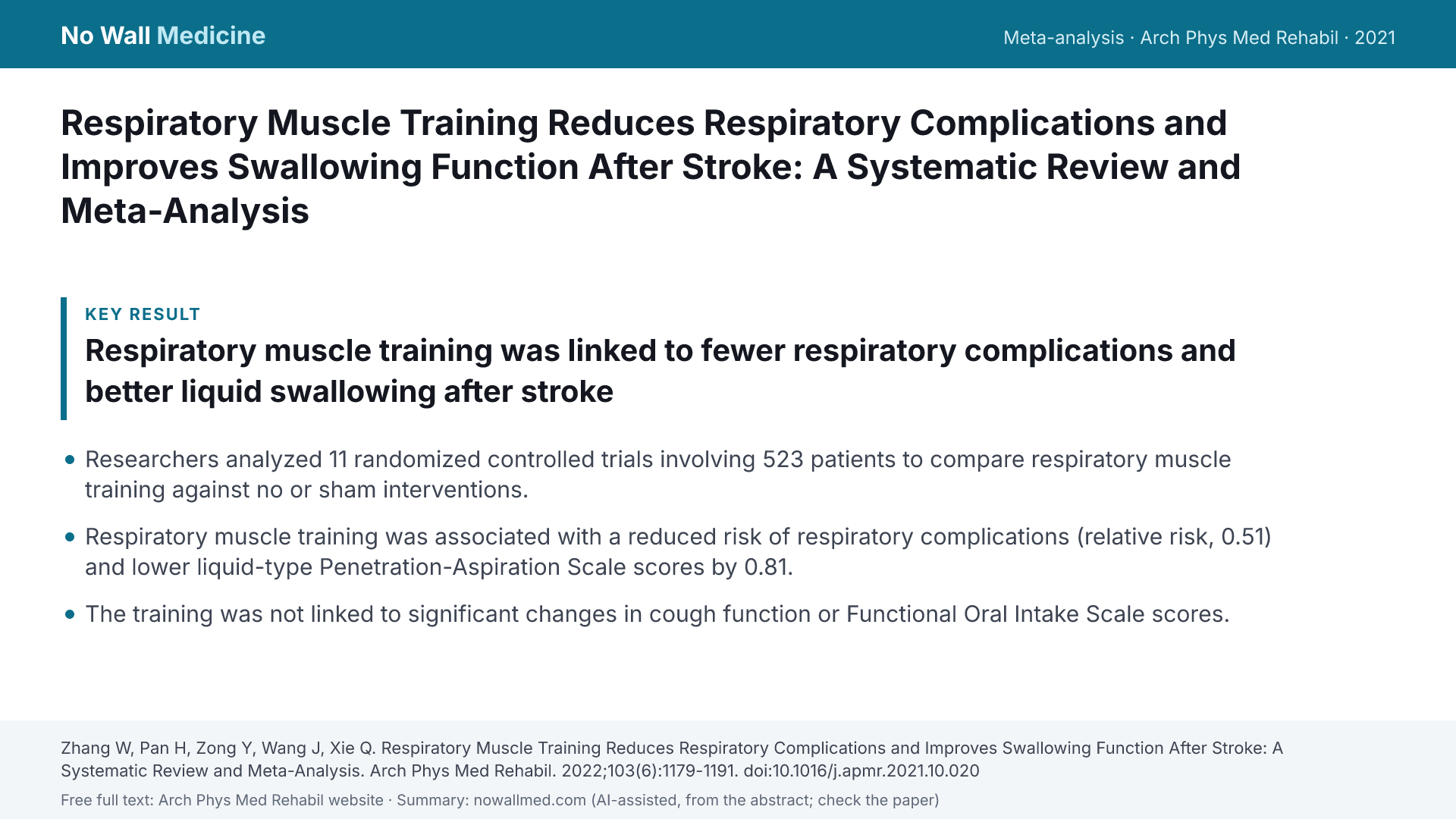
Respiratory muscle training was linked to fewer respiratory complications and better liquid swallowing after stroke
Respiratory Muscle Training Reduces Respiratory Complications and Improves Swallowing Function After Stroke: A Systematic Review and Meta-Analysis
Key points
- Researchers analyzed 11 randomized controlled trials involving 523 patients to compare respiratory muscle training against no or sham interventions.
- Respiratory muscle training was associated with a reduced risk of respiratory complications (relative risk, 0.51) and lower liquid-type Penetration-Aspiration Scale scores by 0.81.
- The training was not linked to significant changes in cough function or Functional Oral Intake Scale scores.
Limitation the authors note: The authors state that additional multicenter studies with larger patient cohorts and long-term follow-up are required to validate these findings.
Headline and key points written with AI from the paper’s abstract, with every number checked against it. Read the paper before relying on them.
Was this summary helpful?
Subject terms
Headline, design, result, key points, caveat and citation as plain text.
Cite this article
Zhang W, Pan H, Zong Y, Wang J, Xie Q. Respiratory Muscle Training Reduces Respiratory Complications and Improves Swallowing Function After Stroke: A Systematic Review and Meta-Analysis. Arch Phys Med Rehabil. 2021. doi:10.1016/j.apmr.2021.10.020
Spotted a mistake? Suggest a correction