Respiratory strength training improved breathing pressure and bulbar function in early-stage ALS patients
Respiratory Strength Training in Amyotrophic Lateral Sclerosis: A Double-Blind, Randomized, Multicenter, Sham-Controlled Trial
Double-blind, randomized, sham-controlled trialMixed results
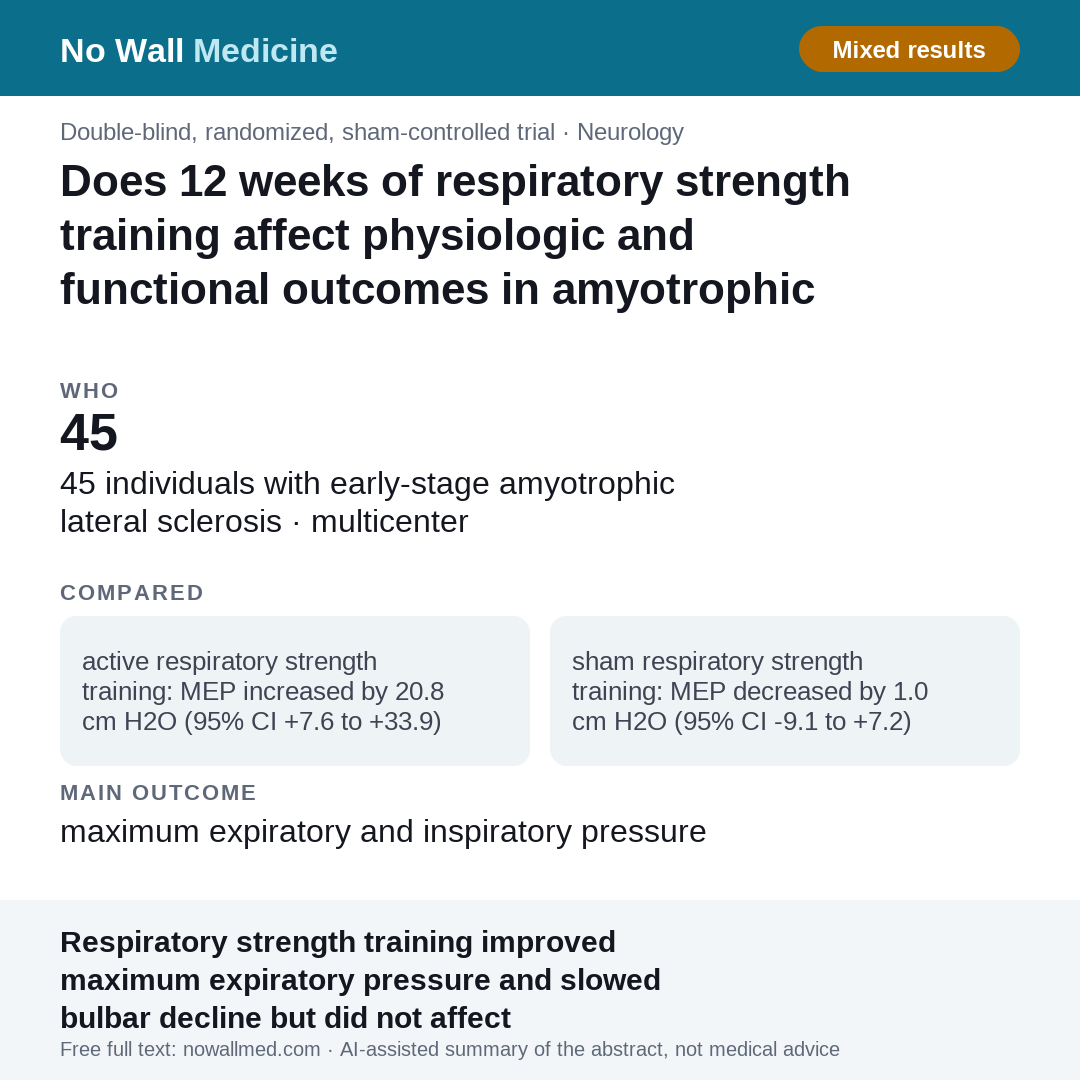
Does 12 weeks of respiratory strength training affect physiologic and functional outcomes in amyotrophic lateral sclerosis?
Who
45
45 individuals with early-stage amyotrophic lateral sclerosis · multicenter
Compared
active respiratory strength training: MEP increased by 20.8 cm H2O (95% CI +7.6 to +33.9)
sham respiratory strength training: MEP decreased by 1.0 cm H2O (95% CI -9.1 to +7.2)
Main outcome
maximum expiratory and inspiratory pressure
Result: bulbar subscale slope -0.29 vs -0.12 points/month (p = 0.02)
Bottom line: Respiratory strength training improved maximum expiratory pressure and slowed bulbar decline but did not affect inspiratory pressure or forced vital capacity.
Limitation: Further work is needed to determine optimal training intensity and resistance load specifications.
Neurology · 2023-02-20Download image
Clinical question: Does 12 weeks of respiratory strength training affect physiologic and functional outcomes in amyotrophic lateral sclerosis?
Why it matters: It is unknown if a 12-week respiratory strength training program provides short-term physiologic benefits or one-year functional effects for people with early-stage amyotrophic lateral sclerosis.
Key points
- Researchers randomized 45 individuals with early-stage amyotrophic lateral sclerosis to either 12 weeks of active respiratory strength training or a sham program.
- Active training increased maximum expiratory pressure by 20.8 cm H2O and cough peak inspiratory flow, but did not significantly change maximum inspiratory pressure or forced vital capacity.
- At 12 months, the sham group had a more than two-fold faster rate of bulbar decline compared to the active group, with slopes of -0.29 versus -0.12 points/month.
Headline and key points written with AI from the paper’s abstract, with every number checked against it. Read the paper before relying on them.
Topics
Cite this article
Plowman EK, Gray LT, Chapin J, Anderson A, Vasilopoulos T, Gooch C. Respiratory Strength Training in Amyotrophic Lateral Sclerosis: A Double-Blind, Randomized, Multicenter, Sham-Controlled Trial. Neurology. 2023. doi:10.1212/WNL.0000000000206830
Spotted a mistake? Suggest a correction
Top studies every Monday
The week’s key trials and guidelines in your specialties, plus any topics you follow. By email, free.
Get the weekly digest