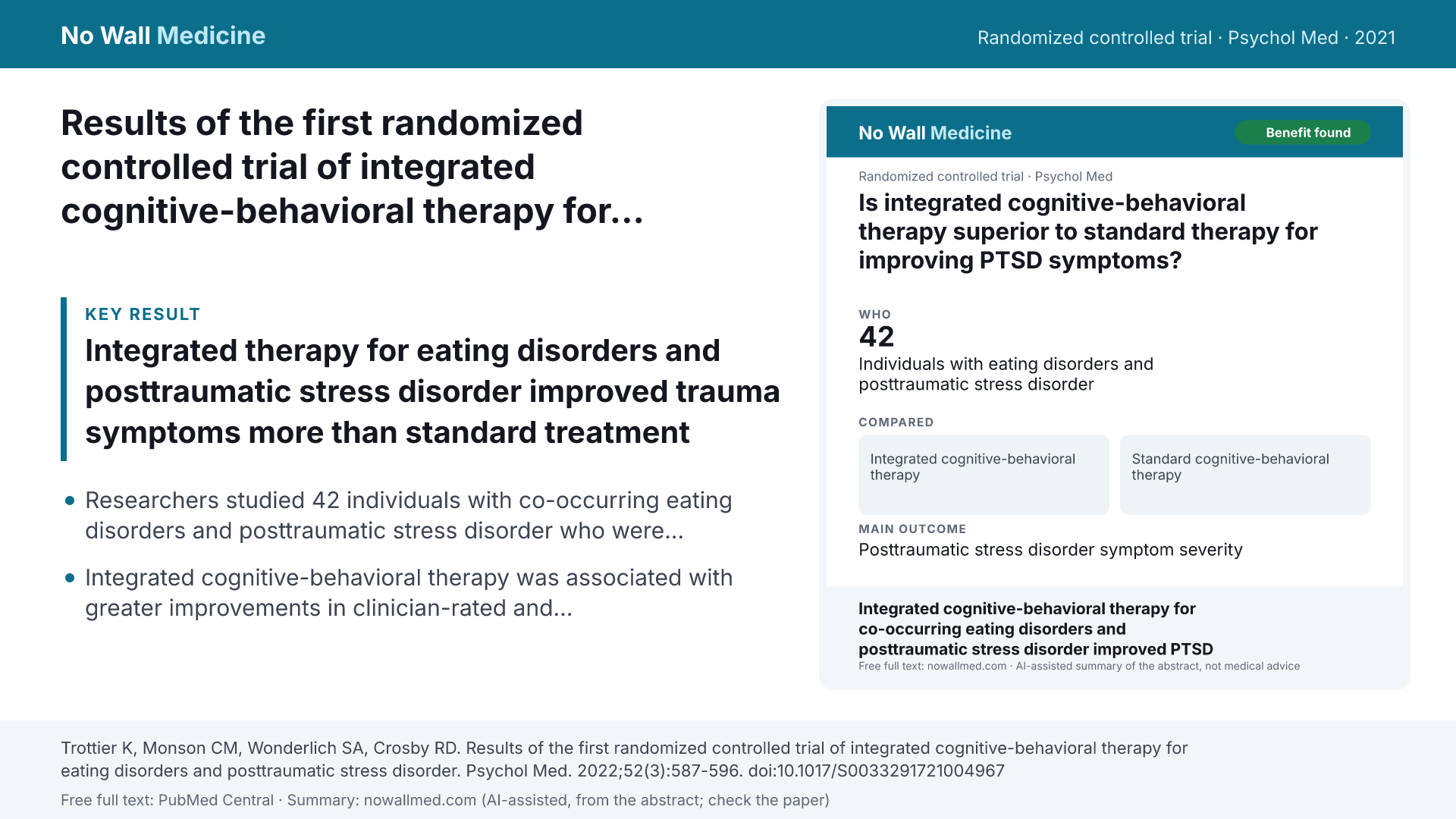
Results of the first randomized controlled trial of integrated cognitive-behavioral therapy for eating disorders and posttraumatic stress disorder
Key result: Integrated therapy for eating disorders and posttraumatic stress disorder improved trauma symptoms more than standard treatment
Key points
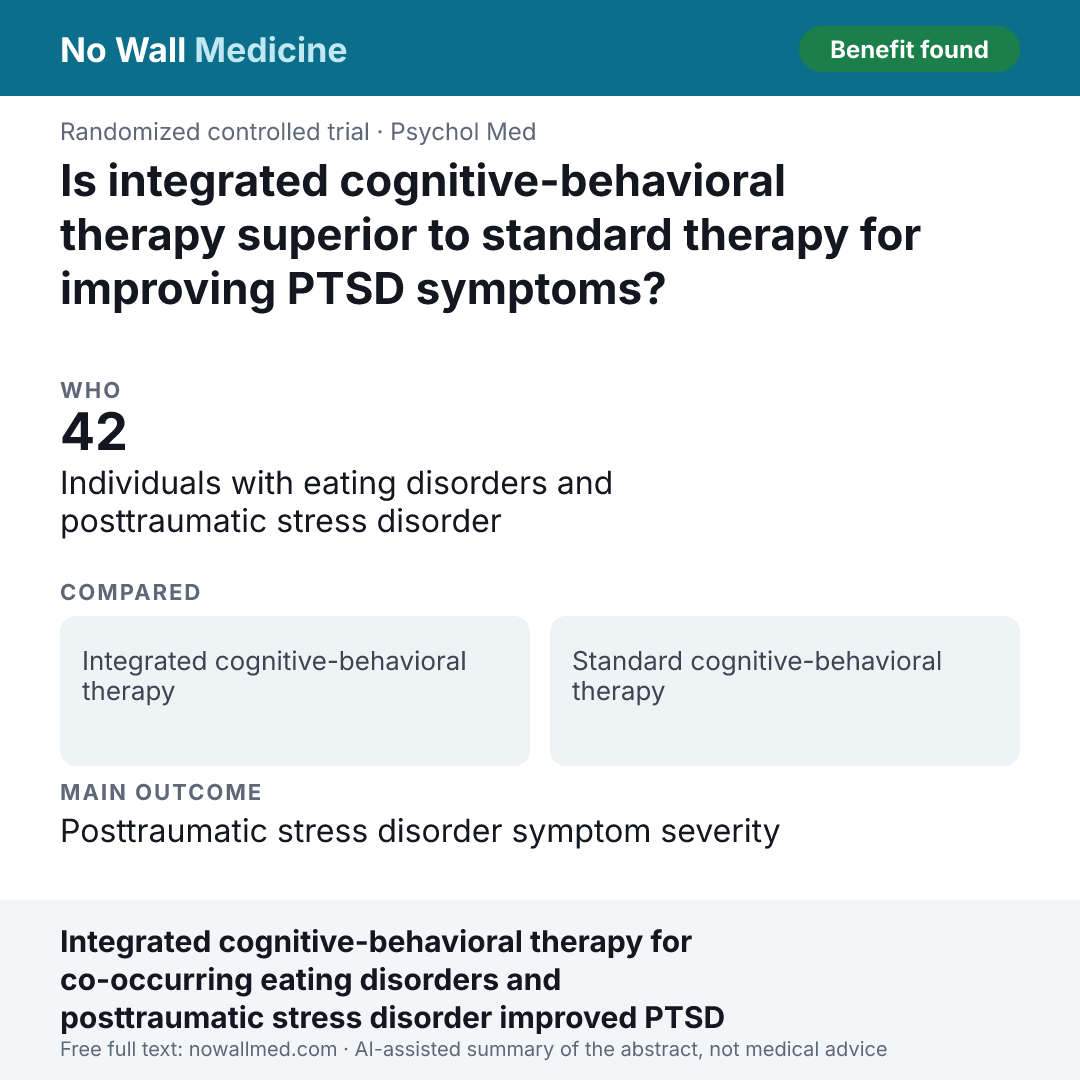
- Researchers studied 42 individuals with co-occurring eating disorders and posttraumatic stress disorder who were randomized to receive either integrated cognitive-behavioral therapy or standard cognitive-behavioral therapy for eating disorders.
- Integrated cognitive-behavioral therapy was associated with greater improvements in clinician-rated and self-reported posttraumatic stress disorder symptom severity compared to standard treatment.
- Both treatment types were associated with significant improvements in anxiety, depression, and posttraumatic stress disorder symptoms that were maintained at 3- and 6-month follow-up.
Limitation the authors note: Future studies with larger sample sizes are needed to determine if integrated treatment provides benefits for eating disorder outcomes.
Discussion prompts
- Would these patients look like yours? Who was left out?
- Is the main outcome one that matters to patients?
- Is the difference large enough to change what you do?
Cite: Trottier K, Monson CM, Wonderlich SA, Crosby RD. Results of the first randomized controlled trial of integrated cognitive-behavioral therapy for eating disorders and posttraumatic stress disorder. Psychol Med. 2022;52(3):587-596. doi:10.1017/S0033291721004967
Free full text: PubMed Central · Summary and visual abstract: nowallmed.com/a/results-of-the-first-randomized-controlled-trial-of-integrated-st50bv/ (AI-assisted from the abstract; check the paper before relying on it).