Diabetes and higher stroke severity scores were associated with lower return to work rates
Return to Work After Ischemic Stroke in Young Adults: A Multicenter Cohort Study, Systematic Review, and Meta-Analysis
Systematic review and meta-analysisMixed results
What are the proportions and factors associated with return to work after young adult ischemic stroke?
Who
1914
Young adults aged 18 to 50 years with ischemic stroke · Multicenter cohort study in Singapore
Compared
63.2%Pooled return to work proportion (984/1574 [95% CI, 56.0-69.9])
84.7%Pooled functional recovery proportion (719/846 [95% CI, 81.1-87.8])
Main outcome
Return to work and functional recovery
Bottom line: Large-artery atherosclerosis, diabetes, and higher stroke severity scores are associated with lower odds of returning to work.
J Am Heart Assoc · 2025-04-03Download image
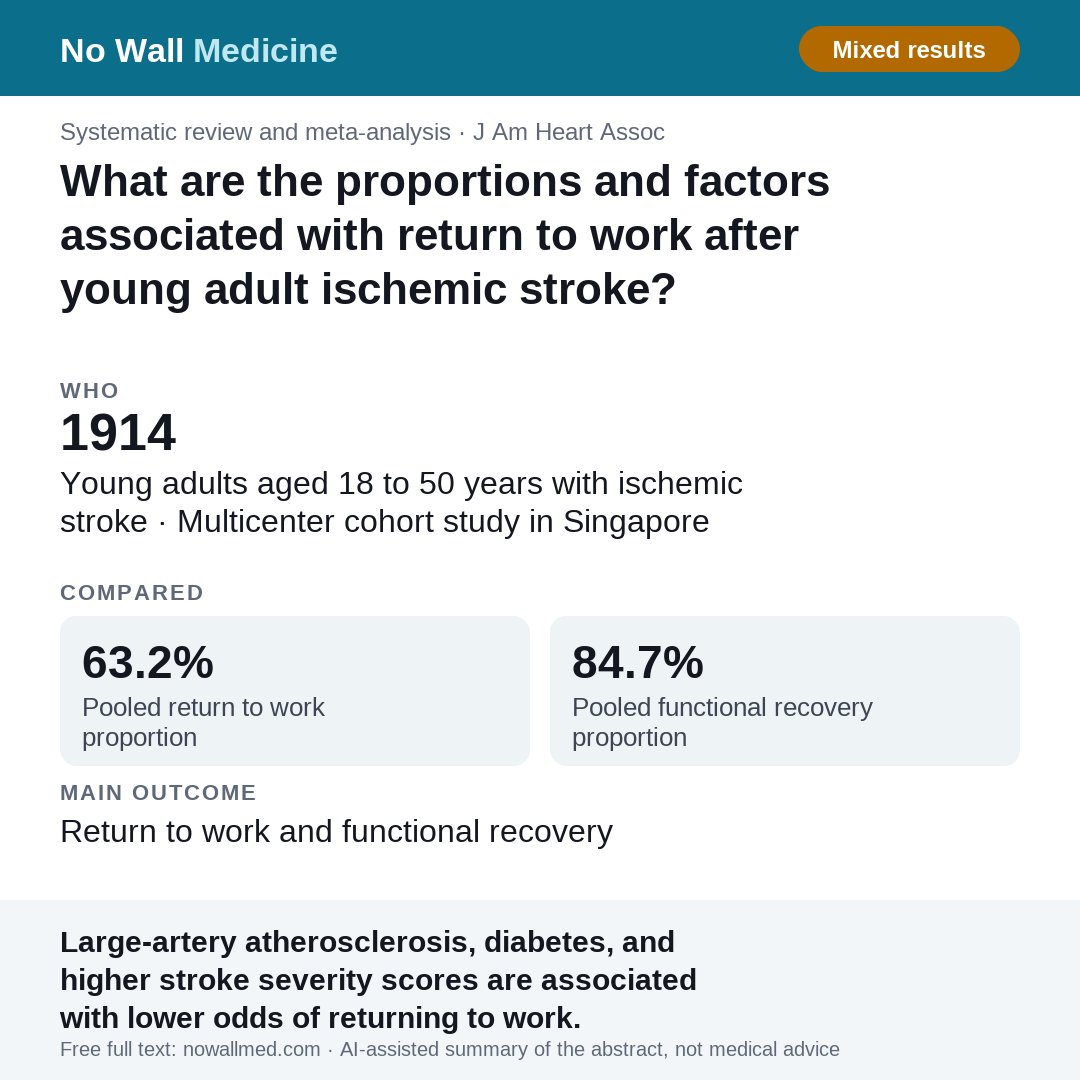
Clinical question: What are the proportions and factors associated with return to work after young adult ischemic stroke?
Why it matters: The specific proportions of young adults returning to work and the factors associated with this outcome after an ischemic stroke were not fully established.
Key points
- Researchers analyzed 362 patients in a Singapore cohort and 1,914 patients from six global studies to assess return to work after ischemic stroke.
- The pooled return to work rate was 63.2% (984/1574 [95% CI, 56.0-69.9]) and functional recovery, or ability to perform daily activities, was 84.7% (719/846 [95% CI, 81.1-87.8]).
- Lower odds of returning to work were associated with diabetes, large-artery atherosclerosis, and admission National Institutes of Health Stroke Scale scores greater than 15.
Headline and key points written with AI from the paper’s abstract, with every number checked against it. Read the paper before relying on them.
Was this summary helpful?
Subject terms
Cite this article
Kwok GYR, Yeong N, Law M, Kang ZL, Achar A, Lim XY. Return to Work After Ischemic Stroke in Young Adults: A Multicenter Cohort Study, Systematic Review, and Meta-Analysis. J Am Heart Assoc. 2025. doi:10.1161/JAHA.124.036427
Spotted a mistake? Suggest a correction
Top studies every Monday
The week’s key trials and guidelines in your specialties, plus any topics you follow. By email, free.
Get the weekly digest