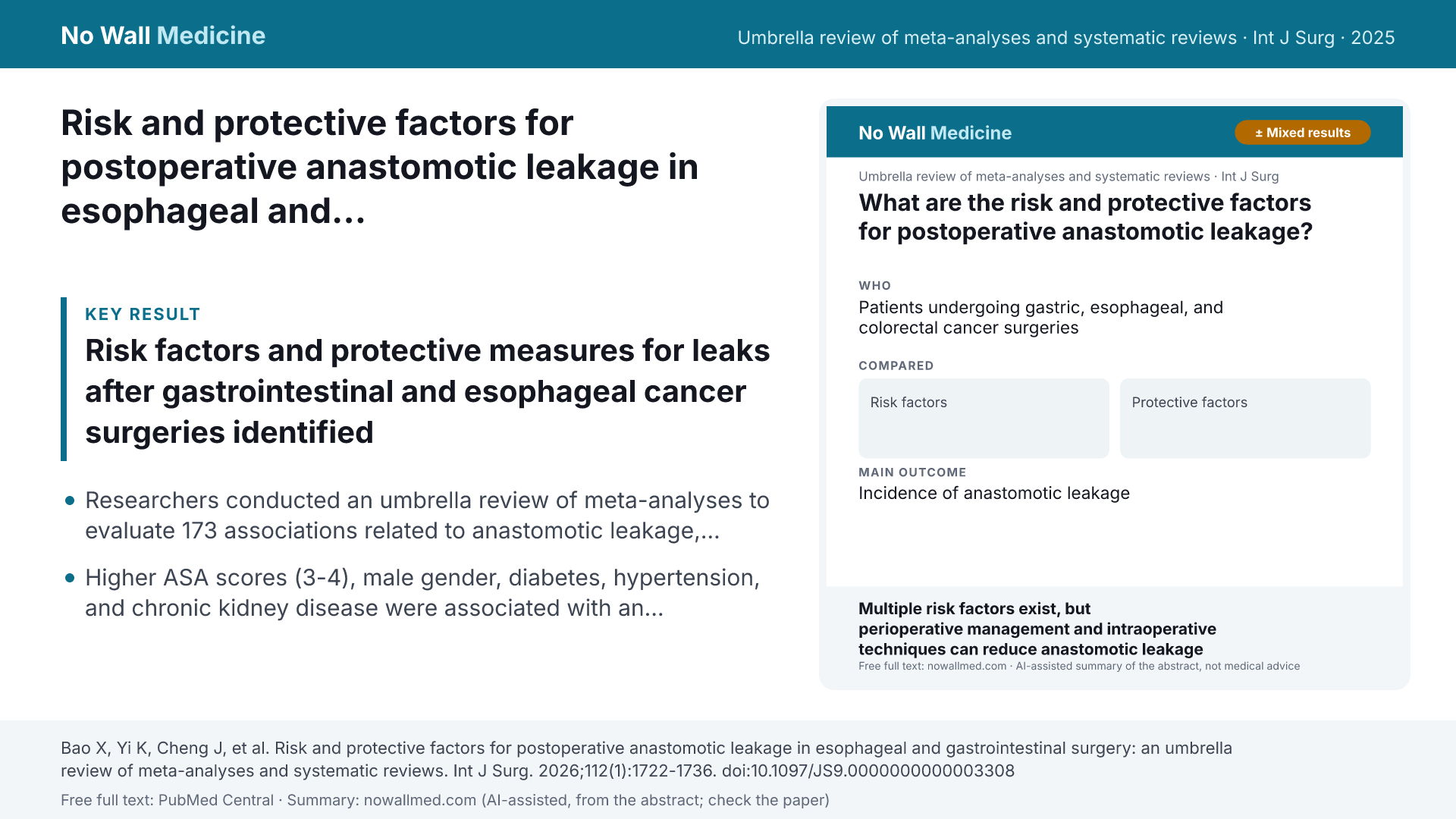
Risk factors and protective measures for leaks after gastrointestinal and esophageal cancer surgeries identified
Risk and protective factors for postoperative anastomotic leakage in esophageal and gastrointestinal surgery: an umbrella review of meta-analyses and systematic reviews
Umbrella review of meta-analyses and systematic reviewsMixed results
What are the risk and protective factors for postoperative anastomotic leakage?
Who
Patients undergoing gastric, esophageal, and colorectal cancer surgeries
Compared
Risk factors
Protective factors
Main outcome
Incidence of anastomotic leakage
Bottom line: Multiple risk factors exist, but perioperative management and intraoperative techniques can reduce anastomotic leakage risk.
Limitation: Need for high-quality, large-sample, multicenter studies to explore prevention strategies.
Int J Surg · 2025-09-19Download image
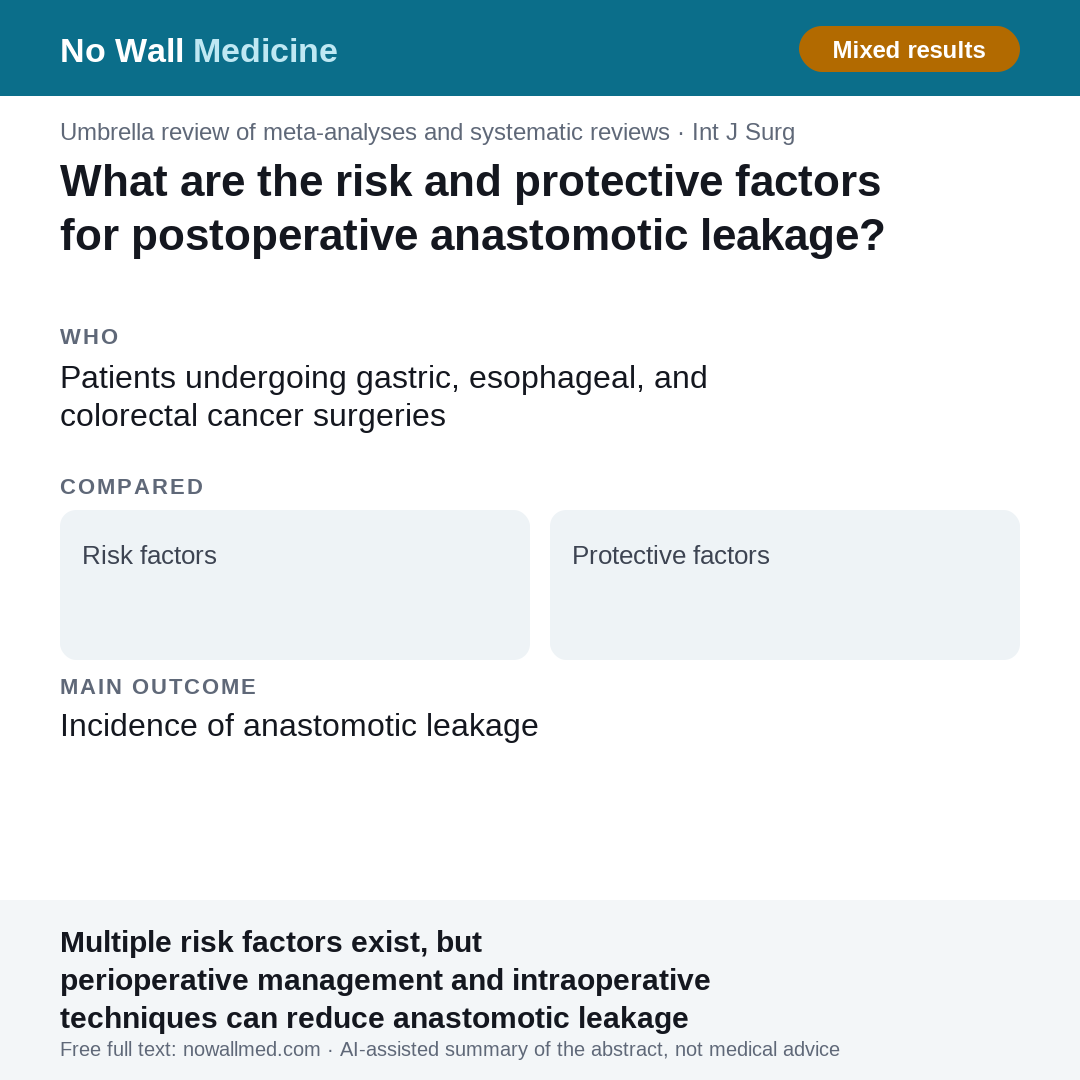
Clinical question: What are the risk and protective factors for postoperative anastomotic leakage?
Why it matters: Anastomotic leakage is a serious complication in gastrointestinal surgery, and clinicians need to identify specific risk and protective factors to manage patient recovery.
Key points
- Researchers conducted an umbrella review of meta-analyses to evaluate 173 associations related to anastomotic leakage, which is a complication where a surgical connection fails to heal.
- Higher ASA scores (3-4), male gender, diabetes, hypertension, and chronic kidney disease were associated with an increased risk of leakage.
- Protective factors associated with lower leakage risk included preoperative mechanical bowel preparation with oral antibiotics, indocyanine green fluorescence imaging, and the use of collagen or fibrin-based sealants.
Headline and key points written with AI from the paper’s abstract, with every number checked against it. Read the paper before relying on them.
Was this summary helpful?
Subject terms
Headline, design, result, key points, caveat and citation as plain text.
Cite this article
Bao X, Yi K, Cheng J, et al. Risk and protective factors for postoperative anastomotic leakage in esophageal and gastrointestinal surgery: an umbrella review of meta-analyses and systematic reviews. Int J Surg. 2025. doi:10.1097/JS9.0000000000003308
Spotted a mistake? Suggest a correction