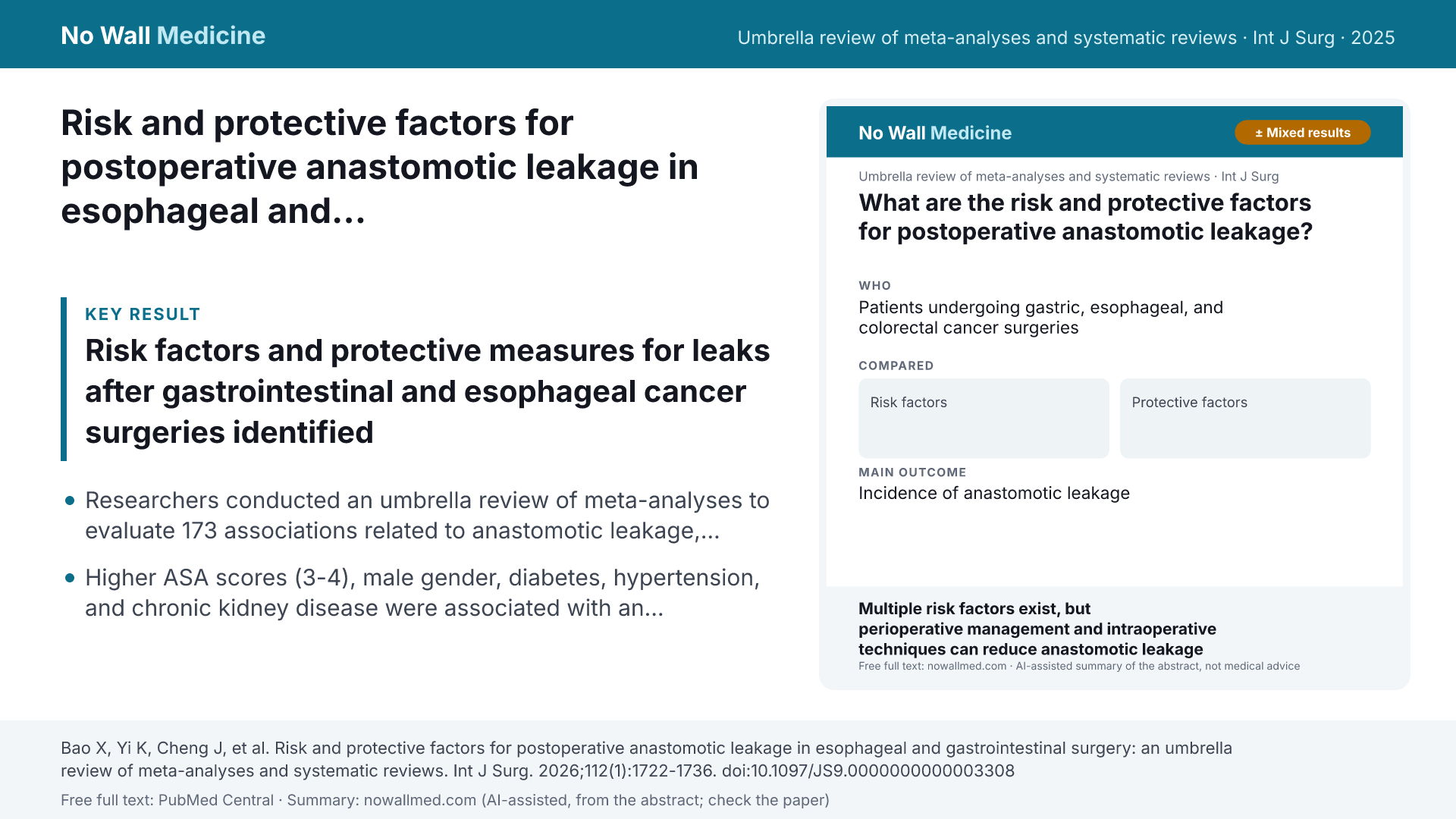
Risk and protective factors for postoperative anastomotic leakage in esophageal and gastrointestinal surgery: an umbrella review of meta-analyses and systematic reviews
Key result: Risk factors and protective measures for leaks after gastrointestinal and esophageal cancer surgeries identified
Key points
- Researchers conducted an umbrella review of meta-analyses to evaluate 173 associations related to anastomotic leakage, which is a complication where a surgical connection fails to heal.
- Higher ASA scores (3-4), male gender, diabetes, hypertension, and chronic kidney disease were associated with an increased risk of leakage.
- Protective factors associated with lower leakage risk included preoperative mechanical bowel preparation with oral antibiotics, indocyanine green fluorescence imaging, and the use of collagen or fibrin-based sealants.
Why it matters: Anastomotic leakage is a serious complication in gastrointestinal surgery, and clinicians need to identify specific risk and protective factors to manage patient recovery.
Discussion prompts
- Would these patients look like yours? Who was left out?
- Is the main outcome one that matters to patients?
- Is the difference large enough to change what you do?
Cite: Bao X, Yi K, Cheng J, et al. Risk and protective factors for postoperative anastomotic leakage in esophageal and gastrointestinal surgery: an umbrella review of meta-analyses and systematic reviews. Int J Surg. 2026;112(1):1722-1736. doi:10.1097/JS9.0000000000003308
Free full text: PubMed Central · Summary and visual abstract: nowallmed.com/a/risk-and-protective-factors-for-postoperative-anastomotic-leakage-in-cv6uzu/ (AI-assisted from the abstract; check the paper before relying on it).