Specific medical conditions were associated with higher risks of invasive pneumococcal disease in adults
Risk conditions for invasive pneumococcal disease in adults: a systematic review and meta-analysis
Systematic review and meta-analysisBenefit, low certainty
What are the relative risk conditions for invasive pneumococcal disease in adults?
Who
Adults with various risk conditions compared to the general population
Compared
Immunocompromising conditions: highest incidence rate ratios reported
General population
Main outcome
Incidence rate ratios for invasive pneumococcal disease
Result: transplant recipients 30.75 (95% CI 17.64-53.60)
Bottom line: Immunocompromising conditions like transplant and asplenia significantly increase invasive pneumococcal disease risk in adults.
Limitation: Very low quality of evidence due to high risk of bias and heterogeneity.
Funded by: Radboudumc Community for Infectious Diseases encouragement Grant
eClinicalMedicine · 2025-10-15 · Save PNG
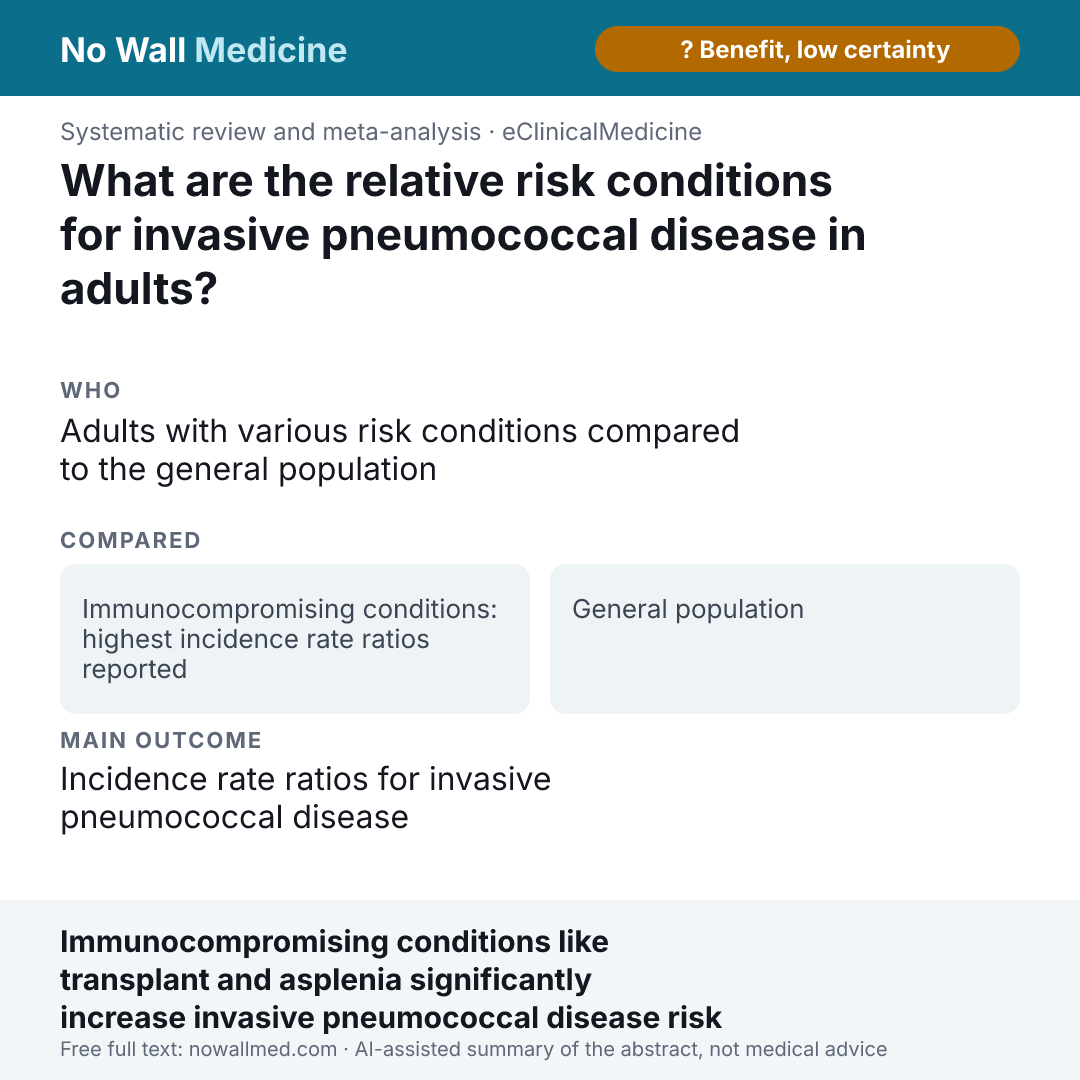
Clinical question: What are the relative risk conditions for invasive pneumococcal disease in adults?
Why it matters: Current prevention programs primarily use age to define target groups, but the relative importance of other risk conditions for invasive pneumococcal disease is not fully quantified.
Key points
- Researchers analyzed 58 studies to identify risk factors for invasive pneumococcal disease, a serious infection caused by Streptococcus pneumoniae bacteria.
- The highest risks were associated with transplant recipients with an incidence rate ratio of 30.75 (95% CI 17.64-53.60) and asplenia with 24.29 (95% CI 18.63-31.65).
- Chronic kidney disease was associated with an incidence rate ratio of 18.40 (95% CI 11.38-29.74) in adults under 65 years old.
Limitation the authors note: The overall quality of evidence was very low due to high risk of bias and considerable between-study heterogeneity.
Headline and key points written with AI from the paper’s abstract, with every number checked against it. Read the paper before relying on them.
Was this summary helpful?
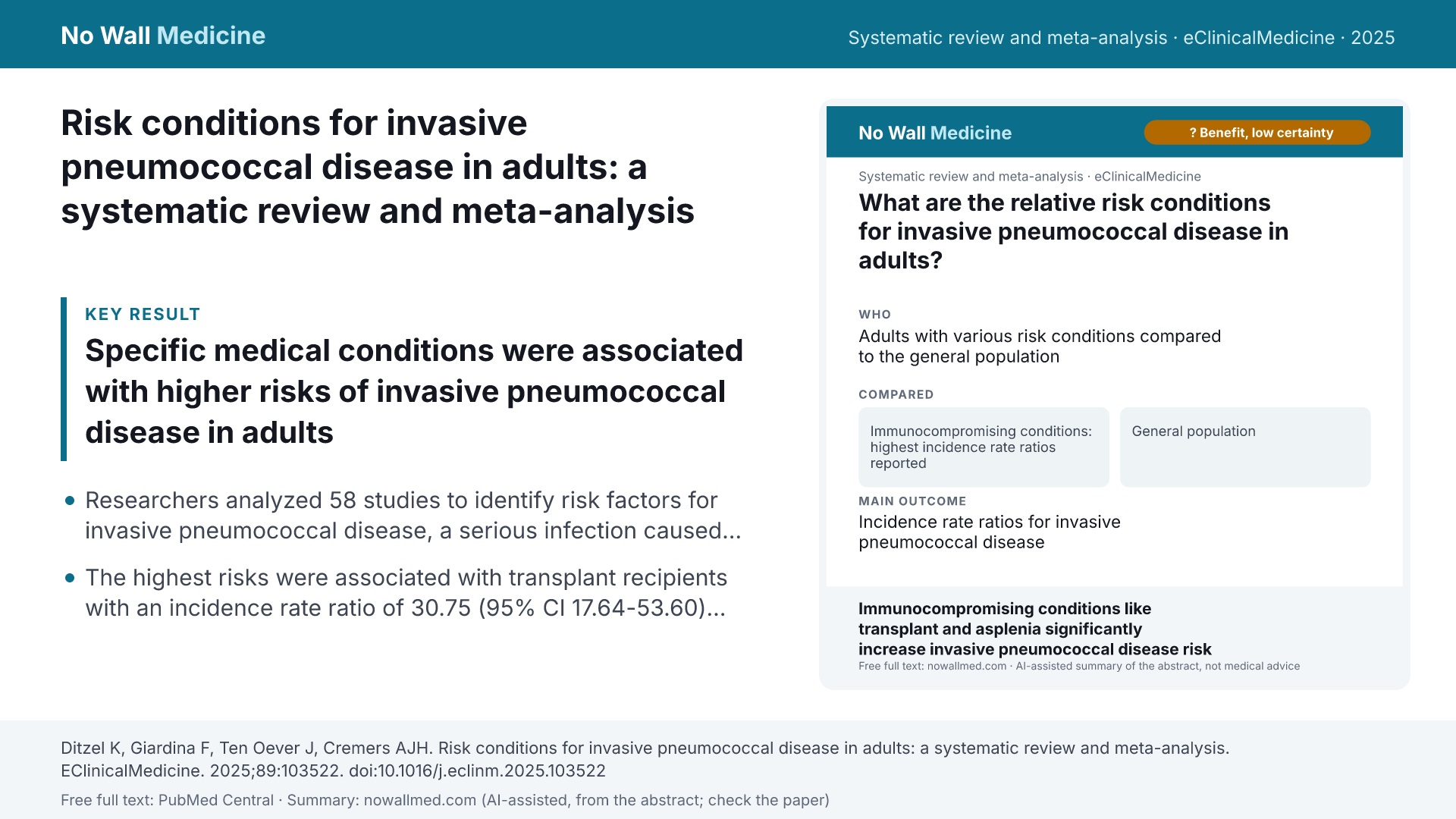
Headline, design, result, key points, caveat and citation as plain text.
Cite this article
Ditzel K, Giardina F, Ten Oever J, Cremers AJH. Risk conditions for invasive pneumococcal disease in adults: a systematic review and meta-analysis. EClinicalMedicine. 2025;89:103522. doi:10.1016/j.eclinm.2025.103522
Spotted a mistake? Suggest a correction