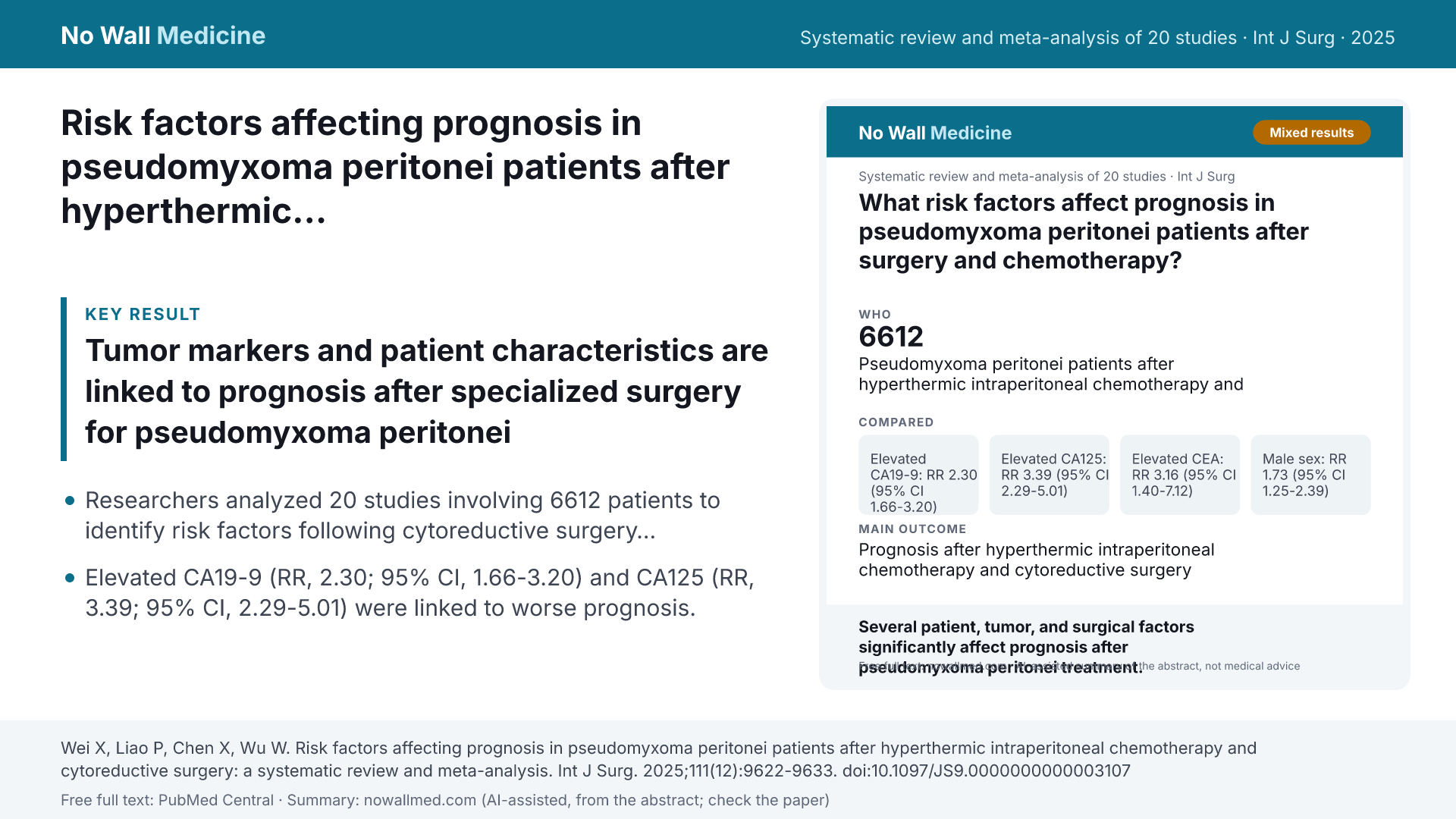
Tumor markers and patient characteristics are linked to prognosis after specialized surgery for pseudomyxoma peritonei
Risk factors affecting prognosis in pseudomyxoma peritonei patients after hyperthermic intraperitoneal chemotherapy and cytoreductive surgery: a systematic review and meta-analysis
Systematic review and meta-analysis of 20 studiesMixed results
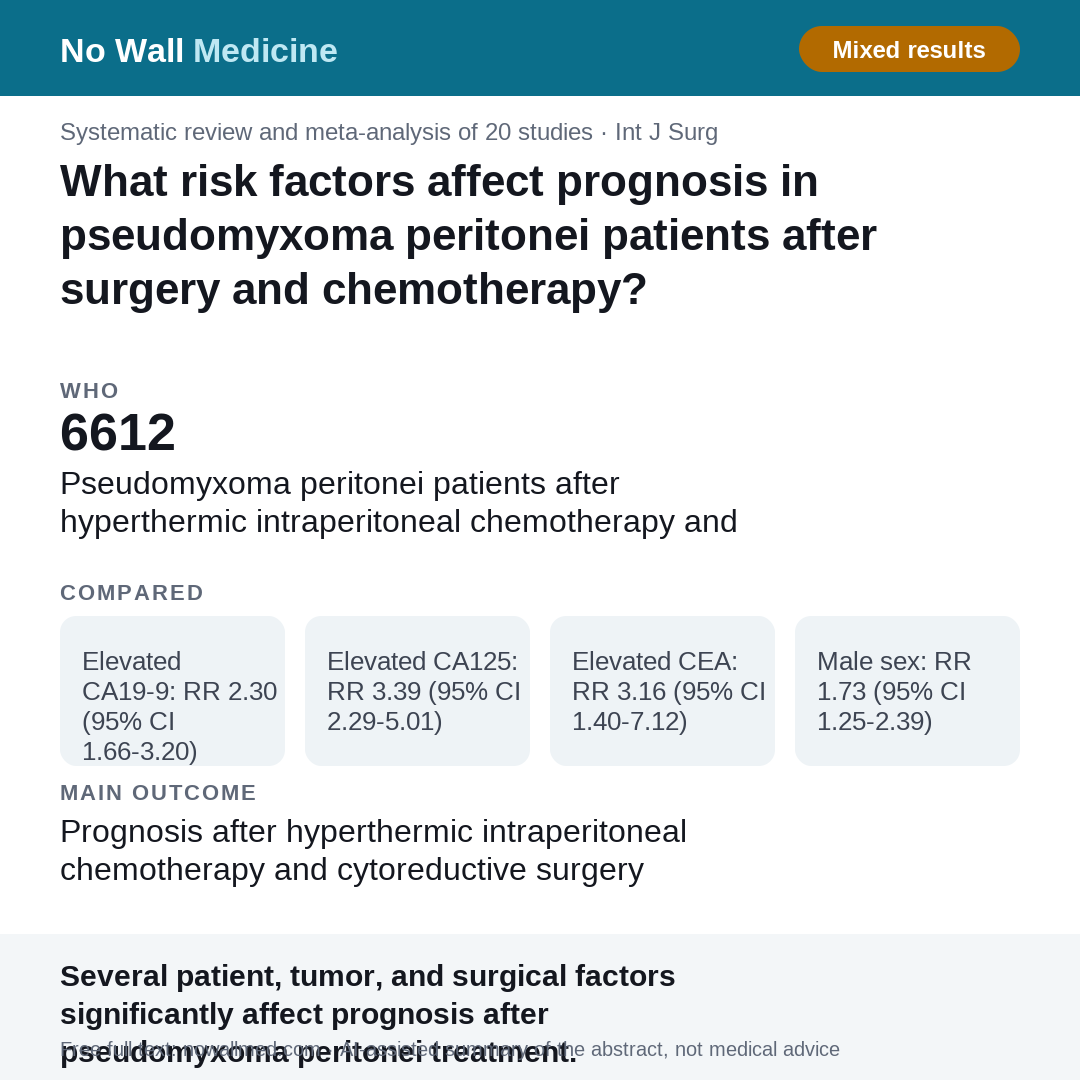
What risk factors affect prognosis in pseudomyxoma peritonei patients after surgery and chemotherapy?
Who
6612
Pseudomyxoma peritonei patients after hyperthermic intraperitoneal chemotherapy and cytoreductive surgery
Compared
Elevated CA19-9: RR 2.30 (95% CI 1.66-3.20)
Elevated CA125: RR 3.39 (95% CI 2.29-5.01)
Elevated CEA: RR 3.16 (95% CI 1.40-7.12)
Male sex: RR 1.73 (95% CI 1.25-2.39)
Main outcome
Prognosis after hyperthermic intraperitoneal chemotherapy and cytoreductive surgery
Bottom line: Several patient, tumor, and surgical factors significantly affect prognosis after pseudomyxoma peritonei treatment.
Int J Surg · 2025-07-23Download image
Clinical question: What risk factors affect prognosis in pseudomyxoma peritonei patients after surgery and chemotherapy?
Why it matters: Clinicians need to identify specific risk factors to help guide postoperative monitoring and customized follow-up strategies for patients with pseudomyxoma peritonei.
Key points
- Researchers analyzed 20 studies involving 6612 patients to identify risk factors following cytoreductive surgery and hyperthermic intraperitoneal chemotherapy.
- Elevated CA19-9 (RR, 2.30; 95% CI, 1.66-3.20) and CA125 (RR, 3.39; 95% CI, 2.29-5.01) were linked to worse prognosis.
- Male sex, CEA (RR, 3.16; 95% CI, 1.40-7.12), and peritoneal cancer index (RR, 1.05; 95% CI, 1.01-1.09) were also associated with prognosis.
Headline and key points written with AI from the paper’s abstract, with every number checked against it. Read the paper before relying on them.
Was this summary helpful?
Subject terms
Cite this article
Wei X, Liao P, Chen X, Wu W. Risk factors affecting prognosis in pseudomyxoma peritonei patients after hyperthermic intraperitoneal chemotherapy and cytoreductive surgery: a systematic review and meta-analysis. Int J Surg. 2025. doi:10.1097/JS9.0000000000003107
Spotted a mistake? Suggest a correction
Top studies every Monday
The week’s key trials and guidelines in your specialties, plus any topics you follow. By email, free.
Get the weekly digest