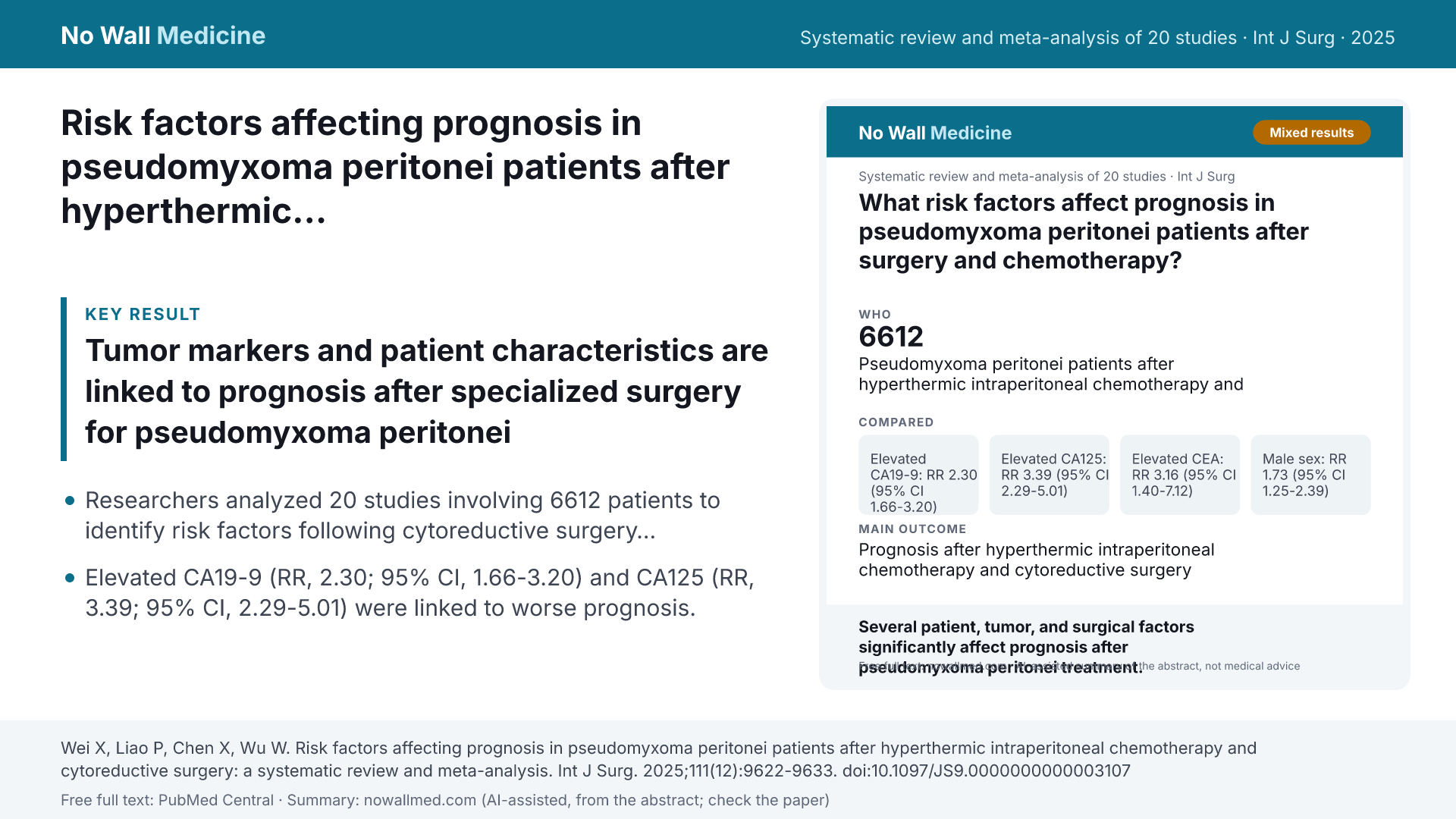
Risk factors affecting prognosis in pseudomyxoma peritonei patients after hyperthermic intraperitoneal chemotherapy and cytoreductive surgery: a systematic review and meta-analysis
Key result: Tumor markers and patient characteristics are linked to prognosis after specialized surgery for pseudomyxoma peritonei
Key points
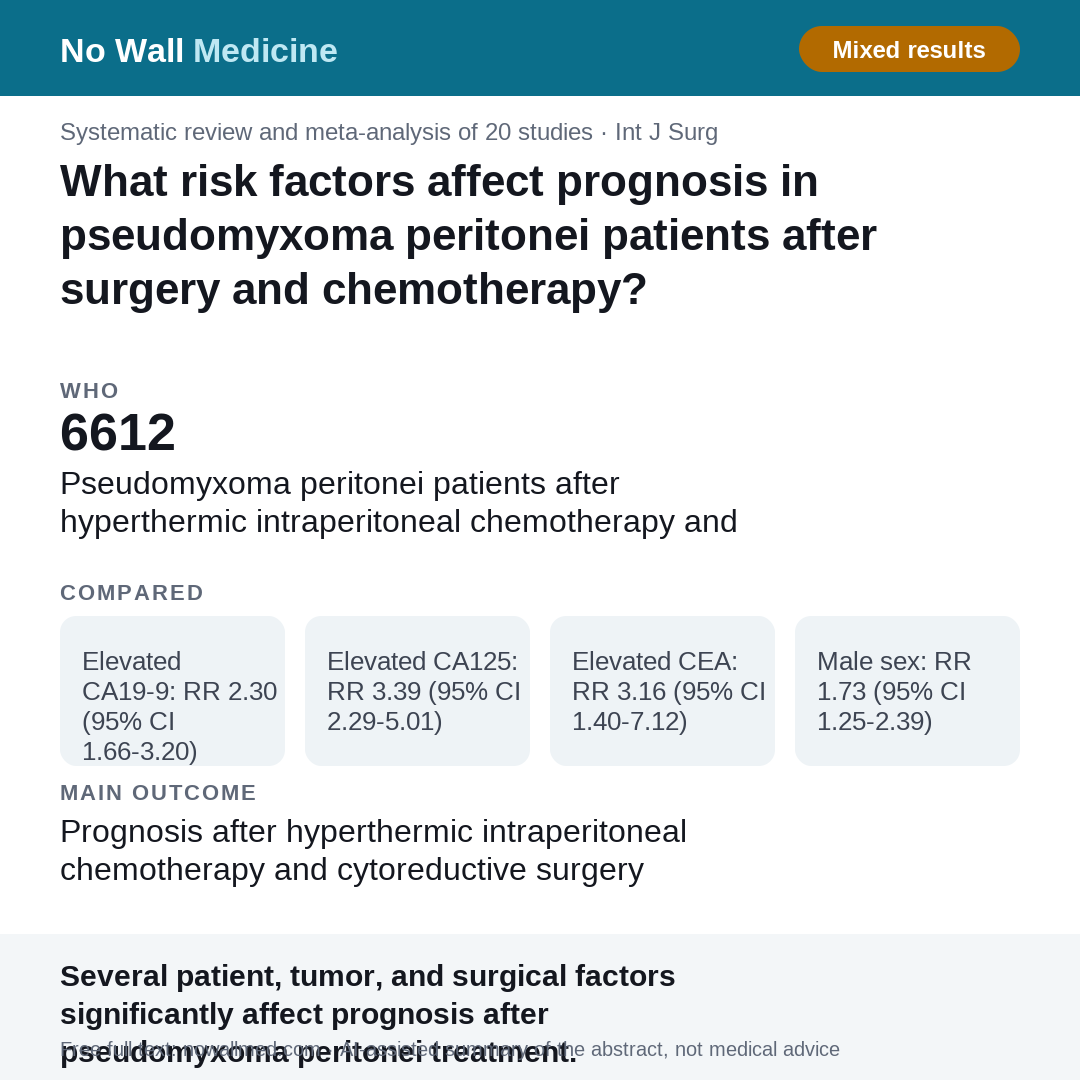
- Researchers analyzed 20 studies involving 6612 patients to identify risk factors following cytoreductive surgery and hyperthermic intraperitoneal chemotherapy.
- Elevated CA19-9 (RR, 2.30; 95% CI, 1.66-3.20) and CA125 (RR, 3.39; 95% CI, 2.29-5.01) were linked to worse prognosis.
- Male sex, CEA (RR, 3.16; 95% CI, 1.40-7.12), and peritoneal cancer index (RR, 1.05; 95% CI, 1.01-1.09) were also associated with prognosis.
Why it matters: Clinicians need to identify specific risk factors to help guide postoperative monitoring and customized follow-up strategies for patients with pseudomyxoma peritonei.
Discussion prompts
- Would these patients look like yours? Who was left out?
- Is the main outcome one that matters to patients?
- Is the difference large enough to change what you do?
Cite: Wei X, Liao P, Chen X, Wu W. Risk factors affecting prognosis in pseudomyxoma peritonei patients after hyperthermic intraperitoneal chemotherapy and cytoreductive surgery: a systematic review and meta-analysis. Int J Surg. 2025. doi:10.1097/JS9.0000000000003107
Free full text: PubMed Central · Summary and visual abstract: nowallmed.com/a/risk-factors-affecting-prognosis-in-pseudomyxoma-peritonei-patients-1jac2eh/ (AI-assisted from the abstract; check the paper before relying on it).