Risk factors for fat necrosis in DIEP flap breast reconstruction identified in systematic review
Risk factors and predictive models for fat necrosis in DIEP flap breast reconstruction: A systematic review
Systematic reviewMixed results
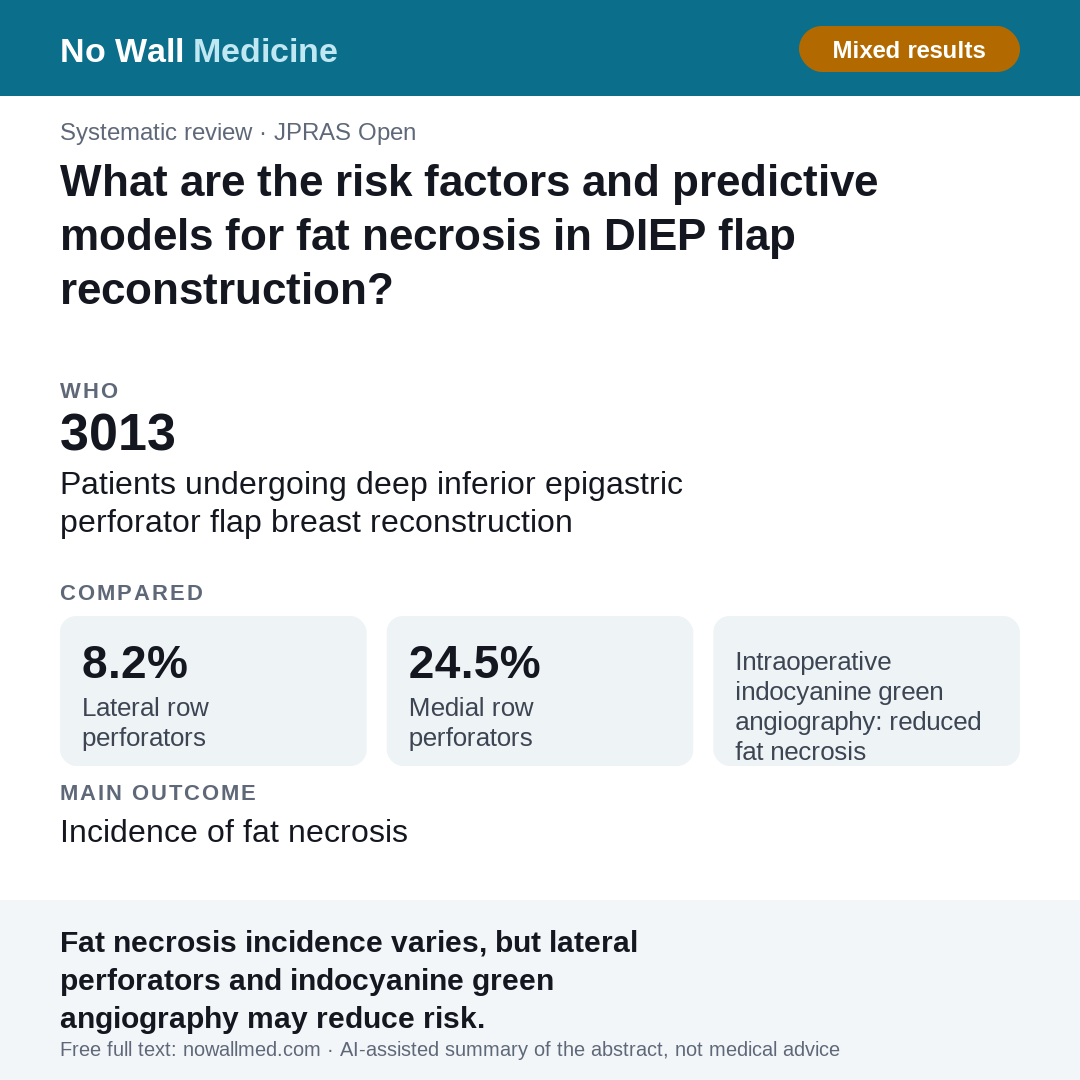
What are the risk factors and predictive models for fat necrosis in DIEP flap reconstruction?
Who
3013
Patients undergoing deep inferior epigastric perforator flap breast reconstruction
Compared
8.2%Lateral row perforators
24.5%Medial row perforators
Intraoperative indocyanine green angiography: reduced fat necrosis
Main outcome
Incidence of fat necrosis
Result: RR 0.49 (95% CI 0.25-0.97)
Bottom line: Fat necrosis incidence varies, but lateral perforators and indocyanine green angiography may reduce risk.
JPRAS Open · 2026-07-18Download image
Clinical question: What are the risk factors and predictive models for fat necrosis in DIEP flap reconstruction?
Why it matters: Fat necrosis is a common complication of DIEP flap breast reconstruction that can affect aesthetic outcomes and reconstructive durability.
Key points
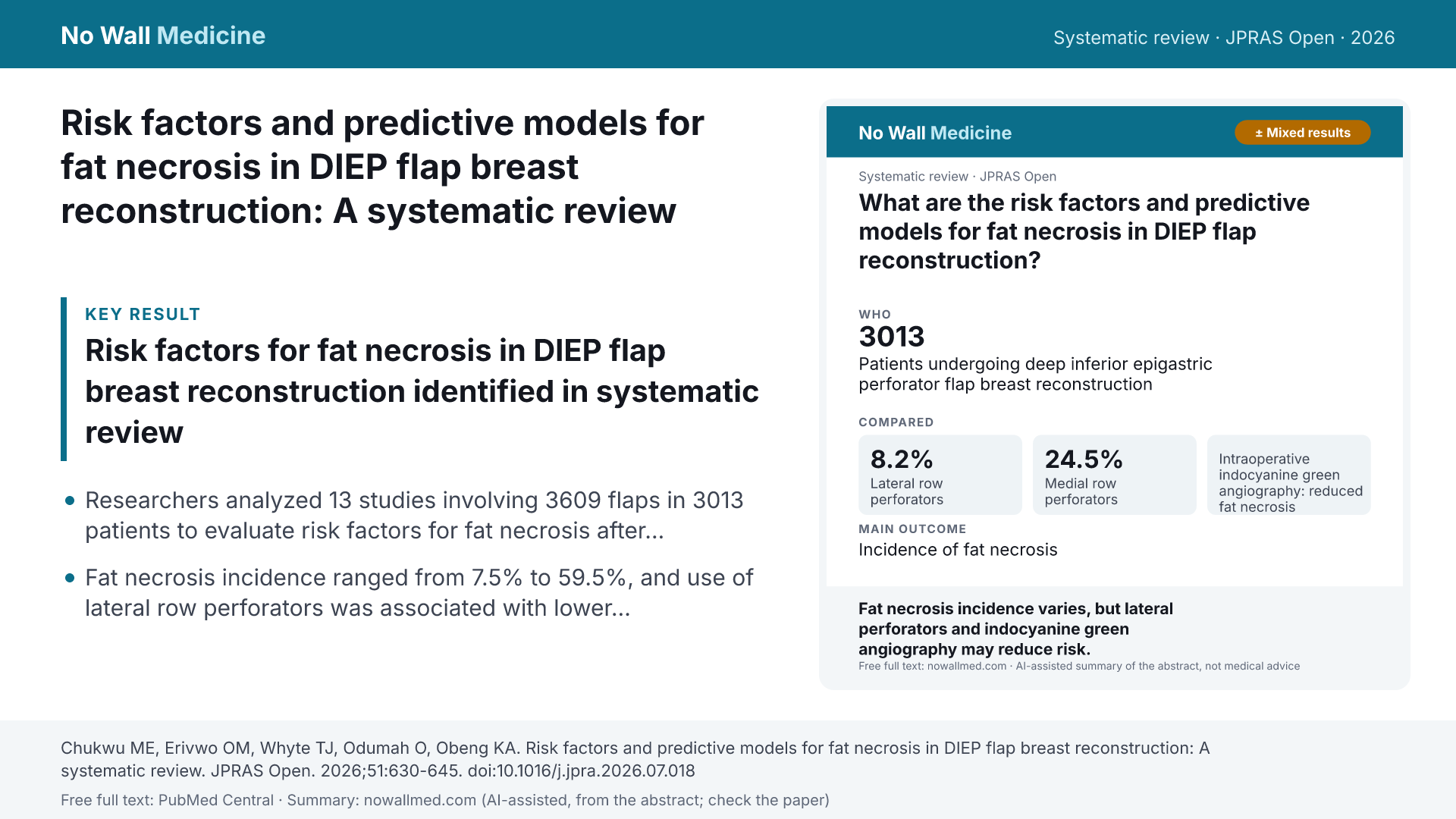
- Researchers analyzed 13 studies involving 3609 flaps in 3013 patients to evaluate risk factors for fat necrosis after DIEP flap breast reconstruction.
- Fat necrosis incidence ranged from 7.5% to 59.5%, and use of lateral row perforators was associated with lower rates compared to medial row perforators (8.2% vs. 24.5%).
- Higher flap weight and a body mass index greater than 30 kg/m² were consistent predictors of fat necrosis.
Headline and key points written with AI from the paper’s abstract, with every number checked against it. Read the paper before relying on them.
Was this summary helpful?
Cite this article
Chukwu ME, Erivwo OM, Whyte TJ, Odumah O, Obeng KA. Risk factors and predictive models for fat necrosis in DIEP flap breast reconstruction: A systematic review. JPRAS Open. 2026. doi:10.1016/j.jpra.2026.07.018
Spotted a mistake? Suggest a correction
Top studies every Monday
The week’s key trials and guidelines in your specialties, plus any topics you follow. By email, free.
Get the weekly digest