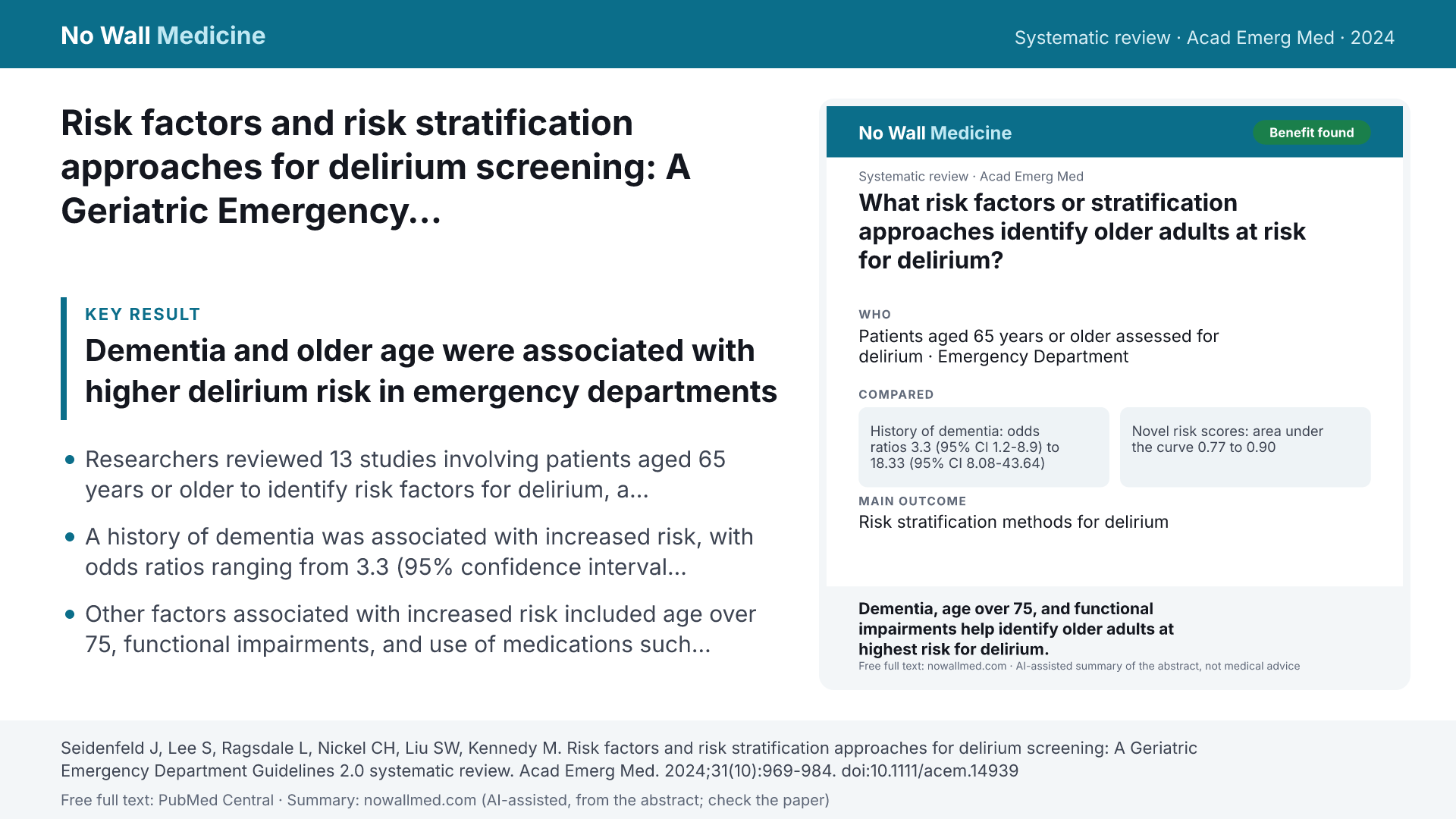
Risk factors and risk stratification approaches for delirium screening: A Geriatric Emergency Department Guidelines 2.0 systematic review
Key result: Dementia and older age were associated with higher delirium risk in emergency departments
Key points
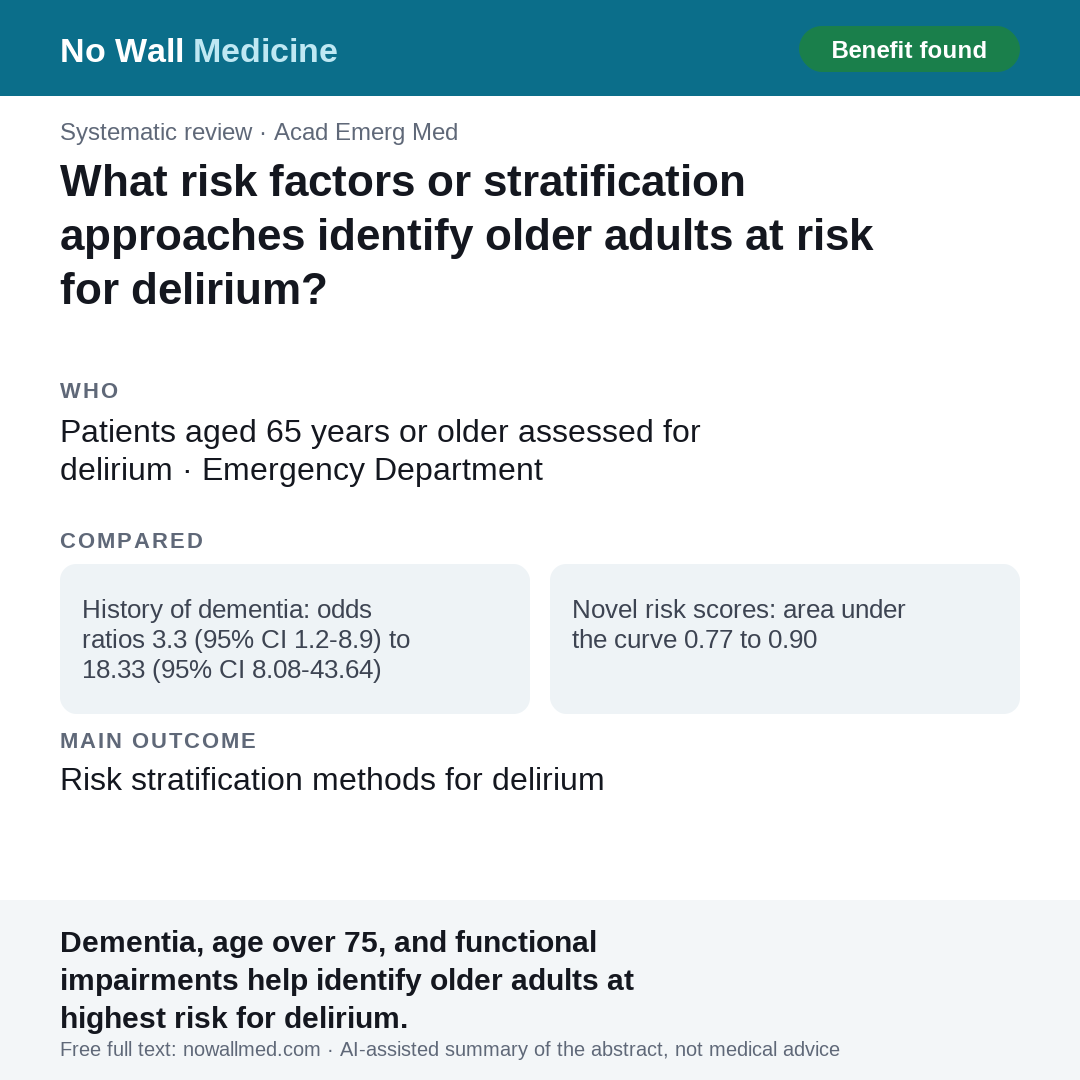
- Researchers reviewed 13 studies involving patients aged 65 years or older to identify risk factors for delirium, a state of sudden confusion.
- A history of dementia was associated with increased risk, with odds ratios ranging from 3.3 (95% confidence interval [CI] 1.2-8.9) to 18.33 (95% CI 8.08-43.64).
- Other factors associated with increased risk included age over 75, functional impairments, and use of medications such as antipsychotics, antidepressants, and opioids.
Why it matters: It is unknown which specific risk factors or scoring methods best identify older adults who would benefit from targeted delirium screening in emergency departments.
Limitation the authors note: No studies evaluated the implementation of risk stratification methods or evaluated patient-oriented outcomes.
Discussion prompts
- Would these patients look like yours? Who was left out?
- Is the main outcome one that matters to patients?
- Is the difference large enough to change what you do?
Cite: Seidenfeld J, Lee S, Ragsdale L, Nickel CH, Liu SW, Kennedy M. Risk factors and risk stratification approaches for delirium screening: A Geriatric Emergency Department Guidelines 2.0 systematic review. Acad Emerg Med. 2024. doi:10.1111/acem.14939
Free full text: PubMed Central · Summary and visual abstract: nowallmed.com/a/risk-factors-and-risk-stratification-approaches-for-delirium-ctz5uv/ (AI-assisted from the abstract; check the paper before relying on it).