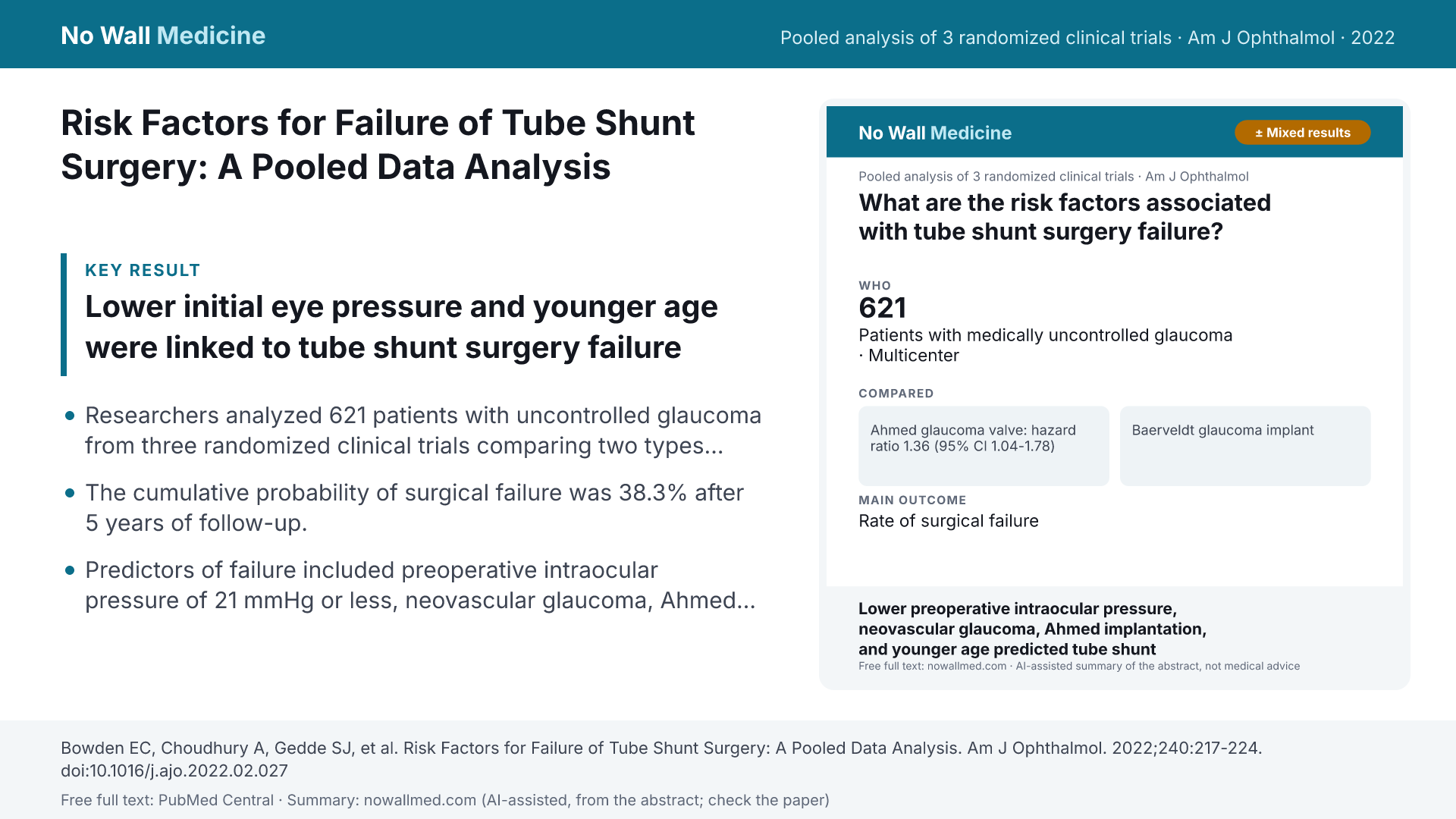
Lower initial eye pressure and younger age were linked to tube shunt surgery failure
Risk Factors for Failure of Tube Shunt Surgery: A Pooled Data Analysis
Pooled analysis of 3 randomized clinical trialsMixed results
What are the risk factors associated with tube shunt surgery failure?
Who
621
Patients with medically uncontrolled glaucoma · Multicenter
Compared
Ahmed glaucoma valve: hazard ratio 1.36 (95% CI 1.04-1.78)
Baerveldt glaucoma implant
Main outcome
Rate of surgical failure
Bottom line: Lower preoperative intraocular pressure, neovascular glaucoma, Ahmed implantation, and younger age predicted tube shunt failure.
Am J Ophthalmol · 2022-03-12 · Save PNG
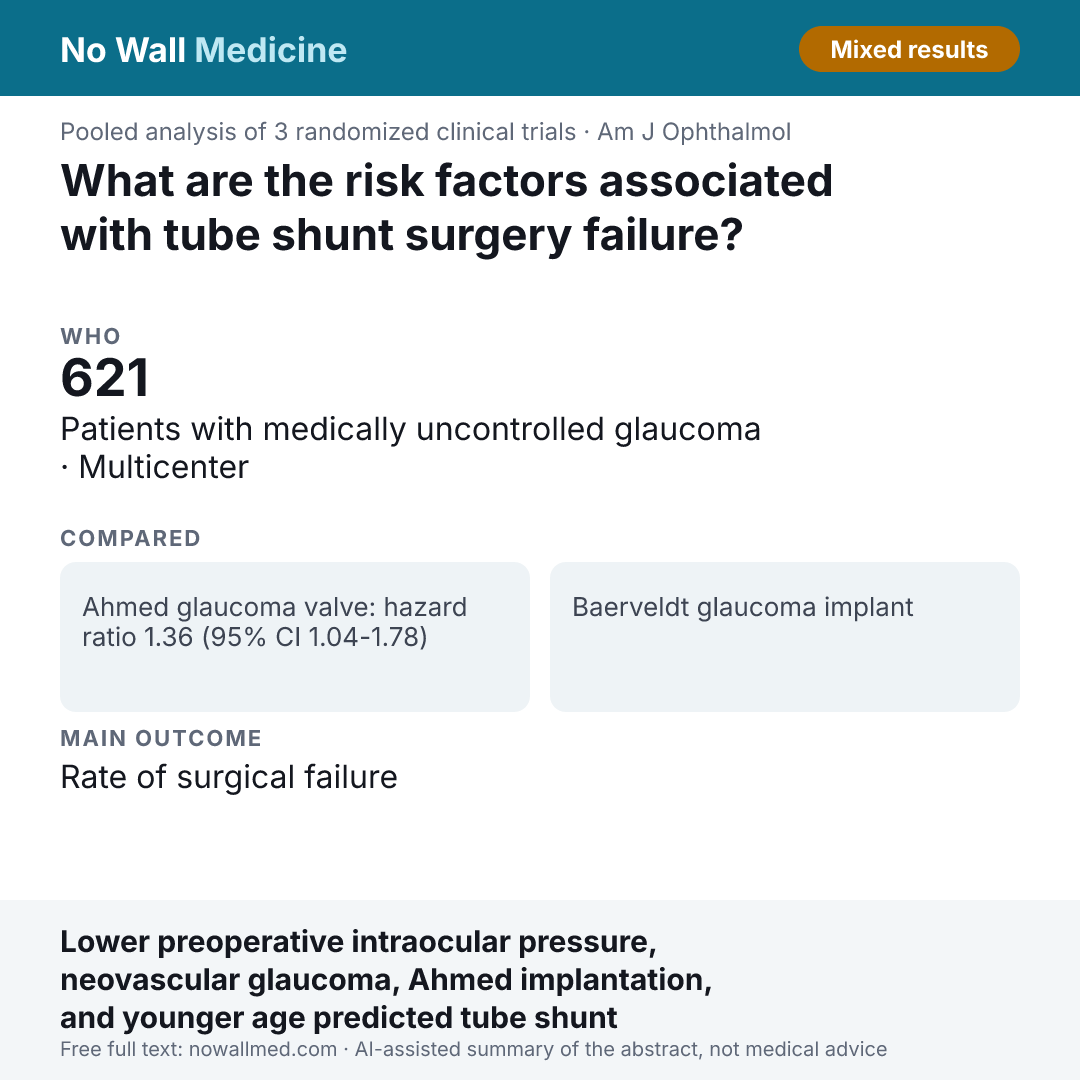
Clinical question: What are the risk factors associated with tube shunt surgery failure?
Key points
- Researchers analyzed 621 patients with uncontrolled glaucoma from three randomized clinical trials comparing two types of glaucoma implants.
- The cumulative probability of surgical failure was 38.3% after 5 years of follow-up.
- Predictors of failure included preoperative intraocular pressure of 21 mmHg or less, neovascular glaucoma, Ahmed valve implantation, and younger age.
Headline and key points written with AI from the paper’s abstract, with every number checked against it. Read the paper before relying on them.
Was this summary helpful?
Subject terms
Headline, design, result, key points, caveat and citation as plain text.
Cite this article
Bowden EC, Choudhury A, Gedde SJ, et al. Risk Factors for Failure of Tube Shunt Surgery: A Pooled Data Analysis. Am J Ophthalmol. 2022;240:217-224. doi:10.1016/j.ajo.2022.02.027
Spotted a mistake? Suggest a correction