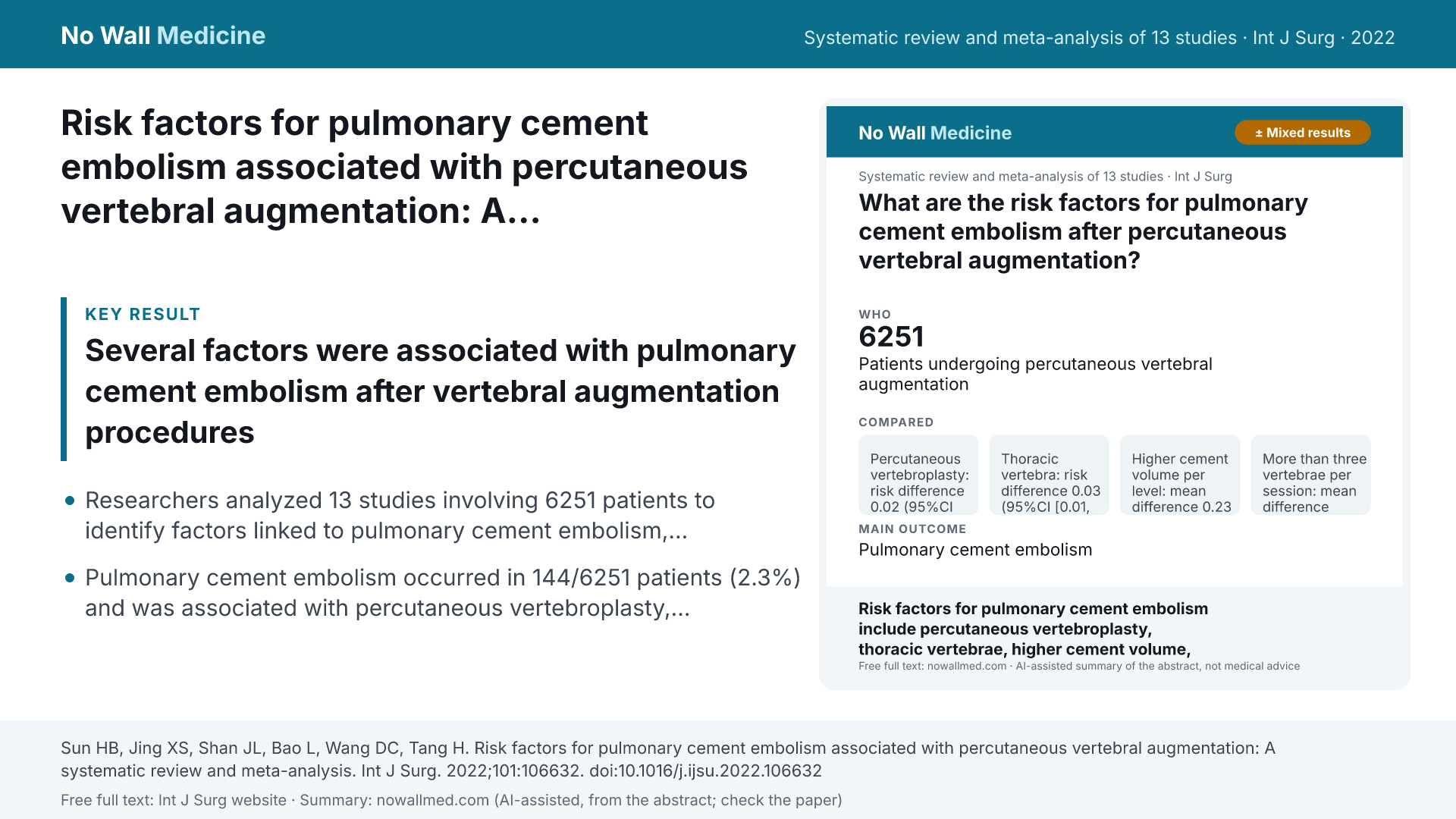
Risk factors for pulmonary cement embolism associated with percutaneous vertebral augmentation: A systematic review and meta-analysis
Key result: Several factors were associated with pulmonary cement embolism after vertebral augmentation procedures
Key points
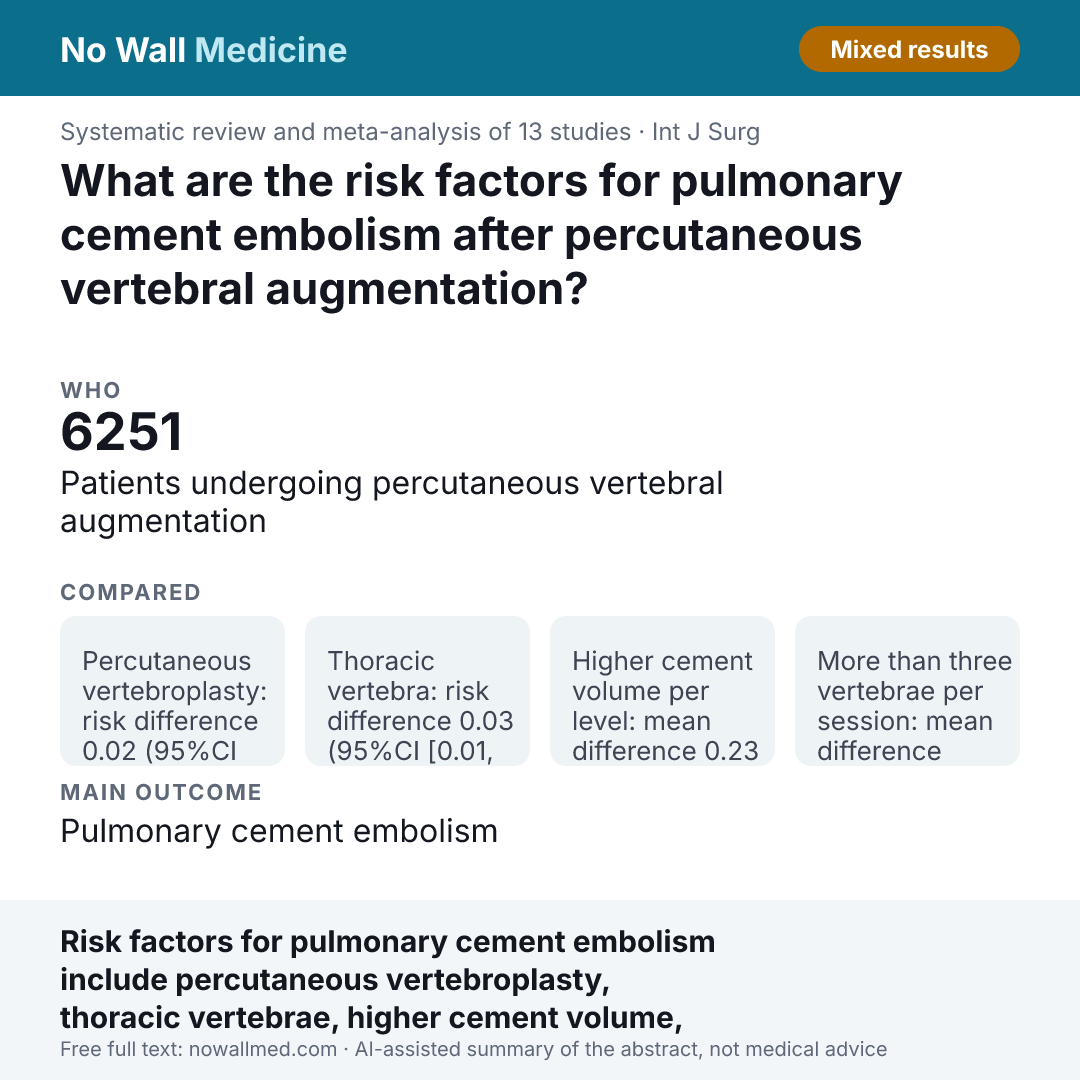
- Researchers analyzed 13 studies involving 6251 patients to identify factors linked to pulmonary cement embolism, a complication where bone cement enters the lungs.
- Pulmonary cement embolism occurred in 144/6251 patients (2.3%) and was associated with percutaneous vertebroplasty, thoracic vertebrae, higher cement volume, treating more than three vertebrae, and venous cement leakage.
- The risk difference for venous cement leakage was 0.07 (95%CI: [0.03, 0.11]) and for thoracic vertebrae was 0.03 (95%CI: [0.01, 0.05]).
Why it matters: The specific risk factors that increase the likelihood of pulmonary cement embolism during percutaneous vertebral augmentation were not clearly identified.
Limitation the authors note: Seven of the included studies were considered low quality according to the Newcastle-Ottawa Scale.
Discussion prompts
- Would these patients look like yours? Who was left out?
- Is the main outcome one that matters to patients?
- Is the difference large enough to change what you do?
Cite: Sun HB, Jing XS, Shan JL, Bao L, Wang DC, Tang H. Risk factors for pulmonary cement embolism associated with percutaneous vertebral augmentation: A systematic review and meta-analysis. Int J Surg. 2022;101:106632. doi:10.1016/j.ijsu.2022.106632
Free full text: Int J Surg website · Summary and visual abstract: nowallmed.com/a/risk-factors-for-pulmonary-cement-embolism-associated-with-7z2wrk/ (AI-assisted from the abstract; check the paper before relying on it).