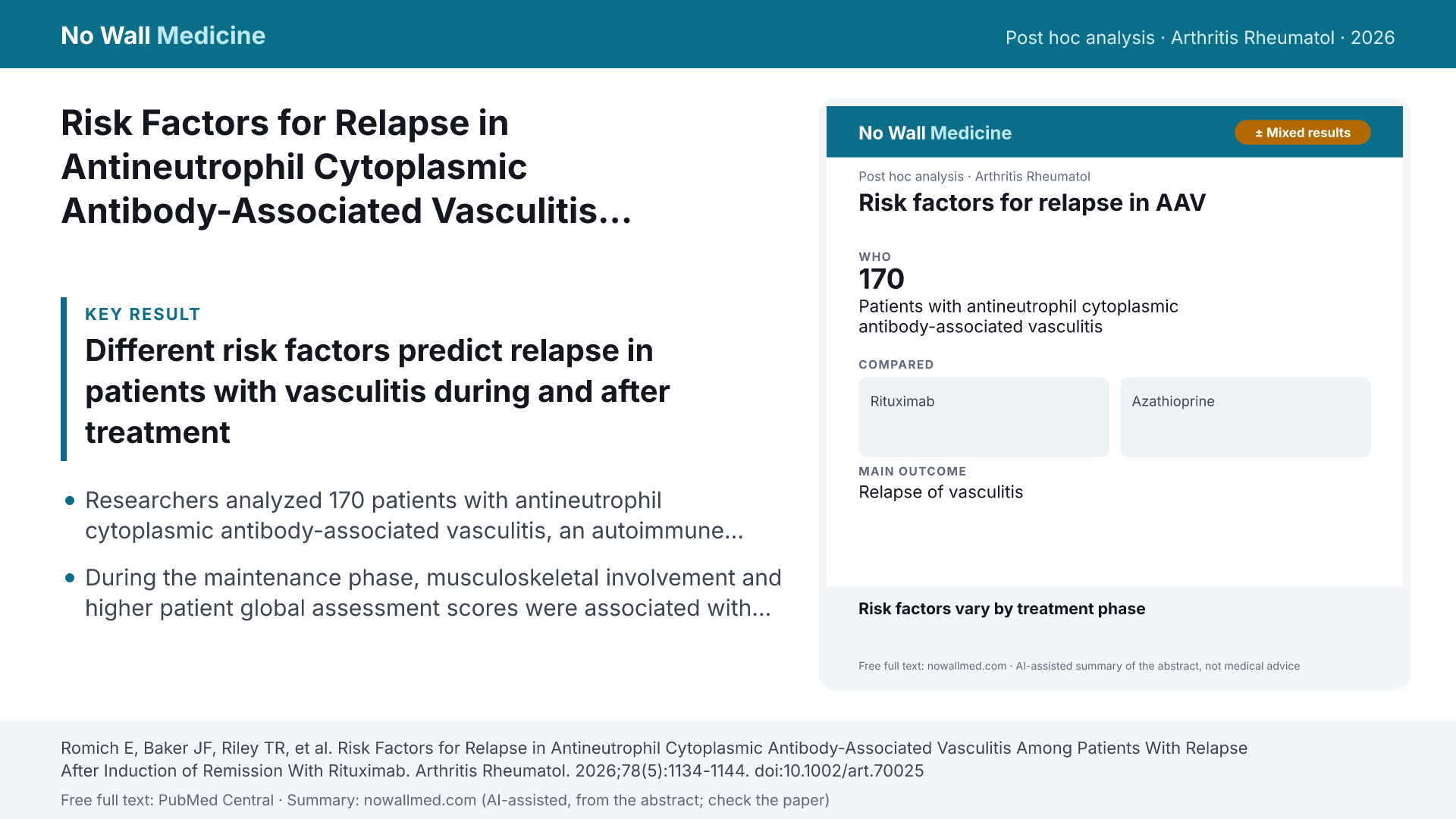
Different risk factors predict relapse in patients with vasculitis during and after treatment
Risk Factors for Relapse in Antineutrophil Cytoplasmic Antibody-Associated Vasculitis Among Patients With Relapse After Induction of Remission With Rituximab
Post hoc analysisMixed results
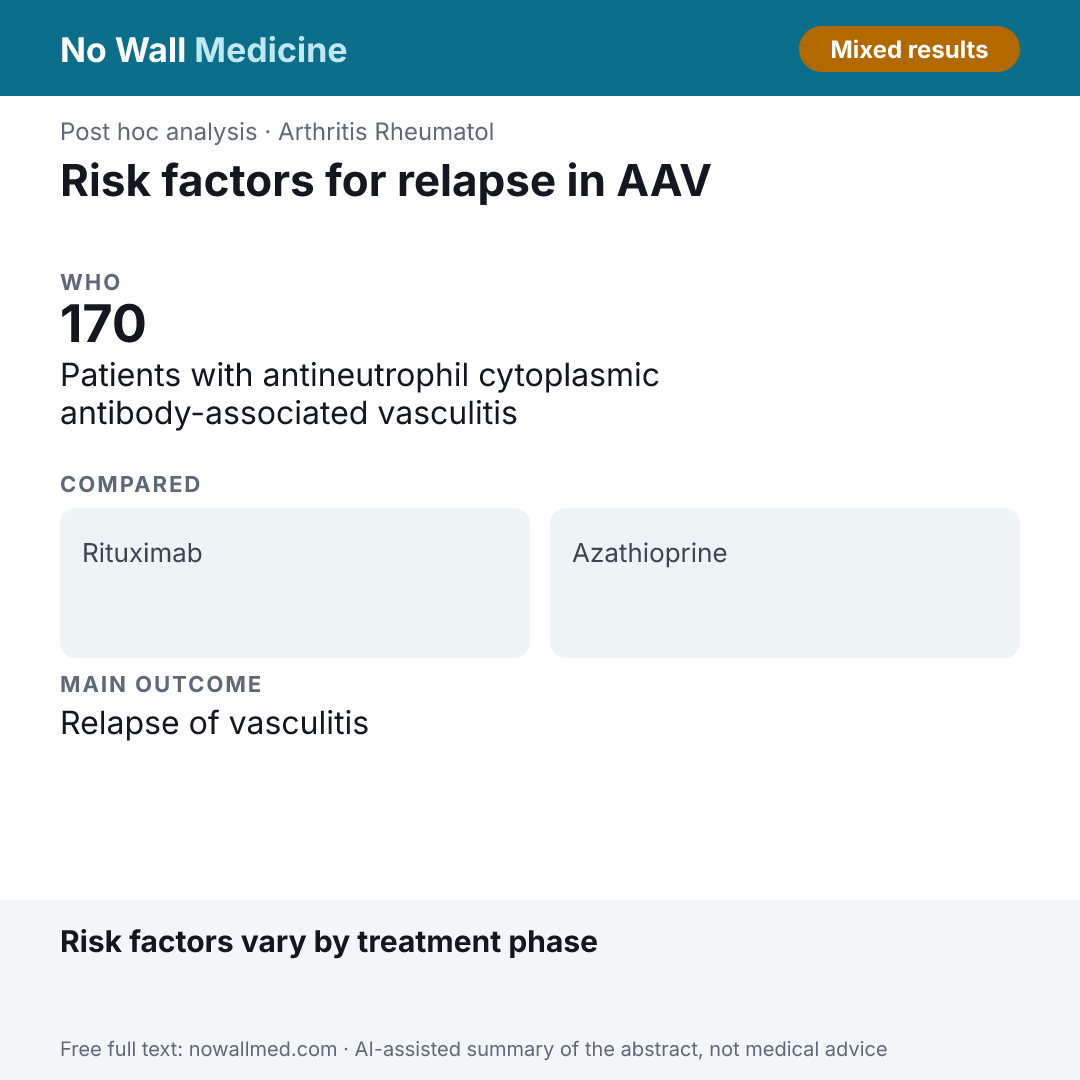
Risk factors for relapse in AAV
Who
170
Patients with antineutrophil cytoplasmic antibody-associated vasculitis
Compared
Rituximab
Azathioprine
Main outcome
Relapse of vasculitis
Bottom line: Risk factors vary by treatment phase
Arthritis Rheumatol · 2026-03-16 · Save PNG
Key points
- Researchers analyzed 170 patients with antineutrophil cytoplasmic antibody-associated vasculitis, an autoimmune blood vessel disease, to identify factors linked to disease relapse.
- During the maintenance phase, musculoskeletal involvement and higher patient global assessment scores were associated with a higher risk of relapse.
- During the off-treatment phase, the presence of CD19+ B cells and the reappearance of antineutrophil cytoplasmic antibodies were associated with higher relapse risk.
Headline and key points written with AI from the paper’s abstract, with every number checked against it. Read the paper before relying on them.
Was this summary helpful?
Subject terms
Headline, design, result, key points, caveat and citation as plain text.
Cite this article
Romich E, Baker JF, Riley TR, et al. Risk Factors for Relapse in Antineutrophil Cytoplasmic Antibody-Associated Vasculitis Among Patients With Relapse After Induction of Remission With Rituximab. Arthritis Rheumatol. 2026;78(5):1134-1144. doi:10.1002/art.70025
Spotted a mistake? Suggest a correction