Risk of Multiple Sclerosis Among Users of Antitumor Necrosis Factor α in 4 Canadian Provinces: A Population-Based Study
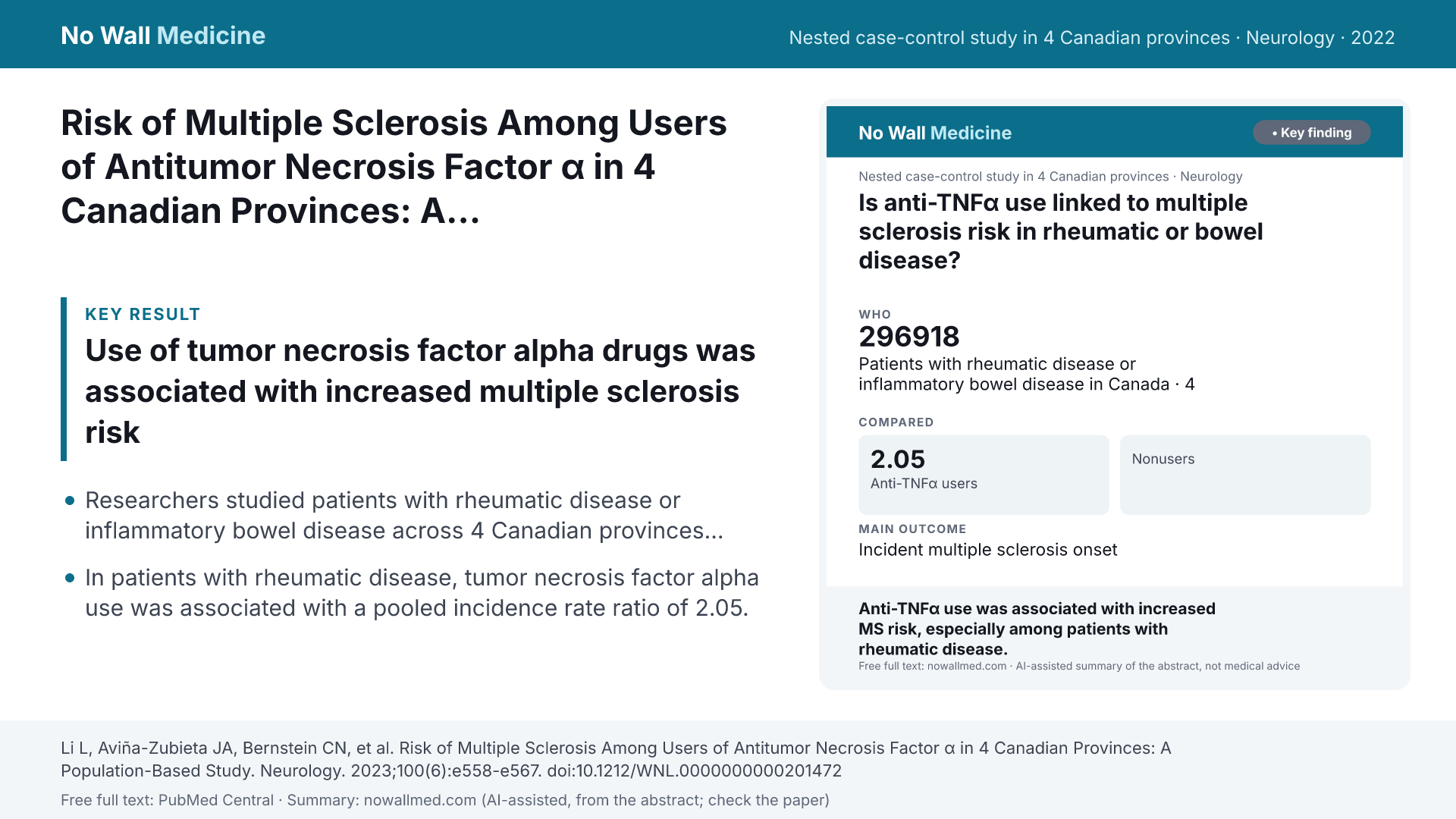
Key result: Use of tumor necrosis factor alpha drugs was associated with increased multiple sclerosis risk
Nested case-control study in 4 Canadian provincesKey finding
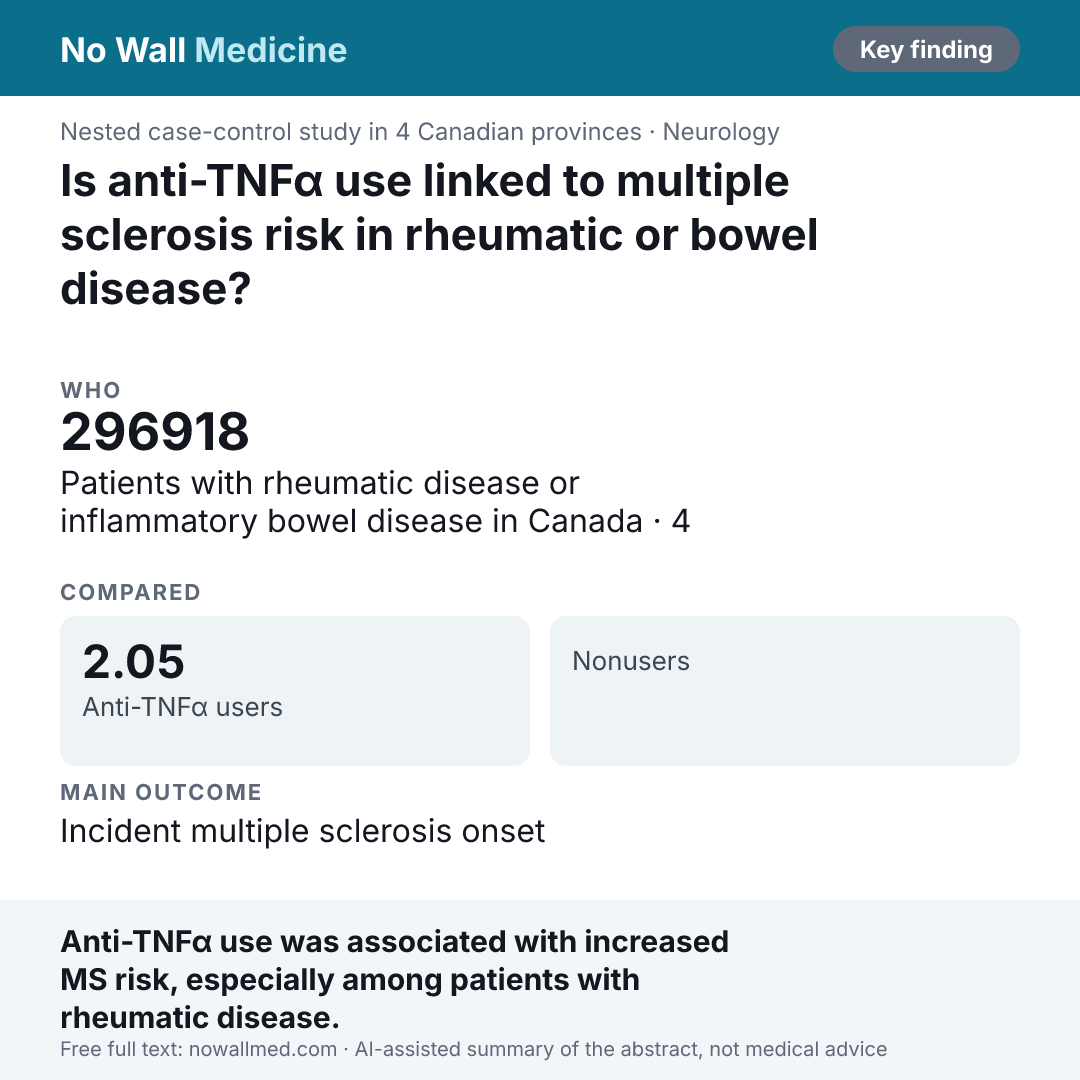
Is anti-TNFα use linked to multiple sclerosis risk in rheumatic or bowel disease?
Who
296918
Patients with rheumatic disease or inflammatory bowel disease in Canada · 4 Canadian provinces
Compared
2.05Anti-TNFα users (95% CI, 1.13-3.72)
Nonusers
Main outcome
Incident multiple sclerosis onset
Result: pooled IRR 2.05 (95% CI, 1.13-3.72)
Bottom line: Anti-TNFα use was associated with increased MS risk, especially among patients with rheumatic disease.
Limitation: Further studies are needed to validate these results for patients with IBD.
Neurology · 2022-10-28 · Save PNG
Key points
- Researchers studied patients with rheumatic disease or inflammatory bowel disease across 4 Canadian provinces using linked health databases.
- In patients with rheumatic disease, tumor necrosis factor alpha use was associated with a pooled incidence rate ratio of 2.05.
- Among patients with inflammatory bowel disease, tumor necrosis factor alpha use was associated with an incidence rate ratio of 1.35, which was not statistically significant.
Discussion prompts
- Would these patients look like yours? Who was left out?
- Is the main outcome one that matters to patients?
- Is the difference large enough to change what you do?
Cite: Li L, Aviña-Zubieta JA, Bernstein CN, et al. Risk of Multiple Sclerosis Among Users of Antitumor Necrosis Factor α in 4 Canadian Provinces: A Population-Based Study. Neurology. 2023;100(6):e558-e567. doi:10.1212/WNL.0000000000201472
Free full text: PubMed Central · Summary and visual abstract: nowallmed.com/a/risk-of-multiple-sclerosis-among-users-of-antitumor-necrosis-factor-126apoa/ (AI-assisted from the abstract; check the paper before relying on it).