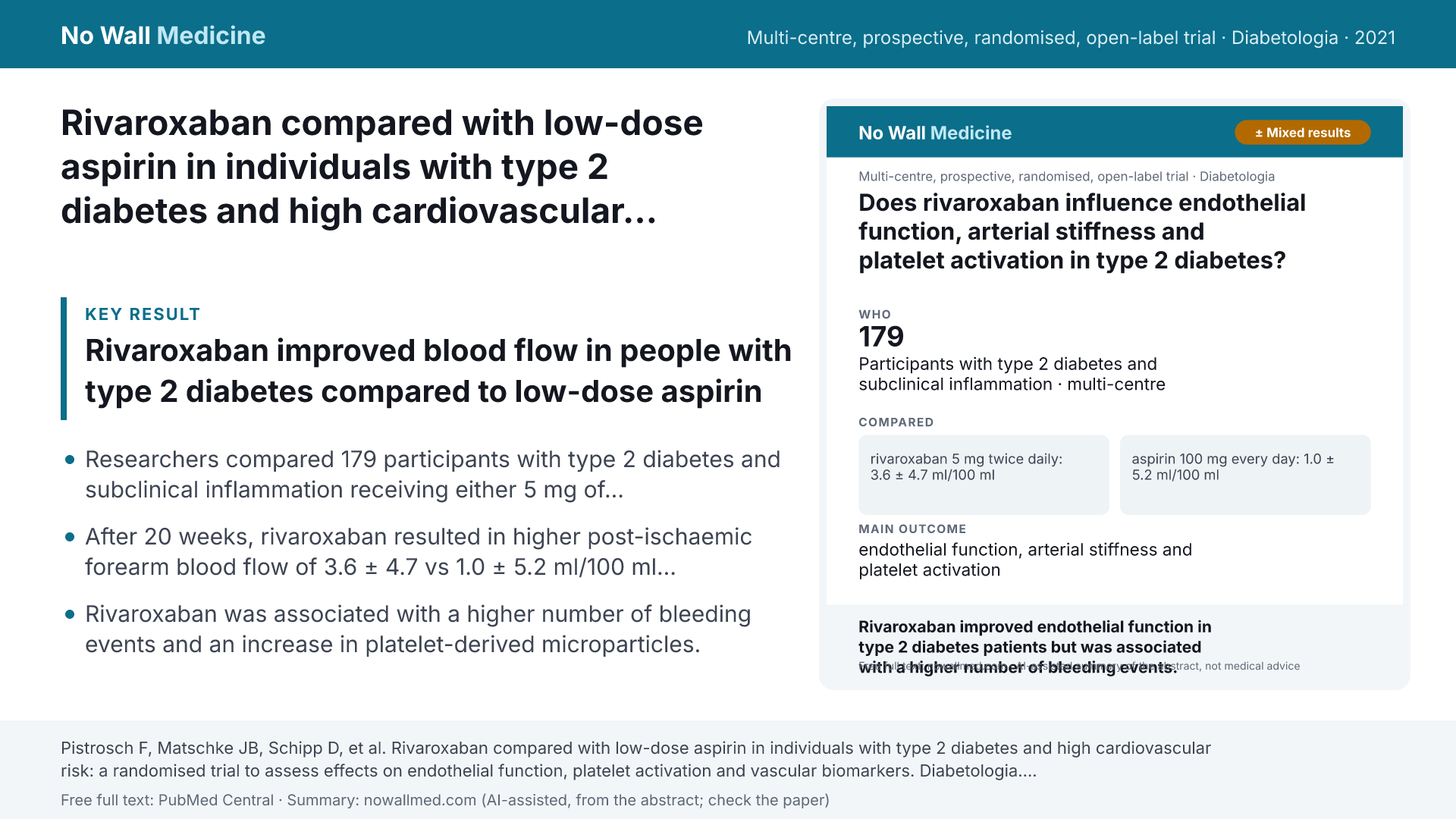
Rivaroxaban improved blood flow in people with type 2 diabetes compared to low-dose aspirin
Rivaroxaban compared with low-dose aspirin in individuals with type 2 diabetes and high cardiovascular risk: a randomised trial to assess effects on endothelial function, platelet activation and vascular biomarkers
Multi-centre, prospective, randomised, open-label trialMixed results
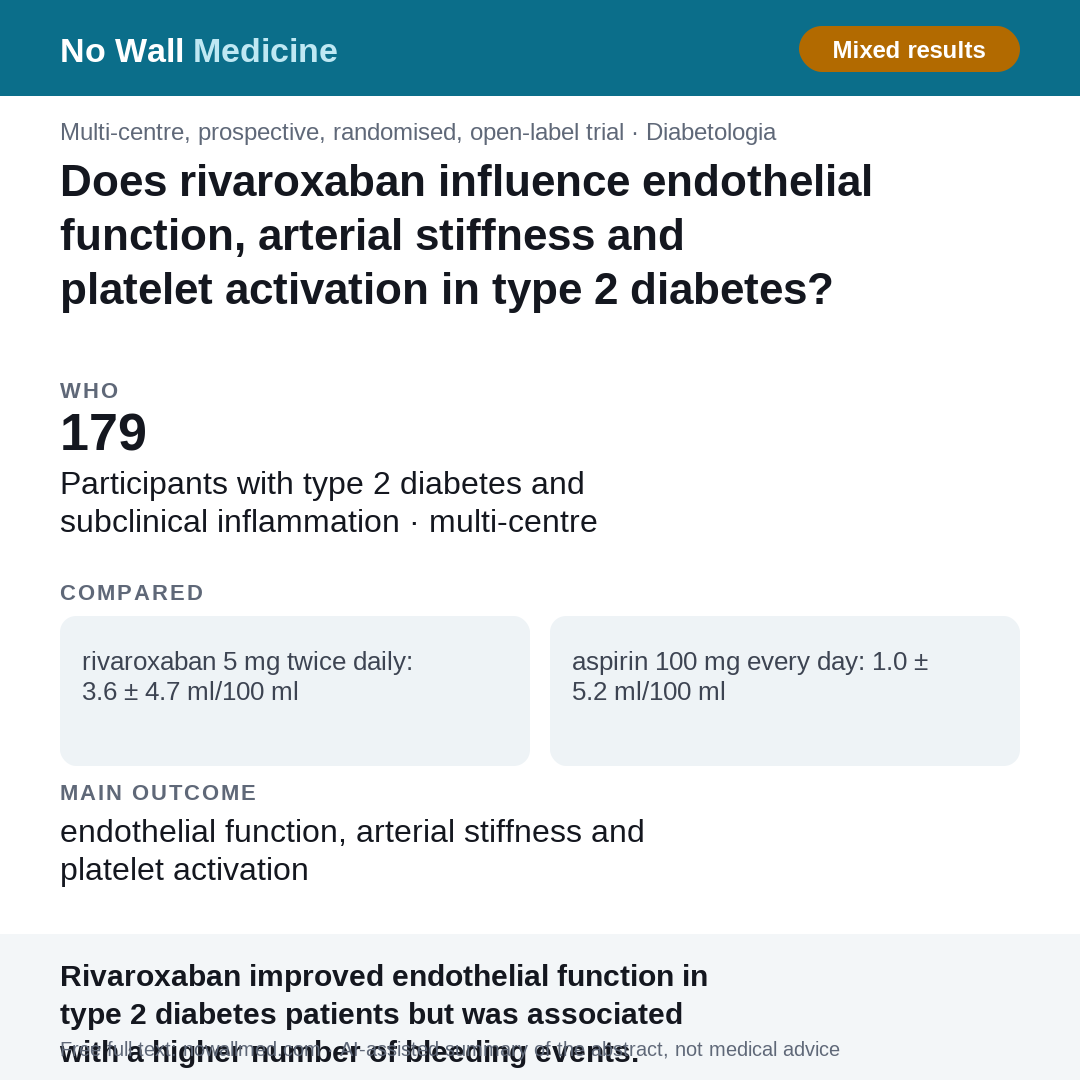
Does rivaroxaban influence endothelial function, arterial stiffness and platelet activation in type 2 diabetes?
Who
179
Participants with type 2 diabetes and subclinical inflammation · multi-centre
Compared
rivaroxaban 5 mg twice daily: 3.6 ± 4.7 ml/100 ml
aspirin 100 mg every day: 1.0 ± 5.2 ml/100 ml
Main outcome
endothelial function, arterial stiffness and platelet activation
Bottom line: Rivaroxaban improved endothelial function in type 2 diabetes patients but was associated with a higher number of bleeding events.
Funded by: Bayer Vital AG, Germany
Diabetologia · 2021-09-08Download image
Clinical question: Does rivaroxaban influence endothelial function, arterial stiffness and platelet activation in type 2 diabetes?
Why it matters: It was unknown whether rivaroxaban could influence endothelial function, arterial stiffness, and platelet activation in individuals with type 2 diabetes and subclinical inflammation.
Key points
- Researchers compared 179 participants with type 2 diabetes and subclinical inflammation receiving either 5 mg of rivaroxaban twice daily or 100 mg of aspirin daily.
- After 20 weeks, rivaroxaban resulted in higher post-ischaemic forearm blood flow of 3.6 ± 4.7 vs 1.0 ± 5.2 ml/100 ml compared to aspirin.
- Rivaroxaban was associated with a higher number of bleeding events and an increase in platelet-derived microparticles.
Headline and key points written with AI from the paper’s abstract, with every number checked against it. Read the paper before relying on them.
Was this summary helpful?
Subject terms
Cite this article
Pistrosch F, Matschke JB, Schipp D, et al. Rivaroxaban compared with low-dose aspirin in individuals with type 2 diabetes and high cardiovascular risk: a randomised trial to assess effects on endothelial function, platelet activation and vascular biomarkers. Diabetologia. 2021. doi:10.1007/s00125-021-05562-9
Spotted a mistake? Suggest a correction