Rivaroxaban vs placebo for extended antithrombotic prophylaxis after laparoscopic surgery for colorectal cancer
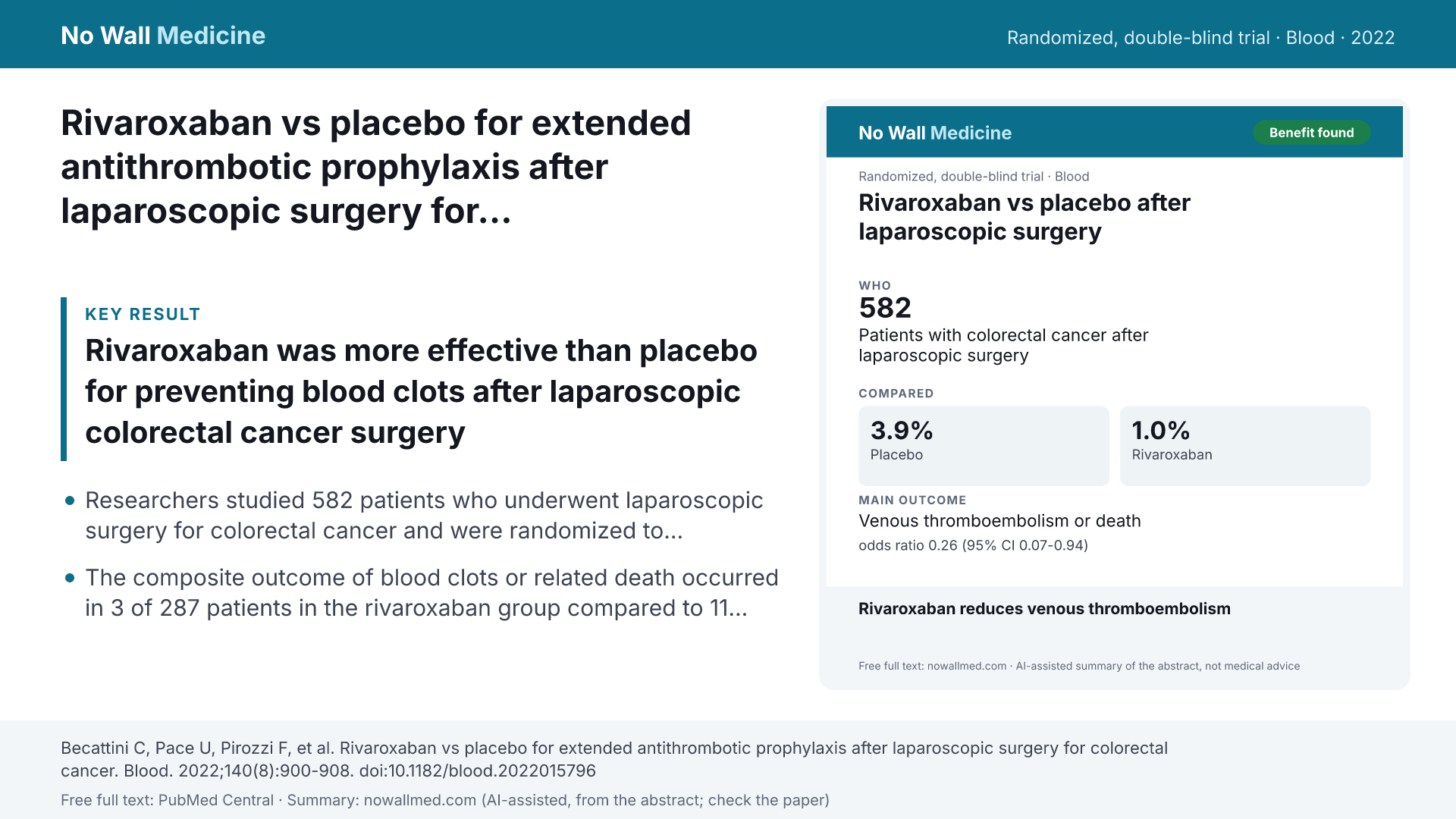
Key result: Rivaroxaban was more effective than placebo for preventing blood clots after laparoscopic colorectal cancer surgery
Key points
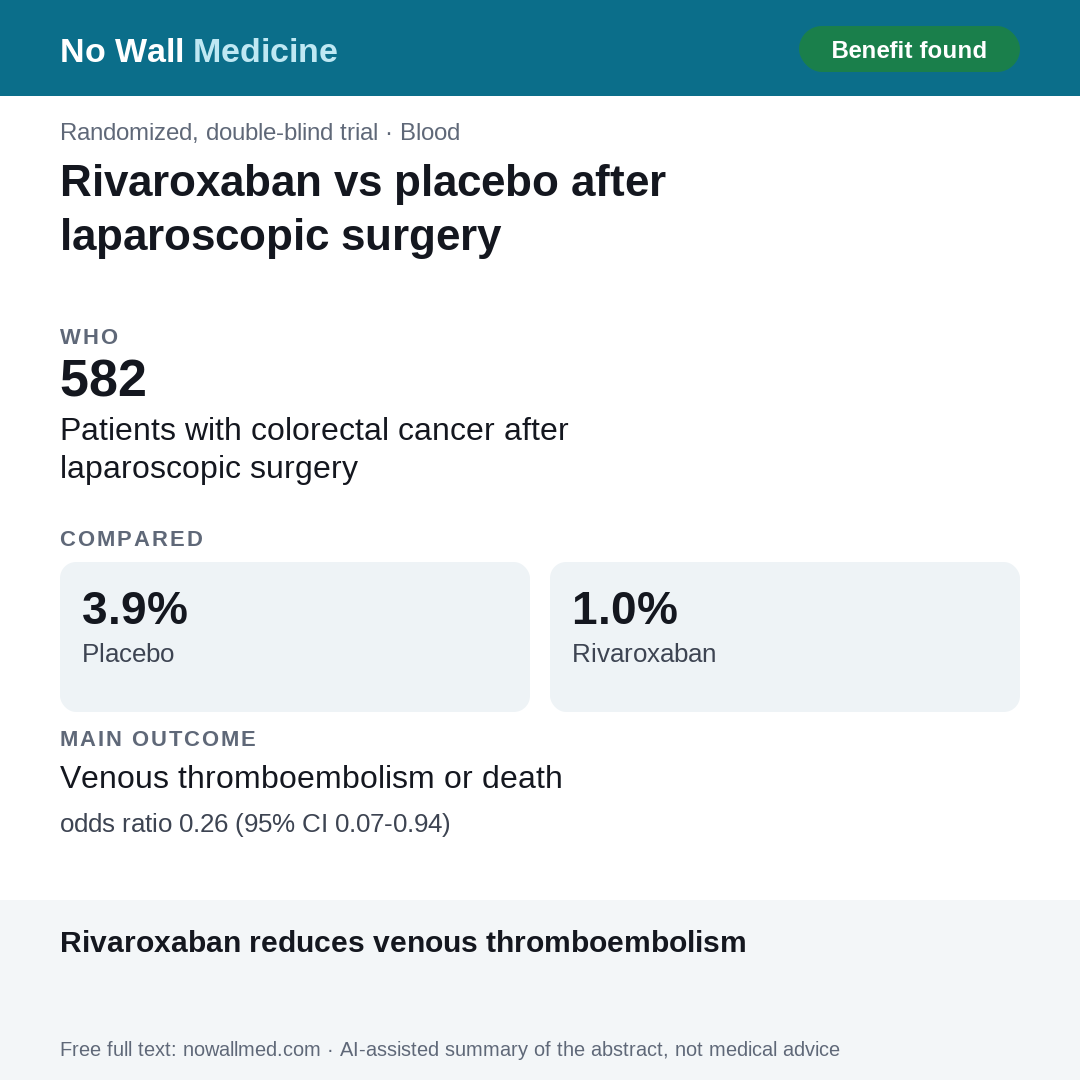
- Researchers studied 582 patients who underwent laparoscopic surgery for colorectal cancer and were randomized to receive either 10 mg of rivaroxaban once daily or a placebo.
- The composite outcome of blood clots or related death occurred in 3 of 287 patients in the rivaroxaban group compared to 11 of 282 in the placebo group (1.0% vs 3.9%).
- Major bleeding occurred in 2 patients in the rivaroxaban group (0.7%) and 0 patients in the placebo group.
In absolute numbers: Placebo 3.9% vs Rivaroxaban 1%, a difference of 2.9 percentage points (about 35 people treated for one more to benefit).
Why it matters: The clinical benefit of extended prevention of venous thromboembolism, or blood clots, after laparoscopic surgery for cancer is unclear.
Discussion prompts
- Would these patients look like yours? Who was left out?
- Is the main outcome one that matters to patients?
- Is the difference large enough to change what you do?
Cite: Becattini C, Pace U, Pirozzi F, et al. Rivaroxaban vs placebo for extended antithrombotic prophylaxis after laparoscopic surgery for colorectal cancer. Blood. 2022. doi:10.1182/blood.2022015796
Free full text: PubMed Central · Summary and visual abstract: nowallmed.com/a/rivaroxaban-vs-placebo-for-extended-antithrombotic-prophylaxis-after-1ddracb/ (AI-assisted from the abstract; check the paper before relying on it).