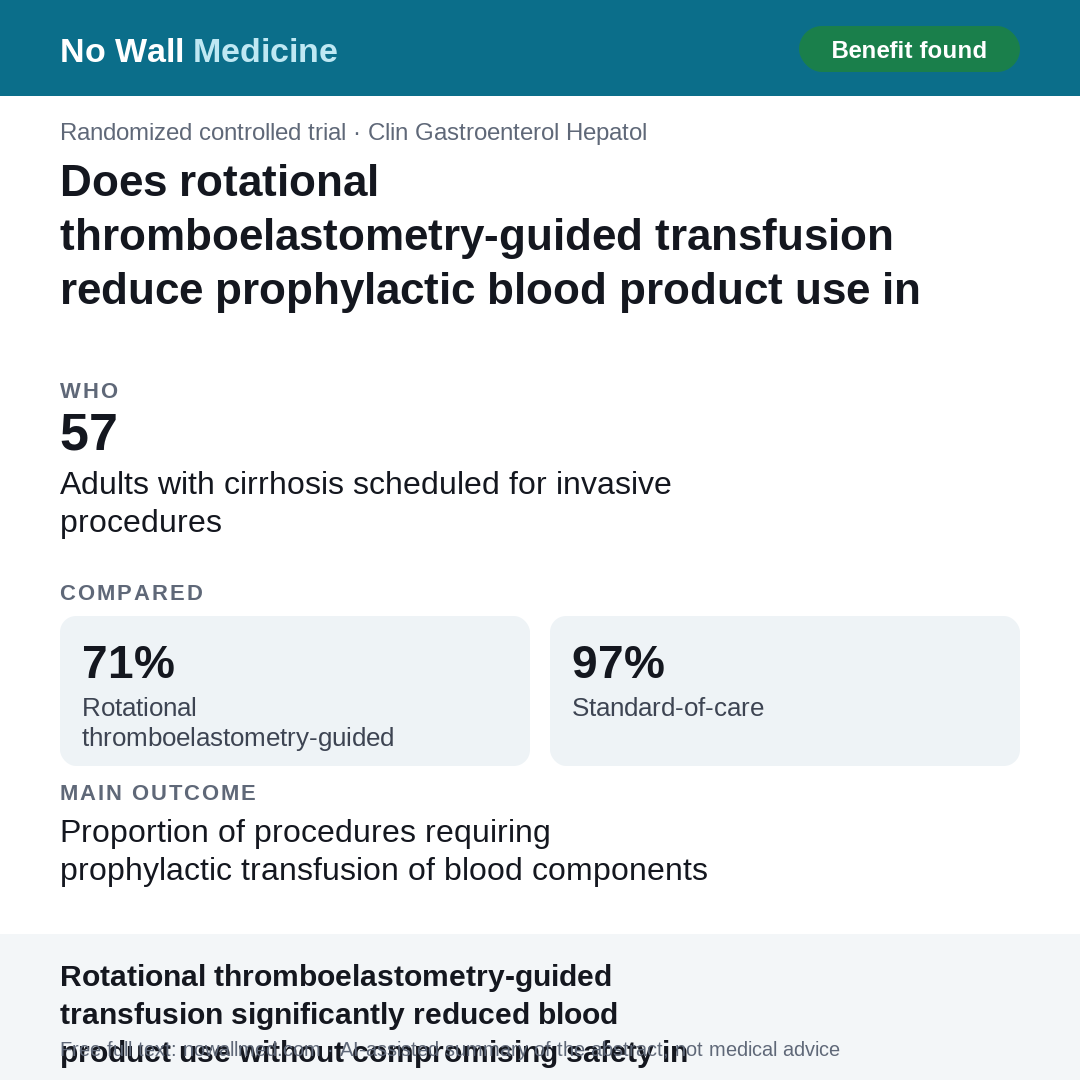
Does rotational thromboelastometry-guided transfusion reduce prophylactic blood product use in patients with cirrhosis?
Who
57
Adults with cirrhosis scheduled for invasive procedures
Compared
71%Rotational thromboelastometry-guided
97%Standard-of-care
Main outcome
Proportion of procedures requiring prophylactic transfusion of blood components
Bottom line: Rotational thromboelastometry-guided transfusion significantly reduced blood product use without compromising safety in patients with cirrhosis.
Clinical question: Does rotational thromboelastometry-guided transfusion reduce prophylactic blood product use in patients with cirrhosis?
Why it matters: Doctors often use blood component prophylaxis in patients with cirrhosis undergoing invasive procedures, but it is unclear if guided testing can reduce unnecessary transfusions.
Key points
Researchers studied 99 patients with cirrhosis undergoing invasive procedures, comparing a rotational thromboelastometry-guided strategy to standard-of-care transfusion methods.
The guided approach reduced the need for prophylactic blood product transfusions from 97% in the standard group to 71% in the guided group.
The study found that using the guided strategy did not increase major procedure-related bleeding complications.
Headline and key points written with AI from the paper’s abstract, with every number checked against it. Read the paper before relying on them.
Comparative risk of hepatocellular carcinoma among people with chronic hepatitis B treated with tenofovir or entecavir: A population-based linkage study