Non-invasive brain stimulation improved mobility and gait in children with cerebral palsy
Safety and effectiveness of non-invasive brain stimulation on mobility and balance function in children with cerebral palsy: a systematic review and meta-analysis
Meta-analysis of 16 randomized controlled trialsMixed results
Is non-invasive brain stimulation safe and effective for mobility and balance in children with cerebral palsy?
Who
346
346 children with cerebral palsy aged 3-14 years
Compared
Non-invasive brain stimulation
Control
Main outcome
mobility and balance function
Result: standard mean difference 0.47 to 0.63 for Gross Motor Function Measure
Bottom line: Non-invasive brain stimulation improves mobility and gait in children with cerebral palsy but balance improvements remain inconclusive.
Limitation: Future research should focus on extending follow-up periods and increasing sample sizes.
J Neuroeng Rehabil · 2025-05-18Download image
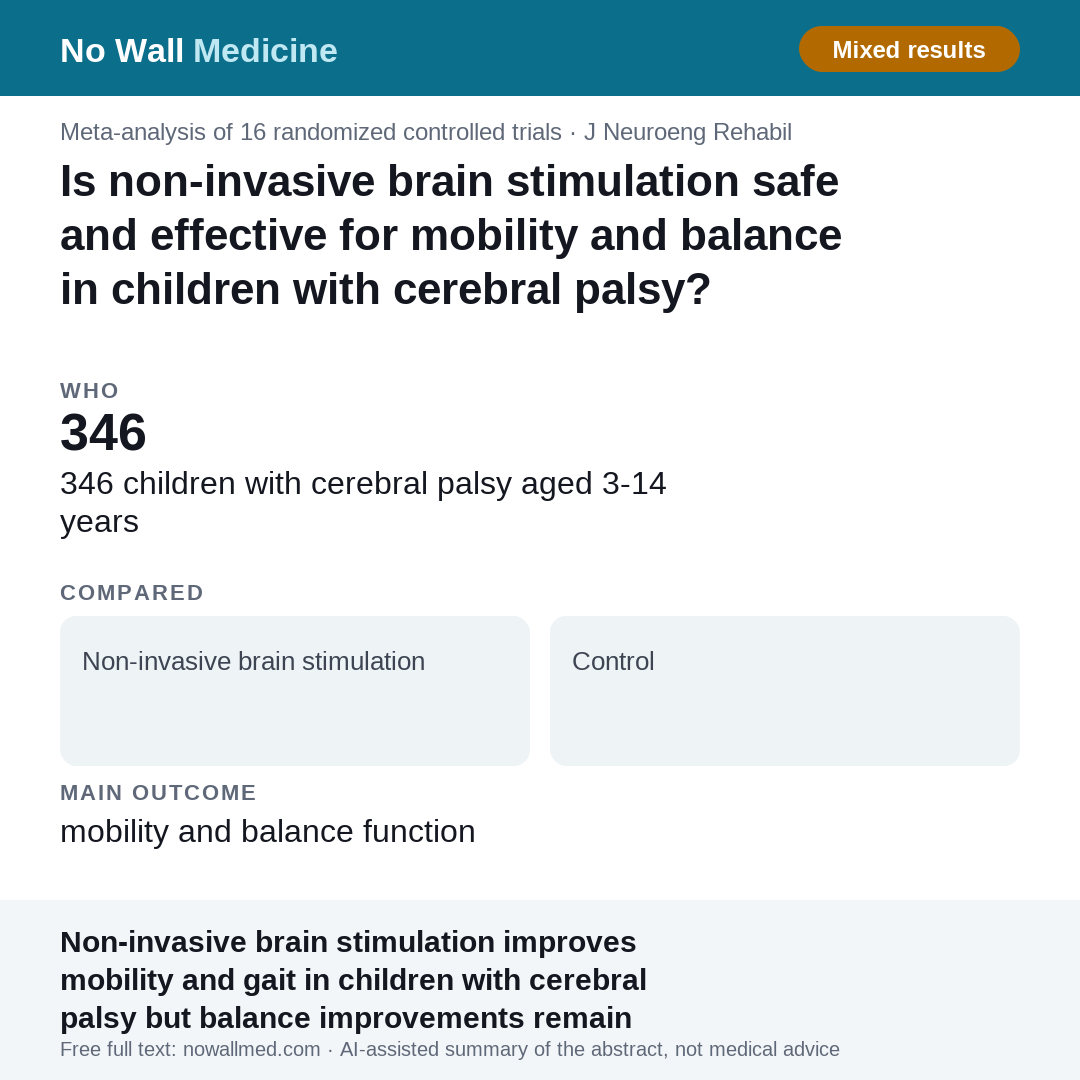
Clinical question: Is non-invasive brain stimulation safe and effective for mobility and balance in children with cerebral palsy?
Why it matters: The safety and effectiveness of non-invasive brain stimulation for improving mobility and balance in children with cerebral palsy remain uncertain.
Key points
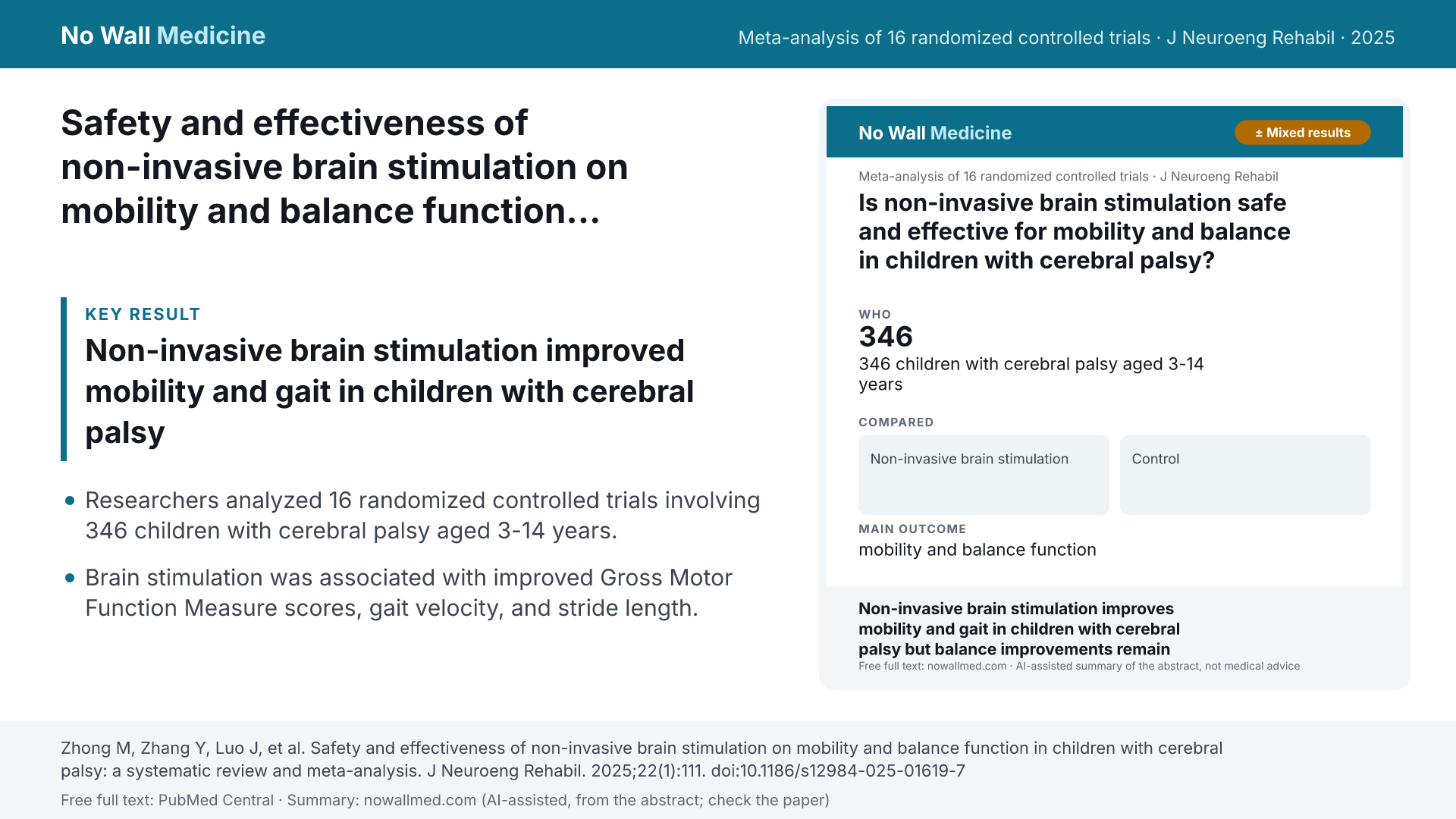
- Researchers analyzed 16 randomized controlled trials involving 346 children with cerebral palsy aged 3-14 years.
- Brain stimulation was associated with improved Gross Motor Function Measure scores, gait velocity, and stride length.
- The intervention was associated with a low incidence of adverse events and no significant improvements in balance.
Headline and key points written with AI from the paper’s abstract, with every number checked against it. Read the paper before relying on them.
Was this summary helpful?
Subject terms
Cite this article
Zhong M, Zhang Y, Luo J, et al. Safety and effectiveness of non-invasive brain stimulation on mobility and balance function in children with cerebral palsy: a systematic review and meta-analysis. J Neuroeng Rehabil. 2025. doi:10.1186/s12984-025-01619-7
Spotted a mistake? Suggest a correction